
Why Conveyancing Matters for UK Home Buyers
Why Conveyancing Matters for UK Home Buyers: Understand the crucial legal process involved when purchasing property to ensure a smooth transaction.
PJ Singh
Co-Founder, Conveyancer Plus | Conveyancing Industry Expert
Co-Founder, Conveyancer Plus \| Conveyancing Industry Expert
Wednesday 4 February 202613 min read
Over **60 percent of British first-time buyers admit feeling confused by legal jargon and hidden costs in the property process. Buying your first home in England brings excitement but also real stress over paperwork, fees, and potential delays. Understanding the full conveyancing journey helps you ask the right questions, protect your investment, and secure a smooth transaction with no nasty surprises.
Table of Contents
Key Takeaways
| Point | Details |
|---|---|
| **Understanding Conveyancing** | Conveyancing is essential for transferring property ownership in the UK, requiring the management of legal documents and compliance with regulations. |
| **Role of Professionals** | Licensed Conveyancers and Solicitors handle property transactions, with Conveyancers specialising in property law while Solicitors provide broader legal services. |
| **Stages of Transaction** | Property transactions follow structured stages, including searches, negotiations, exchange of contracts, and completion, each critical for secure ownership transfer. |
| **Cost Awareness** | Buyers should anticipate various costs beyond legal fees, including stamp duty and environmental search fees, to avoid financial surprises during transactions. |
Conveyancing Defined: Legal Process Explained
Conveyancing represents the critical legal mechanism through which property ownership transfers between parties in the United Kingdom. At its core, conveyancing handles the intricate administrative and legal steps required to legally transfer land or property ownership from one individual or entity to another.
The process involves multiple sophisticated stages that protect both buyer and seller’s interests. Licensed conveyancers manage extensive documentation, conduct essential property searches, liaise with mortgage providers, prepare contractual paperwork, calculate and pay required stamp taxes, and ultimately register the property transfer with the Land Registry. These professionals ensure that every legal requirement is meticulously fulfilled, minimising potential risks and complications during property transactions.
Specifically, conveyancing encompasses several key activities that safeguard the transaction’s integrity. These include:
- Examining property titles and ownership history
- Conducting local authority and environmental searches
- Verifying planning permissions and potential restrictions
- Drafting and reviewing legal contracts
- Managing financial transfers between parties
- Ensuring compliance with current UK property regulations
\_ Pro tip:\_ \_Always request a comprehensive breakdown of conveyancing fees upfront to understand the full financial implications of your property transaction.\_
Who Handles Conveyancing in the UK
In the United Kingdom, property ownership transfers are primarily managed by two types of legal professionals: licensed conveyancers and solicitors. These specialists possess the expertise and legal qualifications required to navigate the complex property transaction landscape, ensuring that every aspect of the transfer is handled professionally and legally.
Licensed Conveyancers are specialised legal professionals who focus exclusively on property law and transactions. They are regulated by the Council for Licensed Conveyancers (CLC) and undergo rigorous training to obtain specific qualifications, including Level 4 and Level 6 Diplomas in Conveyancing Law and Practice. Their primary responsibilities include preparing legal documents, conducting property searches, managing financial transfers, and providing expert advice on property-related legal matters.
Solicitors offer a broader range of legal services but can also specialise in property law. Many solicitors have dedicated conveyancing departments that handle property transactions with the same level of expertise as licensed conveyancers. The key difference lies in their overall scope of practice:
- Licensed Conveyancers: Property law specialists
- Solicitors: Broader legal practice with property law expertise
Both professionals must be regulated by official bodies:
Here’s a quick comparison of licensed conveyancers and solicitors in UK property transactions:
| Aspect | Licensed Conveyancer | Solicitor |
|---|---|---|
| Specialisation | Focuses on property law | Covers all legal fields |
| Regulation Body | Council for Licensed Conveyancers | Solicitors Regulation Authority |
| Qualifications | Diplomas in Conveyancing Law | Law degree and solicitor exams |
| Service Scope | Property transactions only | Broad legal representation |
- Licensed Conveyancers: Regulated by the Council for Licensed Conveyancers (CLC)
- Solicitors: Regulated by the Solicitors Regulation Authority (SRA)
\_ Pro tip:\_ \_Always verify a conveyancer’s or solicitor’s professional credentials and regulatory status before engaging their services to ensure legal protection and quality representation.\_
Stages in a Property Transaction
Property transactions in the United Kingdom follow a structured and legally complex process that ensures secure ownership transfer. Understanding these stages helps buyers and sellers navigate the intricate journey of property transfer with confidence and clarity.
! Couple reviewing property transaction paperwork

The property transaction typically begins with the initial instruction of a conveyancer or solicitor. At this stage, the legal professional verifies the identities of all parties involved and starts preparing the necessary documentation. The seller’s conveyancer drafts the initial contract, which is then carefully reviewed by the buyer’s legal representative. This initial phase involves meticulous document preparation and preliminary legal checks to establish the groundwork for the transaction.
Subsequent stages of the property transaction include several critical steps:
1. Property Searches
- Local authority searches
- Environmental investigations
- Water and drainage checks
- Land Registry historical records review
2. Enquiries and Negotiations
- Raising legal enquiries about the property
- Reviewing search results
- Negotiating any discovered issues
- Confirming mortgage offer details
3. Exchange of Contracts
- Legally binding agreement between parties
- Payment of deposit
- Setting definitive completion date
- Mutual commitment to the transaction
4. Completion
- Transfer of funds
- Legal transfer of property ownership
- Handover of keys
- Registration with Land Registry
\_ Pro tip:\_ \_Request a comprehensive timeline from your conveyancer at the outset to understand potential duration and key milestones in your property transaction.\_
Legal Protections and Risk Checks
Property transactions involve complex legal landscapes where protecting buyers from potential risks is paramount. Regulatory bodies carefully monitor conveyancing practices to prevent fraudulent activities and ensure transparent, secure property transfers across the United Kingdom.
! Infographic of conveyancing key stages UK buyers
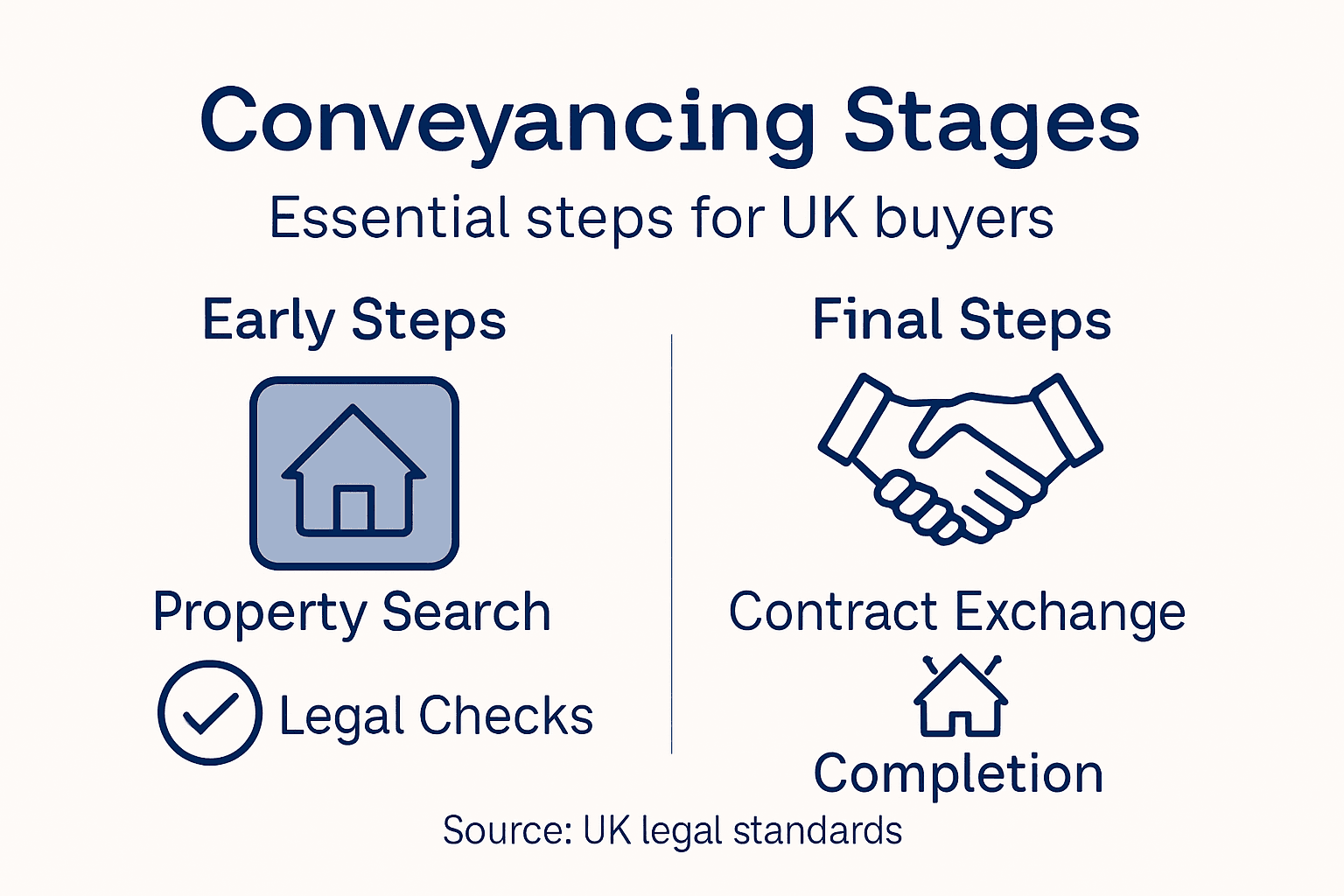
One of the most critical legal protections involves rigorous anti-money laundering (AML) checks. Conveyancing firms are legally obligated to conduct comprehensive due diligence on all parties involved in a property transaction. This process includes verifying client identities, understanding the source of funds, and screening for potential financial irregularities. These stringent checks help prevent economic crimes and protect both individual buyers and the broader financial system from potential exploitation.
Key legal protections and risk management strategies include:
1. Identity Verification
- Passport and driving licence checks
- Proof of address validation
- Comprehensive background screening
2. Financial Due Diligence
- Source of funds investigation
- Anti-money laundering compliance
- Mortgage fraud prevention
3. Property Risk Assessment
- Title deed verification
- Land Registry historical checks
- Outstanding legal encumbrances review
- Planning permission investigations
4. Regulatory Compliance
- Adherence to Solicitors Regulation Authority guidelines
- Compliance with Council for Licensed Conveyancers standards
- Regular professional conduct audits
\_ Pro tip:\_ \_Request detailed documentation of the risk checks performed by your conveyancer to ensure comprehensive protection throughout your property transaction.\_
Costs, Liabilities and Avoiding Pitfalls
Property transactions involve substantial financial commitments and potential legal complexities that can catch unsuspecting buyers off guard. Conveyancing costs can quickly accumulate beyond initial estimates, making it crucial to understand the full financial landscape before committing to a purchase.
The total expenses in a property transaction extend far beyond the basic legal fees. Buyers must anticipate various additional costs, including search fees, land registry charges, stamp duty, mortgage arrangement fees, and potential surveys. Each of these elements contributes to the overall financial burden and can significantly impact the total investment required to complete a property purchase.
The following table summarises typical outlays and liability areas in a UK property transaction:
| Cost Type | Typical Amount (Estimate) | Main Risk if Unchecked |
|---|---|---|
| Conveyancing fees | £800–£1,500 | Overcharging or hidden costs |
| Stamp Duty | £0–£15,000+ | Incorrect tax calculation |
| Survey costs | £300–£1,200 | Undetected structural issues |
| Land Registry fees | £50–£1,000+ | Ownership recording errors |
| Legal liability | Case-specific | Future disputes or claims |
Key potential pitfalls and financial considerations include:
1. Upfront Costs
- Conveyancing solicitor fees
- Property search expenses
- Mortgage arrangement charges
- Survey and valuation costs
2. Hidden Expenses
- Stamp duty land tax
- Land registry registration fees
- Environmental search charges
- Local authority search fees
3. Risk Management Costs
- Professional indemnity insurance
- Additional legal document processing
- Potential remedial investigation expenses
4. Potential Liability Areas
- Boundary dispute resolution
- Unresolved property defect claims
- Unexpected structural investigation costs
- Potential legal challenge expenses
\_ Pro tip:\_ \_Request a comprehensive, itemised quote from your conveyancer that breaks down all potential costs and fees to avoid unexpected financial surprises during your property transaction.\_
Simplify Your Conveyancing Journey with Trusted Experts
Navigating the complex legal steps involved in conveyancing can feel overwhelming for UK home buyers. The need to manage property searches, legal paperwork, and financial transfers while avoiding costly pitfalls can create unnecessary stress. Conveyancing-Solicitor.co.uk understands these challenges and connects you directly with highly rated, SRA- or CLC-regulated conveyancers and solicitors who specialise in smooth, transparent property transactions.
Save time and reduce risk by obtaining instant, fixed-fee quotes that could cut your legal fees by up to 75%. Our vetted conveyancing professionals will guide you through every step — from comprehensive property searches and contract review to completion and Land Registry registration. Discover how easy and affordable conveyancing can be by getting your free, personalised quote today at Instant Quote. Need to learn more on how conveyancing works or how to find the right solicitor? Explore our detailed Step-by-Step Conveyancing Process and find the perfect professional on Find a Conveyancer. Don’t wait until hidden costs or legal delays catch you by surprise. Take control now and start your property journey securely and confidently.
Frequently Asked Questions
What is conveyancing, and why is it important for home buyers?
Conveyancing is the legal process of transferring property ownership between parties. It is vital for home buyers as it ensures that the transaction is legally binding, protects your investment, and mitigates potential risks associated with property ownership.
Who handles the conveyancing process for home buyers?
The conveyancing process can be managed by licensed conveyancers or solicitors. Licensed conveyancers specialise solely in property law, while solicitors offer a broader range of legal services, including property transactions.
What are the key stages in the conveyancing process for home buyers?
The key stages include property searches, enquiries and negotiations, exchange of contracts, and completion. Each stage involves critical activities such as verifying property details, negotiating terms, and legally transferring ownership.
What costs should home buyers expect during the conveyancing process?
Home buyers should anticipate various costs, including conveyancing fees, stamp duty, survey costs, and land registry fees. It’s essential to seek a comprehensive, itemised quote to avoid unexpected financial surprises.
About the Author
Verified Expert
PJ Singh
Co-Founder, Conveyancer Plus \| Conveyancing Industry Expert
BSc Computer Science, University of Hertfordshire \| 10+ Years Conveyancing Industry Experience
PJ Singh is Co-Founder of Conveyancer Plus, bringing over 10 years of expertise in the UK conveyancing and property sector. Previously Group Director of Sales and Marketing at Ackroyd Legal and Head of Business Development at Fitzalan Partners (Homeward Legal), PJ has worked with over 70 SRA-regulated solicitors nationwide. His deep understanding of the property transaction process and client journey makes him a trusted voice in simplifying conveyancing for homebuyers.
View all articles by PJ → LinkedIn
More Articles
Article\\ \\ Conveyancing Process Step by Step for UK Home Buyers \\ \\ Understand the UK conveyancing process step-by-step with our expert guide for home buyers. Get clear advice from a trusted conveyancing solicitor.\\ \\ 3 Feb 2026 Article\\ \\ Conveyancing Solicitor UK Delivers Trusted Local Specialist Conveyancing for New Builds England \\ \\ Find trusted, vetted conveyancing solicitors across the UK. Clear, Easy & Affordable conveyancing services with up to 75% savings on legal fees.\\ \\ 18 Dec 2025 Article\\ \\ Transfer of Equity – How It Affects Family Property \\ \\ Understand UK Transfer of Equity & how it affects family property. Get expert conveyancing solicitor advice on changing ownership.\\ \\ 4 Feb 2026
View reviews →
Get Your Free Conveyancing Quote
Compare prices from trusted local solicitors. No obligation, no hidden fees.
Instant quotes
No obligation
Save up to 75%
Get Free Quotes Now
Easy and affordable conveyancing made simple. SRA regulated solicitors across the UK.
Services
Quick Links
Legal
Contact
- 0330 053 2229
- clientservices@conveyancing-solicitor.co.uk
- United Kingdom
Conveyancing-Solicitor.co.uk is a trading name of Home Movers Plus Ltd, with the company registration number 13764928. © 2026 Home Movers Plus Ltd –
About the Author
PJ Singh
Co-Founder, Conveyancer Plus | Conveyancing Industry Expert
PJ Singh is Co-Founder of Conveyancer Plus, bringing over 10 years of expertise in the UK conveyancing and property sector. Previously Group Director of Sales and Marketing at Ackroyd Legal and Head of Business Development at Fitzalan Partners (Homeward Legal), PJ has worked with over 70 SRA-regulated solicitors nationwide. His deep understanding of the property transaction process and client journey makes him a trusted voice in simplifying conveyancing for homebuyers.
More Articles
Remortgage your house: step-by-step guide for UK homeowners
Learn how to remortgage your house in the UK with this clear step-by-step guide covering timing, costs, legal fees, and how to save up to 75% on conveyancing.
Transparency in conveyancing: your guide to clear home moves
Discover what transparency in conveyancing really means, where it breaks down, and how to choose a solicitor who keeps you fully informed with no hidden fees.
Essential conveyancing terms every UK home seller must know
Learn the essential conveyancing terms every UK home seller must know, from TA6 forms to exchange and completion, to avoid costly delays and legal pitfalls.
Get Your Free Conveyancing Quote
Compare prices from trusted local solicitors. No obligation, no hidden fees.