
Role of Conveyancer in Property Purchase – Why It Matters
Role of Conveyancer in Property Purchase – Why It Matters: Understand the conveyancer's critical role, from initial checks to final completion, ensuring a smoot
PJ Singh
Co-Founder, Conveyancer Plus | Conveyancing Industry Expert
Co-Founder, Conveyancer Plus \| Conveyancing Industry Expert
Tuesday 3 February 202614 min read
Over eighty percent of British property transactions involve a conveyancer guiding buyers through complicated legal hurdles. Whether you are entering the market for the first time or adding to your portfolio, understanding this process is crucial for anyone dealing with British real estate. This guide gives you clear insight into what a conveyancer actually does, what legal checks are performed, and how their expertise can protect buyers from costly mistakes.
Table of Contents
Key Takeaways
| Point | Details |
|---|---|
| **Role of Conveyancer** | A conveyancer simplifies the property buying process, managing legal and financial tasks to ensure smooth ownership transfer. |
| **Legal Checks** | Conveyancers conduct essential legal searches to identify potential issues like boundary disputes and planning permissions that could affect the property. |
| **Cost Awareness** | Typical conveyancing fees range from £850 to £1,500, with additional disbursement costs, so detailed quotes should be requested to avoid hidden charges. |
| **Professional Verification** | Buyers must ensure their conveyancer is properly regulated and check their credentials before engagement to protect their investment. |
What Does a Conveyancer Do in Buying Property?
A conveyancer plays a critical role in transforming your property purchase from a complex legal transaction into a smooth, manageable process. These legal professionals handle the intricate legal and administrative work required to transfer property ownership from seller to buyer. Conveyancers handle contract exchanges, manage financial transactions, and provide legal guidance throughout the entire property purchase journey.
The specific responsibilities of a conveyancer are comprehensive and detailed. They conduct thorough local council searches to uncover any potential issues with the property, review mortgage documentation, verify property titles, and ensure all legal requirements are meticulously met. Their work involves checking planning permissions, investigating potential boundary disputes, examining lease agreements for flats, and confirming there are no legal impediments that could prevent the sale from proceeding smoothly.
Moreover, conveyancers act as crucial intermediaries between multiple parties in a property transaction. They communicate with estate agents, mortgage lenders, surveyors, and the seller’s legal representatives to coordinate every aspect of the purchase. This includes managing the exchange of contracts, handling the transfer of funds, and registering the new property ownership with the Land Registry. Their expertise helps protect buyers from potential legal pitfalls and ensures that all financial and legal aspects of the property purchase are handled professionally.
Pro Tip: Research Your Conveyancer Thoroughly: Always check a conveyancer’s professional credentials, read client reviews, and confirm they are regulated by either the Solicitors Regulation Authority (SRA) or the Council for Licensed Conveyancers (CLC) before engaging their services.
Legal Requirements and Conveyancing Checks
Property transactions involve numerous legal requirements that protect both buyers and sellers from potential risks and complications. Conveyancers play a crucial role in ensuring these legal standards are comprehensively met, conducting thorough local authority searches that provide detailed information about a property and its surrounding environment, including critical aspects like planning permissions and potential environmental concerns.
The conveyancing process involves a systematic approach to legal checks, which typically includes several key investigations. These comprehensive checks encompass examining property titles, verifying ownership history, investigating any existing legal charges or restrictions on the property, and ensuring there are no unresolved boundary disputes. Conveyancers meticulously review planning permissions to confirm that any previous property modifications or extensions have been legally sanctioned, and they assess potential environmental risks that might impact the property’s value or future usability.
Moreover, conveyancers undertake multiple specialised searches to uncover potential issues that could affect the property purchase. These include local authority searches, environmental searches, drainage and water searches, and mining searches where relevant. Each search serves a specific purpose: local authority searches reveal planning history and potential enforcement actions, environmental searches identify contamination risks or flood threats, drainage searches confirm water infrastructure details, and mining searches highlight potential geological risks in areas with historical mining activities.
Below is a summary of key conveyancing searches and their specific purpose:
| Search Type | Main Purpose | Typical Areas of Concern |
|---|---|---|
| Local Authority Search | Uncover planning and local restrictions | Planning history, enforcement notices |
| Environmental Search | Assess environmental and flood risks | Contamination, flood zones |
| Drainage & Water | Confirm water and sewage arrangements | Mains connection, drainage responsibilities |
| Mining Search | Identify subsidence or mining hazards | Historical mining, ground stability |
Pro Tip: Documentation Preparedness: Gather all relevant property documents in advance, including previous sale contracts, building regulation certificates, and planning permission records, to expedite the conveyancing process and provide your legal representative with comprehensive information from the outset.
Stages of Conveyancing in a Property Purchase
The property purchase journey involves a structured process of conveyancing stages that systematically transform a property transaction from initial offer to legal completion. First-time buyers can navigate this complex process by understanding the key steps involved in conveyancing, ensuring a smooth and legally compliant property acquisition.
! Homebuyer and conveyancer meeting over files

Typically, the conveyancing process begins with instructing a solicitor or licensed conveyancer who will conduct initial investigations. This stage involves obtaining and reviewing draft contracts, conducting comprehensive property searches, and examining potential legal restrictions. The conveyancer will request property searches from local authorities, review environmental data, investigate drainage information, and check for any planning permissions or potential boundary disputes that might impact the property’s value or future usability.
! Infographic timeline of conveyancing stages
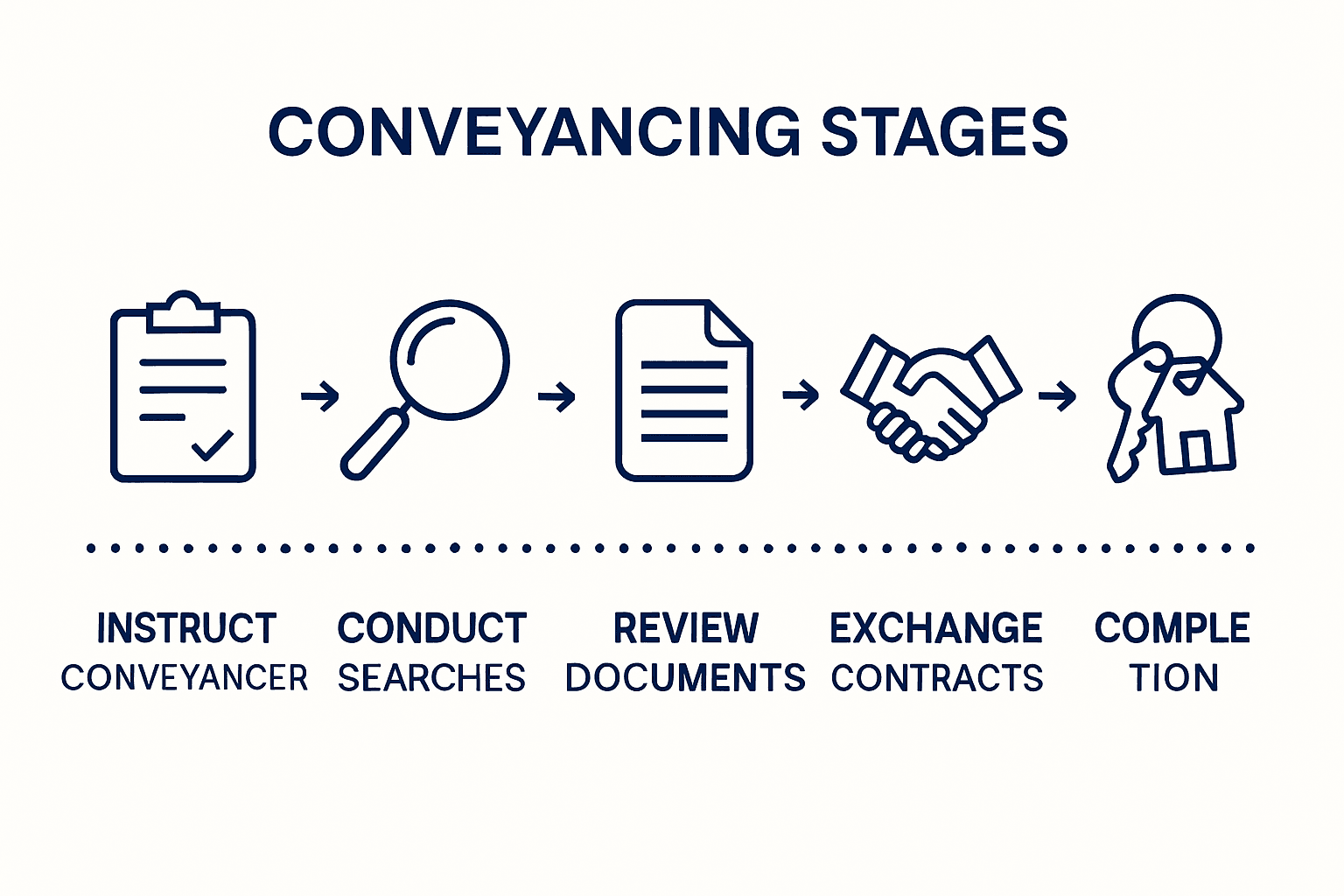
Subsequent stages involve critical legal and financial procedures. Once searches are completed and satisfactory, the conveyancer will review the mortgage offer, draft a comprehensive property report, and prepare for the exchange of contracts. During the exchange, both buyer and seller become legally committed to the transaction, with a deposit typically transferred and a completion date agreed upon. The final stage involves transferring the remaining funds, completing the property registration with the Land Registry, and ensuring all legal documentation is correctly processed and filed.
Pro Tip: Proactive Communication: Maintain regular contact with your conveyancer, promptly respond to document requests, and ask questions about any aspect of the process you do not fully understand to prevent potential delays and ensure a smooth property transaction.
Conveyancer’s Responsibilities and Buyer Protections
A conveyancer serves as a critical guardian in property transactions, providing comprehensive legal protection for buyers through meticulous professional oversight. Conveyancers perform essential legal checks, manage financial transactions, and coordinate between multiple parties to ensure a secure and legally compliant property purchase, effectively shielding buyers from potential legal and financial risks.
The primary responsibilities of a conveyancer extend far beyond simple paperwork management. They conduct extensive property searches to uncover any potential legal impediments, verify property titles, investigate potential boundary disputes, and ensure all statutory requirements are thoroughly met. This includes examining planning permissions, checking for any outstanding legal charges, reviewing environmental search results, and confirming that the property can be legally transferred without complications. By identifying potential issues early, conveyancers help buyers make informed decisions and prevent unexpected legal challenges that could arise after property purchase.
Moreover, conveyancers play a crucial role in financial protection by managing complex monetary transactions with the utmost precision. They handle the transfer of funds between buyers, sellers, and mortgage lenders, ensuring that all financial aspects of the transaction are transparent and legally compliant. This includes managing deposit payments, coordinating the transfer of purchase funds, and ensuring that all financial transactions are properly documented and traceable. Their professional indemnity insurance provides an additional layer of protection, offering buyers recourse in the unlikely event of professional negligence.
Pro Tip: Professional Verification: Always check your conveyancer’s professional credentials, confirm they are regulated by the Solicitors Regulation Authority (SRA) or Council for Licensed Conveyancers (CLC), and request a clear breakdown of their fees and services before commencing your property transaction.
Costs, Fee Structures, and Common Mistakes
Conveyancing fees represent a critical investment in ensuring a legally secure property transaction, with pricing structures varying significantly across different legal practices. While specific costs depend on property complexity and transaction type, buyers should anticipate professional fees ranging from £850 to £1,500 for standard residential purchases, alongside additional disbursement charges for essential searches and legal documentation.
Typical conveyancing fee structures generally encompass several key components. These include fixed legal fees for standard services, variable disbursement costs for official searches and registrations, and potential additional charges for more complex transactions such as leasehold properties or those involving unique legal complications. Buyers should request comprehensive fee breakdowns that transparently outline all expected costs, including local authority searches, land registry fees, environmental searches, and potential additional investigations required for specific property types.
Below is a comparison of common conveyancing fee components for property buyers:
| Fee Component | Typical Cost Range | What It Covers |
|---|---|---|
| Professional Fee | £850 – £1,500 | Legal work and case management |
| Disbursement Charges | £250 – £450 | Official searches and documents |
| Land Registry Fee | £50 – £1,000 | Title registration, varies by property |
| Additional Services | £100 – £500+ | Leaseholds, complex issues, extra checks |
Common mistakes in navigating conveyancing costs often stem from insufficient research and understanding of fee structures. Many buyers overlook hidden costs or fail to comprehensively compare quotes from multiple conveyancing professionals, potentially exposing themselves to unexpected financial burdens. Critical errors include not requesting detailed fee estimates, failing to understand what services are included in the base price, and neglecting to clarify potential additional charges for complex scenarios such as properties with planning permission issues or those requiring extensive legal investigations.
Pro Tip: Comprehensive Quote Comparison: Request detailed, written quotes from multiple conveyancers, ensuring they provide a full breakdown of fixed fees and potential disbursement costs, and always confirm what services are explicitly included to avoid unexpected financial surprises during your property transaction.
Discover Trusted Conveyancing Support for Your Property Journey
Navigating the complex role of a conveyancer can be daunting with all the legal checks, searches, and financial responsibilities involved. This article highlights common challenges such as ensuring thorough local authority searches, understanding conveyancing fee structures, and managing contract exchanges seamlessly. If you are concerned about avoiding delays, hidden costs, or choosing a reliable professional regulated by the Solicitors Regulation Authority or the Council for Licensed Conveyancers, you are not alone.
At Conveyancing-Solicitor.co.uk we connect you with vetted, five-star conveyancers who understand these exact pain points. Our instant fixed-fee quotes give you transparency and can save you up to 75% compared to standard legal fees. Whether you need expert guidance through conveyancing stages or want to avoid common mistakes with disbursements and searches, our nationwide network ensures you access tailored, expert advice.
Take control of your property purchase now. Get your free conveyancing quote and find your ideal conveyancer quickly by visiting Get your instant quote now and make your property purchase confident and clear.
Frequently Asked Questions
What is the role of a conveyancer in a property purchase?
A conveyancer is a legal professional who handles the transfer of property ownership, managing contracts, financial transactions, and legal compliance to ensure a smooth purchase process.
Why should I hire a conveyancer when buying a property?
Hiring a conveyancer is crucial as they provide expert legal guidance, conduct necessary property searches, and protect you from potential legal issues that could arise during the transaction.
What are the key stages of the conveyancing process?
The key stages include instructing a conveyancer, conducting property searches, reviewing documents, exchanging contracts, and completing the property registration with the Land Registry.
What costs should I expect when hiring a conveyancer?
Expect to pay professional fees ranging from £850 to £1,500, along with disbursement costs for official searches and potential additional fees for complex transactions.
About the Author
Verified Expert
PJ Singh
Co-Founder, Conveyancer Plus \| Conveyancing Industry Expert
BSc Computer Science, University of Hertfordshire \| 10+ Years Conveyancing Industry Experience
PJ Singh is Co-Founder of Conveyancer Plus, bringing over 10 years of expertise in the UK conveyancing and property sector. Previously Group Director of Sales and Marketing at Ackroyd Legal and Head of Business Development at Fitzalan Partners (Homeward Legal), PJ has worked with over 70 SRA-regulated solicitors nationwide. His deep understanding of the property transaction process and client journey makes him a trusted voice in simplifying conveyancing for homebuyers.
View all articles by PJ → LinkedIn
More Articles
Article\\ \\ Conveyancing Process Step by Step for UK Home Buyers \\ \\ Understand the UK conveyancing process step-by-step with our expert guide for home buyers. Get clear advice from a trusted conveyancing solicitor.\\ \\ 3 Feb 2026 Article\\ \\ Conveyancing Solicitor UK Delivers Trusted Local Specialist Conveyancing for New Builds England \\ \\ Find trusted, vetted conveyancing solicitors across the UK. Clear, Easy & Affordable conveyancing services with up to 75% savings on legal fees.\\ \\ 18 Dec 2025 Article\\ \\ Transfer of Equity – How It Affects Family Property \\ \\ Understand UK Transfer of Equity & how it affects family property. Get expert conveyancing solicitor advice on changing ownership.\\ \\ 4 Feb 2026
View reviews →
Get Your Free Conveyancing Quote
Compare prices from trusted local solicitors. No obligation, no hidden fees.
Instant quotes
No obligation
Save up to 75%
Get Free Quotes Now
Easy and affordable conveyancing made simple. SRA regulated solicitors across the UK.
Services
Quick Links
Legal
Contact
- 0330 053 2229
- clientservices@conveyancing-solicitor.co.uk
- United Kingdom
Conveyancing-Solicitor.co.uk is a trading name of Home Movers Plus Ltd, with the company registration number 13764928. © 2026 Home Movers Plus Ltd –
About the Author
PJ Singh
Co-Founder, Conveyancer Plus | Conveyancing Industry Expert
PJ Singh is Co-Founder of Conveyancer Plus, bringing over 10 years of expertise in the UK conveyancing and property sector. Previously Group Director of Sales and Marketing at Ackroyd Legal and Head of Business Development at Fitzalan Partners (Homeward Legal), PJ has worked with over 70 SRA-regulated solicitors nationwide. His deep understanding of the property transaction process and client journey makes him a trusted voice in simplifying conveyancing for homebuyers.
More Articles
Remortgage your house: step-by-step guide for UK homeowners
Learn how to remortgage your house in the UK with this clear step-by-step guide covering timing, costs, legal fees, and how to save up to 75% on conveyancing.
Transparency in conveyancing: your guide to clear home moves
Discover what transparency in conveyancing really means, where it breaks down, and how to choose a solicitor who keeps you fully informed with no hidden fees.
Essential conveyancing terms every UK home seller must know
Learn the essential conveyancing terms every UK home seller must know, from TA6 forms to exchange and completion, to avoid costly delays and legal pitfalls.
Get Your Free Conveyancing Quote
Compare prices from trusted local solicitors. No obligation, no hidden fees.