
How to Sell a House: Step-by-Step Guide for Success
How to Sell a House: Step-by-Step Guide for Success. Navigate the UK property market confidently with our expert advice, from initial listing to completion.
PJ Singh
Co-Founder, Conveyancer Plus | Conveyancing Industry Expert
Co-Founder, Conveyancer Plus \| Conveyancing Industry Expert
Tuesday 3 February 202616 min read
Nearly half of British first-time home sellers in London admit feeling overwhelmed by confusing legal steps and unpredictable fees. For many new homeowners, understanding how to prepare a property, set the right price, and complete contracts can be daunting without clear advice. This guide spotlights simple solutions for affordable conveyancing with fixed costs, helping you save money while confidently handling each phase of your property sale.
Table of Contents
Quick Summary
| Main Insight | Explanation |
|---|---|
| **1. Prepare Your Home Thoroughly** | Conduct deep cleaning, necessary repairs, and decluttering to enhance the visual appeal and functionality of your property before selling. |
| **2. Obtain Multiple Property Valuations** | To set the right selling price, gather valuations from various estate agents and research recent sales in your neighbourhood for a realistic assessment. |
| **3. Collaborate on Effective Listings** | Work closely with your estate agent to create high-quality listings, including professional photographs and engaging descriptions to attract potential buyers. |
| **4. Be Strategic in Negotiations** | When negotiating offers, assess the reliability of buyers and not just the offer price. Aim for a mutually beneficial agreement that suits your selling goals. |
| **5. Thoroughly Understand Legal Processes** | Ensure that all documentation is complete and accurate before exchanging contracts, and verify all terms to avoid complications later in the sale process. |
Step 1: Prepare your property for market
Selling your house requires strategic preparation to attract potential buyers and maximise your property’s market value. The initial stage involves transforming your property into an appealing, market-ready asset that will draw serious interest and potentially secure a faster sale.
Begin by conducting a comprehensive property assessment that focuses on visual appeal and functionality. This means addressing any maintenance issues, from minor cosmetic repairs to more significant structural concerns. Start with a thorough deep clean of your entire property, paying special attention to areas buyers scrutinise most: kitchens, bathrooms, and living spaces. Declutter each room to create a sense of spaciousness and neutrality that allows potential buyers to envision themselves living in the space. Energy efficiency standards have become increasingly important, so consider upgrading insulation, windows, and heating systems to improve your property’s energy performance rating.
External appearance matters significantly in property sales. Enhance your home’s kerb appeal by maintaining a tidy garden, repainting exterior walls if needed, and ensuring the entrance looks welcoming. Professional photographs taken after these improvements can dramatically increase online listing attractiveness. Consider obtaining an up-to-date Energy Performance Certificate, which not only meets legal requirements but also demonstrates your property’s efficiency to potential buyers.
\_ Professional insight:\_ \_Invest in a pre-sale property inspection to identify and address potential issues before listing, which can prevent unexpected complications during the sales process.\_
Below is a quick reference table outlining how key upgrades can affect your property’s marketability:
| Upgrade Type | Impact on Value | Buyer Appeal | Typical Cost Range |
|---|---|---|---|
| Energy efficient windows | Improves rating | Attracts eco-conscious | £3,000–£7,000 |
| Modern kitchen | Higher sale price | Widens interest | £5,000–£20,000 |
| Repaint exterior | Boosts first impressions | Invites more viewings | £800–£2,500 |
| Upgraded insulation | Reduces bills | Appeals to families | £1,000–£4,000 |
Step 2: Set the right price and choose an agent
Determining the optimal selling price and selecting the right estate agent are critical steps that can significantly influence your property sale’s success. These decisions require careful research, strategic thinking, and a nuanced understanding of the local property market.
Pricing your property accurately demands thorough market research and a realistic assessment of your home’s value. Start by investigating recent sale prices of comparable properties in your neighbourhood, considering factors like size, condition, and specific location features. Obtain valuations from multiple estate agents to gain a comprehensive perspective. Choosing the right estate agent involves more than just comparing commission rates. Look for agents with proven local market knowledge, strong marketing strategies, and a track record of successful sales in your area. Review their digital and print marketing approaches, ask about their communication strategies, and request detailed information about their recent sales performance.
! Estate agent discussing pricing with sellers
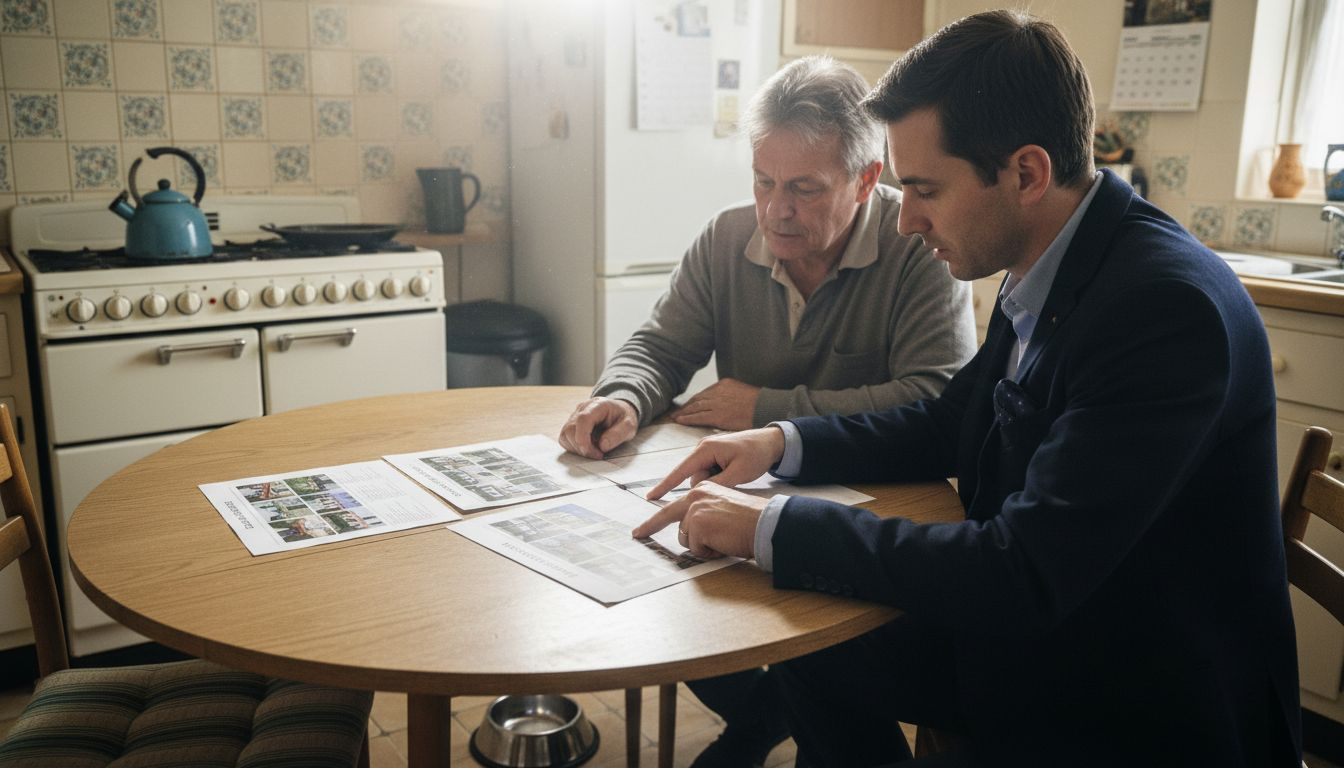
Consider interviewing several agents and requesting comprehensive marketing plans. Pay attention to their proposed valuation and be wary of agents who dramatically overvalue your property just to win your business. Check their credentials carefully, including professional memberships and online reviews. Ask about their specific strategies for properties similar to yours, their average time to sell, and their proposed approach to managing viewings and negotiations. Understanding their fee structure is equally important some agents offer fixed fees, while others work on a percentage basis.
\_ Professional insight:\_ \_Request a detailed breakdown of marketing costs and strategies before signing any contract, and ensure you understand all potential additional charges.\_
Here’s a summary comparing common estate agent fee structures and marketing strategies:
| Agent Fee Model | Typical Rate/Cost | Marketing Coverage | Payment Timing |
|---|---|---|---|
| Percentage-based | 1%–3% of sale price | Broad local & online | After sale completed |
| Fixed fee | £800–£1,500 upfront | Limited, often online only | Upfront or split |
| Hybrid model | £499–£999 + % of sale | Combines online & local | Split payments |
Step 3: List your house and attract buyers
Listing your property effectively is a crucial step that can dramatically impact your sale success. This stage involves strategically presenting your home to potential buyers and maximising its online and offline marketing potential to generate genuine interest.
! Infographic showing six steps to sell a house
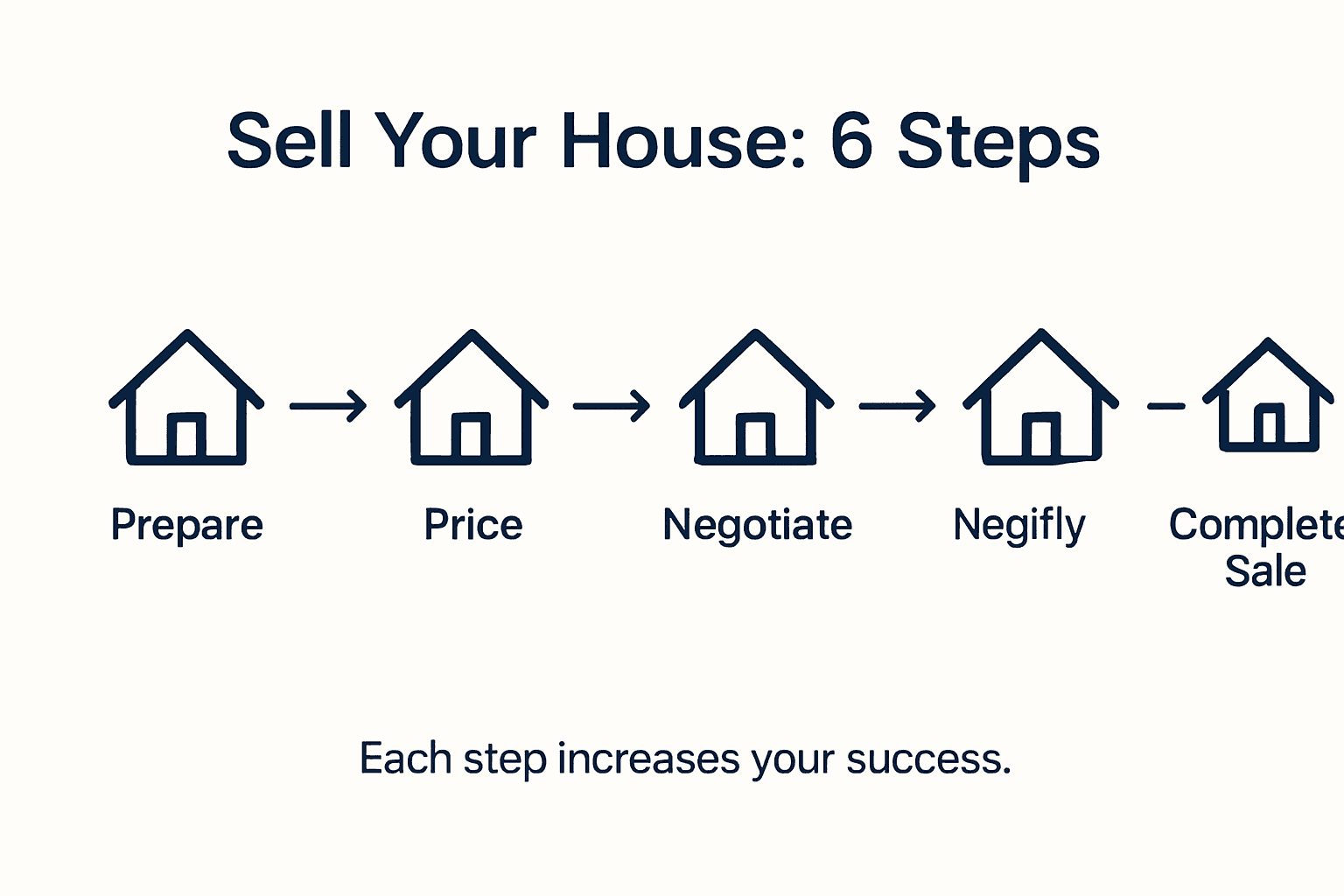
Comprehensive property marketing requires careful preparation of your listing materials. Work closely with your chosen estate agent to compile a compelling property profile that includes high-quality professional photographs, detailed floor plans, and an engaging property description. Ensure your Energy Performance Certificate is up to date and prominently displayed. Focus on highlighting your property’s unique selling points such as recent renovations, energy efficient features, or desirable location attributes. Consider creating a virtual tour or video walkthrough to provide potential buyers with an immersive preview of your home.
Expand your property’s visibility by leveraging multiple marketing channels. While premium property portals like Rightmove and Zoopla are essential, do not overlook alternative platforms. Some sellers find success using free listing sites to supplement their primary marketing strategy. Prepare a compelling narrative about your property that goes beyond basic specifications share the story of your home, its neighbourhood, and what makes it special. Ensure your agent understands and can communicate these unique aspects effectively during viewings and online presentations.
\_ Professional insight:\_ \_Schedule professional photography during optimal daylight hours and ensure each room is meticulously staged to create the most appealing visual representation of your property.\_
Step 4: Negotiate offers and accept the best deal
Negotiating property offers is a delicate process that requires strategic thinking, emotional intelligence, and a clear understanding of your selling objectives. This crucial stage determines not just the financial outcome of your sale, but also the overall smoothness of the transaction.
Property offer negotiations in the United Kingdom involve complex considerations beyond simple price comparisons. Understanding that initial offers are not legally binding provides you with strategic flexibility. Work closely with your estate agent to evaluate each offer comprehensively, considering factors such as the buyer’s financial readiness, potential chain complications, and proposed completion timelines. Assess the strength of each offer by examining the buyer’s mortgage agreement in principle, their position in the property chain, and their demonstrated commitment to the purchase.
Remain objective and patient during negotiations, recognising that the highest offer is not always the best offer. Consider the buyer’s overall reliability and ability to complete the transaction smoothly. Some buyers might present lower initial offers but demonstrate greater flexibility and certainty in their purchasing capability. Communicate clearly with your estate agent, establishing your minimum acceptable price and any critical conditions. Be prepared to counteroffer strategically, using market insights and your property’s unique attributes to justify your valuation. Remember that successful negotiations are about finding a mutually beneficial agreement that satisfies both parties.
\_ Professional insight:\_ \_Always maintain a professional demeanour during negotiations and be willing to walk away if the terms do not meet your fundamental requirements.\_
Step 5: Verify legal requirements and exchange contracts
Exchanging contracts represents the pivotal moment in your property sale where legal commitments become binding and your transaction moves from potential to definitive. This stage requires meticulous attention to detail and comprehensive understanding of the legal framework governing property transfers.
Property ownership transfer involves complex legal procedures that demand precision and professional guidance. Your solicitor will draft a comprehensive contract detailing critical elements such as the agreed sale price, exact property boundaries, included fixtures and fittings, and any specific restrictions or conditions. During this phase, both parties legal representatives will negotiate and review contract terms, ensuring all potential contingencies are addressed. This process includes conducting thorough property searches, verifying title deeds, and confirming there are no outstanding legal impediments to the sale.
Prepare thoroughly for the exchange by ensuring all necessary documentation is complete and accurate. This includes your property information forms, fixtures and fittings lists, and any relevant planning permissions or building regulation certificates. Your solicitor will coordinate with the buyer’s legal team to synchronise contract exchange, a moment that legally commits both parties to the transaction. At this point, you will typically agree on a completion date and pay a deposit, signalling the formal progression of your property sale.
\_ Professional insight:\_ \_Request a comprehensive review of all contract details before signing and ensure you fully understand every clause and potential implication of the agreement.\_
Step 6: Complete the sale and hand over keys
Completion day represents the culmination of your property selling journey a moment where legal ownership transfers and you bid farewell to your current home. This final stage requires careful coordination and understanding of the intricate processes involved in finalising your property transaction.
Completion procedures involve precise financial and logistical arrangements that typically occur within business hours. Your solicitor will manage the transfer of funds between buyer and seller accounts, ensuring all financial obligations are met. Once the funds have cleared, the estate agent will be authorised to release the keys to the new owner. This moment symbolises the official transfer of property ownership and marks the end of your selling process.
Prepare for completion day by ensuring all your personal belongings are packed and ready for removal. Conduct a final walkthrough of the property to confirm you have not left anything behind and that the home is in the agreed condition. Coordinate with your removal company to ensure a smooth transition, and be prepared to hand over all relevant documentation such as warranties, instruction manuals for appliances, and any specific property maintenance records. Keep copies of all final sale documents for your personal records, which may be important for future tax or legal purposes.
\_ Professional insight:\_ \_Schedule your move early in the day to provide ample time for key handover and potential unexpected complications.\_
Simplify Your Home Selling Journey with Expert Conveyancing Support
Selling a house involves many crucial steps from accurate pricing to legal contract exchanges, and the process can quickly become overwhelming. This guide highlights challenges sellers face like selecting the right estate agent, negotiating offers, and understanding legal requirements. It is vital to have trusted professional assistance to navigate these complex phases smoothly and avoid costly delays or legal pitfalls.
At Conveyancing-Solicitor.co.uk, we connect you instantly with vetted, five-star regulated conveyancers who specialise in making property transactions clear and stress-free. Our expert network covers every conveyancing stage sellers encounter including contract review and completion management. With transparent, fixed-fee quotes that can save you up to 75% on legal fees you get premium conveyancing service without the usual uncertainty or hidden costs.
• Need guidance on selecting a conveyancer aligned with your selling goals? Explore our authoritative Find a Conveyancer resources.
• Want to understand conveyancing fees and timelines before you commit? Our detailed Step-by-Step Conveyancing Process pillar demystifies the journey.
• Looking for fast, reliable legal services that keep your sale on track? Get instant fixed-fee quotes from local or nationwide specialists now.
Don’t let legal complexities stall your property sale. Take control today by visiting Conveyancing-Solicitor.co.uk Instant Quote and discover how easy and affordable expert conveyancing can be. Your successful sale starts with the right conveyancer by your side.
Frequently Asked Questions
How can I prepare my house for sale?
To prepare your house for sale, start by conducting a thorough assessment and addressing any maintenance issues, including cleaning and decluttering. Next, focus on enhancing kerb appeal by improving the exterior and considering energy efficiency upgrades to attract buyers.
What factors should I consider when setting the price of my house?
When setting the price of your house, research recent sale prices of similar homes in your area and obtain valuations from multiple estate agents. Aim to set a competitive price based on market insights to attract serious buyers quickly.
How do I effectively list my property to attract buyers?
To effectively list your property, collaborate with your estate agent to create a compelling profile that includes high-quality photographs and an engaging description. Highlight unique features and consider using multiple marketing channels to increase visibility and interest.
What should I do during the offer negotiation process?
During the offer negotiation process, carefully evaluate each offer’s strengths and weaknesses, focusing on the buyer’s financial readiness and potential for a smooth transaction. Maintain an objective approach and be prepared to counteroffer if necessary to secure the best deal.
What legal documents are necessary for finalising a house sale?
For finalising a house sale, ensure you have completed documentation such as the property information forms and fixtures and fittings lists. Work closely with your solicitor to prepare all necessary legal paperwork to avoid delays during the exchange of contracts.
What steps should I take on completion day?
On completion day, ensure all personal belongings are packed and conduct a final walkthrough of the property. Coordinate with your removal company and be prepared to hand over keys and relevant documentation to the new owners once the sale is confirmed.
About the Author
Verified Expert
PJ Singh
Co-Founder, Conveyancer Plus \| Conveyancing Industry Expert
BSc Computer Science, University of Hertfordshire \| 10+ Years Conveyancing Industry Experience
PJ Singh is Co-Founder of Conveyancer Plus, bringing over 10 years of expertise in the UK conveyancing and property sector. Previously Group Director of Sales and Marketing at Ackroyd Legal and Head of Business Development at Fitzalan Partners (Homeward Legal), PJ has worked with over 70 SRA-regulated solicitors nationwide. His deep understanding of the property transaction process and client journey makes him a trusted voice in simplifying conveyancing for homebuyers.
View all articles by PJ → LinkedIn
More Articles
Article\\ \\ Conveyancing Process Step by Step for UK Home Buyers \\ \\ Understand the UK conveyancing process step-by-step with our expert guide for home buyers. Get clear advice from a trusted conveyancing solicitor.\\ \\ 3 Feb 2026 Article\\ \\ Conveyancing Solicitor UK Delivers Trusted Local Specialist Conveyancing for New Builds England \\ \\ Find trusted, vetted conveyancing solicitors across the UK. Clear, Easy & Affordable conveyancing services with up to 75% savings on legal fees.\\ \\ 18 Dec 2025 Article\\ \\ Transfer of Equity – How It Affects Family Property \\ \\ Understand UK Transfer of Equity & how it affects family property. Get expert conveyancing solicitor advice on changing ownership.\\ \\ 4 Feb 2026
View reviews →
Get Your Free Conveyancing Quote
Compare prices from trusted local solicitors. No obligation, no hidden fees.
Instant quotes
No obligation
Save up to 75%
Get Free Quotes Now
Easy and affordable conveyancing made simple. SRA regulated solicitors across the UK.
Services
Quick Links
Legal
Contact
- 0330 053 2229
- clientservices@conveyancing-solicitor.co.uk
- United Kingdom
Conveyancing-Solicitor.co.uk is a trading name of Home Movers Plus Ltd, with the company registration number 13764928. © 2026 Home Movers Plus Ltd –
About the Author
PJ Singh
Co-Founder, Conveyancer Plus | Conveyancing Industry Expert
PJ Singh is Co-Founder of Conveyancer Plus, bringing over 10 years of expertise in the UK conveyancing and property sector. Previously Group Director of Sales and Marketing at Ackroyd Legal and Head of Business Development at Fitzalan Partners (Homeward Legal), PJ has worked with over 70 SRA-regulated solicitors nationwide. His deep understanding of the property transaction process and client journey makes him a trusted voice in simplifying conveyancing for homebuyers.
More Articles
Remortgage your house: step-by-step guide for UK homeowners
Learn how to remortgage your house in the UK with this clear step-by-step guide covering timing, costs, legal fees, and how to save up to 75% on conveyancing.
Transparency in conveyancing: your guide to clear home moves
Discover what transparency in conveyancing really means, where it breaks down, and how to choose a solicitor who keeps you fully informed with no hidden fees.
Essential conveyancing terms every UK home seller must know
Learn the essential conveyancing terms every UK home seller must know, from TA6 forms to exchange and completion, to avoid costly delays and legal pitfalls.
Get Your Free Conveyancing Quote
Compare prices from trusted local solicitors. No obligation, no hidden fees.