



Buying your first home in England or Wales can quickly become confusing with so many legal steps involved. Understanding the difference between general solicitors and regulated conveyancers matters because every detail in your property transaction could affect your finances or ownership rights. This straightforward guide explains how a regulated conveyancer offers trusted support, clear communication and strong consumer protections, giving first-time buyers confidence from the start.
Table of Contents
- What Is A Regulated Conveyancer?
- SRA And CLC: Who Regulates Conveyancers?
- Legal Protections For Property Buyers
- Transparent Fees And Service Standards
- Risks Of Unregulated Conveyancing Firms
Key Takeaways
| Point | Details |
|---|---|
| Regulated Conveyancers Offer Protection | Choosing a regulated conveyancer ensures legal accountability and consumer protection in property transactions. |
| Distinct Regulatory Bodies | The Solicitors Regulation Authority (SRA) and the Council for Licensed Conveyancers (CLC) oversee legal standards in property transactions. |
| Importance of Transparency | Regulated conveyancers provide clear fee structures and professional accountability, allowing clients to understand costs upfront. |
| Risks of Unregulated Firms | Engaging unregulated firms increases financial risk, including lack of accountability and exposure to potential fraud. |
What Is a Regulated Conveyancer?
A regulated conveyancer is a specialised legal professional focused exclusively on property transactions in the United Kingdom. These professionals are legally authorised to manage all legal, administrative, and financial aspects involved in buying, selling, or remortgaging property in England and Wales.
Regulated conveyancers differ from general solicitors by concentrating solely on property law. They provide critical services including:
- Preparing comprehensive property contracts
- Conducting detailed property searches
- Handling complex mortgage documentation
- Arranging contract exchanges
- Registering ownership changes with the Land Registry
To become a regulated conveyancer, professionals must meet strict standards set by the Council for Licensed Conveyancers (CLC). This regulatory body ensures practitioners maintain high professional conduct and educational standards.
The key distinction between regulated and unregulated conveyancers lies in consumer protection. Regulated professionals are legally accountable, offering clients significant safeguards and recourse if something goes wrong during a property transaction. They must carry professional indemnity insurance and adhere to rigorous ethical guidelines.
Pro tip: Always verify a conveyancer’s regulatory status by checking their credentials with the Council for Licensed Conveyancers before engaging their services.
SRA and CLC: Who Regulates Conveyancers?
Two primary regulatory bodies oversee legal professionals in property transactions across the United Kingdom: the Solicitors Regulation Authority (SRA) and the Council for Licensed Conveyancers (CLC). These organisations enforce professional standards to protect consumers and maintain high-quality legal services.
The SRA plays a critical role in regulating solicitors who provide conveyancing services in England and Wales. Their responsibilities include:
- Establishing professional conduct standards
- Monitoring compliance with legal regulations
- Protecting consumer interests
- Investigating professional misconduct
- Enforcing disciplinary actions when necessary
The Council for Licensed Conveyancers sets rigorous educational and training requirements specifically for licensed conveyancing professionals. Unlike the SRA, which covers a broader range of legal services, the CLC concentrates exclusively on conveyancing practitioners.
Key differences between these regulatory bodies include their specific focus and scope. While the SRA oversees solicitors across various legal domains, the CLC specialises in property law professionals, ensuring that licensed conveyancers meet stringent professional standards through comprehensive monitoring and assessment.
To help clarify the regulatory landscape, here is a concise comparison between the SRA and CLC:
| Regulator | Focus Area | Regulates Professionals | Key Priority |
|---|---|---|---|
| Solicitors Regulation Auth. | Broad legal services | Solicitors | Upholding general legal standards |
| Council for Licenced Conv. | Property conveyancing only | Licensed conveyancers | Ensuring specialist property advice |
Pro tip: Always confirm a conveyancer’s current regulatory status by checking their registration directly with the SRA or CLC before engaging their services.
Legal Protections for Property Buyers
Choosing a regulated conveyancer provides substantial legal protections that safeguard property buyers throughout their transaction. Buyers benefit from comprehensive consumer protection mechanisms designed to ensure transparency, fairness, and financial security.
These legal protections encompass several critical safeguards:
- Mandatory professional conduct standards
- Transparent fee structures
- Protection of client funds in designated accounts
- Comprehensive professional indemnity insurance
- Formal complaints and compensation schemes
Professional bodies enforce strict regulations to maintain high standards of service. Regulated conveyancers must adhere to rigorous ethical guidelines, ensuring that property buyers receive professional, accountable legal support throughout their transaction.

Should anything go wrong during the conveyancing process, regulated professionals provide multiple layers of protection. Buyers can seek recourse through official regulatory bodies, access compensation schemes, and rely on professional indemnity insurance to mitigate potential financial losses.
Pro tip: Always request documentation confirming your conveyancer’s current regulatory status and professional indemnity insurance before proceeding with any property transaction.
Transparent Fees and Service Standards
Navigating property transactions requires clear financial understanding, and regulated conveyancers provide exactly that. Professionals offer comprehensive fee breakdowns to ensure clients know exactly what they’re paying for from the outset.
Typical transparent fee structures include:
- Detailed itemised cost breakdown
- Fixed-fee conveyancing options
- Clear explanation of mandatory disbursements
- Upfront quotations with no hidden charges
- Itemised legal work descriptions
Regulated conveyancers distinguish themselves by providing exceptional clarity around pricing and services. They understand that property transactions involve significant financial investments, and therefore commit to providing clients with complete visibility into every aspect of their professional fees.
Most reputable conveyancers will provide a comprehensive written quote that outlines not just their professional fees, but also anticipated additional costs such as local searches, land registry fees, and other necessary disbursements. This approach eliminates surprises and helps buyers budget accurately throughout their property purchase.
Pro tip: Always request a detailed, written fee breakdown and ensure all potential additional costs are explicitly outlined before signing any agreement.
Risks of Unregulated Conveyancing Firms
Choosing an unregulated conveyancing firm exposes property buyers to significant financial and legal vulnerabilities. Unregulated services lack critical consumer protections that could potentially jeopardise one of the most important financial transactions in a person’s life.
The primary risks associated with unregulated conveyancing include:
- Absence of professional accountability
- No client money protection schemes
- Increased potential for fraudulent activities
- Limited recourse if mistakes occur
- Unpredictable and potentially hidden fees
- No mandatory professional indemnity insurance
Unregulated conveyancers operate without formal oversight, creating substantial risks for unsuspecting property buyers. Without established regulatory frameworks, these firms may lack the professional standards, communication protocols, and ethical guidelines that protect consumers during complex property transactions.
Moreover, unregulated firms often cannot provide the same level of financial security as their regulated counterparts. They may not maintain the necessary financial reserves or insurance to compensate clients in case of significant errors, leaving buyers vulnerable to potential substantial financial losses.
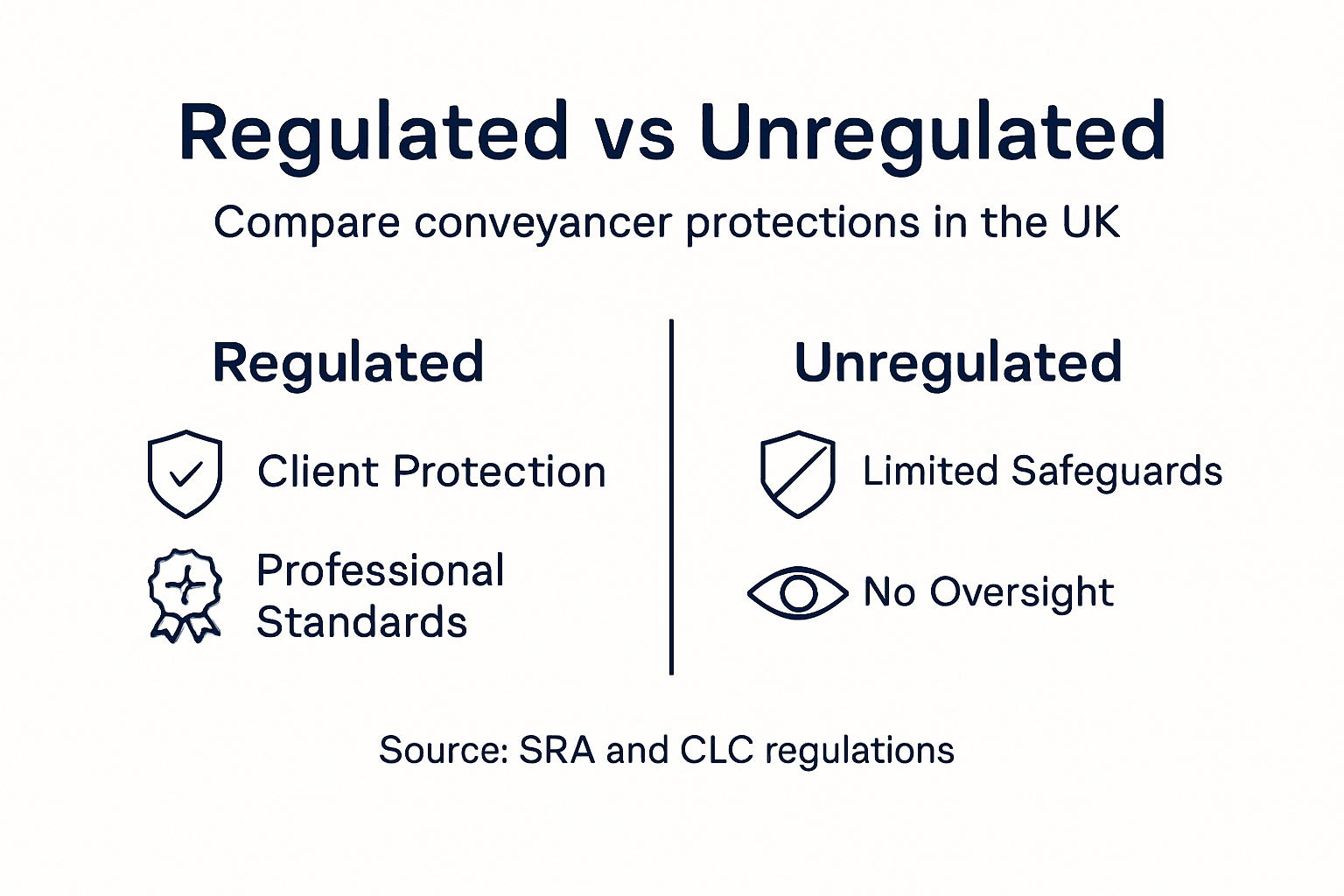
Understanding the impact of regulation versus lack of oversight is vital for property buyers:
| Aspect | Regulated Conveyancers | Unregulated Firms |
|---|---|---|
| Consumer recourse options | Formal complaint channels | Limited or no recourse |
| Financial security provided | Client funds fully protected | Client funds may be at risk |
| Professional accountability | Subject to strict regulation | No formal accountability |
| Compensation for mistakes | Insurance-backed compensation | Compensation rarely available |
Pro tip: Always verify a conveyancer’s regulatory status with the Solicitors Regulation Authority or Council for Licensed Conveyancers before engaging their services.
Make Your Property Transaction Secure with Regulated Conveyancers
Understanding the importance of choosing a regulated conveyancer can save you from costly risks and uncertainties during your property purchase. The article highlights how working with professionals who are regulated by the Solicitors Regulation Authority or the Council for Licensed Conveyancers guarantees clear fees, consumer protections, and accountability throughout your conveyancing journey. Avoid the pitfalls of unregulated firms that lack vital legal safeguards and financial protections.
At Conveyancing-Solicitor.co.uk, we connect you instantly with vetted, five-star conveyancing firms regulated by the SRA or CLC who provide transparent, fixed-fee quotes. Our nationwide network ensures you get expert advice local to you or across the UK with trusted professionals who put your peace of mind first. Benefit from up to 75 percent savings on legal fees without compromising on service quality.
Looking to secure your property transaction with a regulated conveyancer you can trust Then start your journey confidently today by getting your instant quote from Conveyancing-Solicitor.co.uk Instant Quotes. Learn more about how to find a good conveyancing solicitor and understand the difference between licensed conveyancers and solicitors so you can make an informed decision. Act now to avoid delays and pitfalls in your property purchase and experience conveyancing made clear and affordable.
Frequently Asked Questions
What is a regulated conveyancer?
A regulated conveyancer is a legal professional authorised to manage property transactions in the UK, focusing solely on property law and ensuring legal, administrative, and financial aspects are handled correctly.
How do regulated conveyancers ensure consumer protection?
Regulated conveyancers adhere to strict standards set by regulatory bodies, offering consumer protections like mandatory professional conduct, transparent fee structures, and professional indemnity insurance.
What are the advantages of choosing a regulated conveyancer over an unregulated one?
Choosing a regulated conveyancer provides significant advantages such as professional accountability, client funds protection, comprehensive recourse options in case of issues, and reduced risks of fraud or errors in property transactions.
How can I verify the regulatory status of a conveyancer?
You can verify a conveyancer’s regulatory status by checking their credentials with the Solicitors Regulation Authority (SRA) or the Council for Licensed Conveyancers (CLC) to ensure they are properly licensed and adhering to legal standards.
Recommended
- SRA Regulated Solicitors – Why It Matters for Home Buyers – Conveyancing Solicitor
- SRA Regulation – What It Means for UK Buyers – Conveyancing Solicitor
- Role of Conveyancer Versus Solicitor Explained – Conveyancing Solicitor
- 7 Key Steps to Choosing London Conveyancing Solicitors – Conveyancing Solicitor
