



Buying your first home in London can feel confusing when every step seems tied up in legal speak and hidden fees. It matters because you want clear answers and genuine support as you make one of life’s biggest decisions. In 2025, advanced digital tools and more transparent pricing are reshaping how property deals work, offering buyers like you a smart, simplified path through the process by focusing on digital integration and clarity at every stage.
Table of Contents
- Defining Conveyancing in 2025: Key Changes
- New Technologies Transforming UK Conveyancing
- Legal Reforms and Regulatory Shifts Explained
- Shifts in Conveyancing Fees and Service Models
- Risks, Pitfalls, and Buyer Protection Trends
Key Takeaways
| Point | Details |
|---|---|
| Digital Transformation | Conveyancing in 2025 is characterised by increased digital integration, enhancing communication and reducing transaction times for buyers. |
| Regulatory Adaptation | Stricter regulations are being implemented, focusing on digital security and consumer protection, ensuring safer property transactions. |
| Innovative Pricing Models | Flexible and transparent fee structures are emerging, allowing clients to select services that best match their needs. |
| Enhanced Risk Management | Buyers must remain vigilant against evolving risks, necessitating robust checks on identity and property ownership to avoid potential fraud. |
Defining Conveyancing in 2025: Key Changes
Conveyancing in 2025 represents a significant transformation in property transactions, driven by technological innovations and regulatory shifts. The landscape is evolving rapidly, introducing new digital processes and enhanced transparency for property buyers across the United Kingdom.
Key characteristics of conveyancing in 2025 include fundamental changes in how legal property transfers are managed:
- Increased digital integration across transaction stages
- Enhanced artificial intelligence powered search processes
- More transparent fee structures
- Reduced paperwork through advanced digital conveyancing services
Technology is fundamentally reshaping the conveyancing process. Digital platforms now enable faster communication between solicitors, estate agents, and clients, dramatically reducing traditional waiting periods. Machine learning algorithms help identify potential property risks more accurately, providing buyers with comprehensive insights before finalising transactions.
Regulatory frameworks are also adapting to accommodate these technological changes. The Solicitors Regulation Authority (SRA) and Council for Licensed Conveyancers (CLC) are implementing stricter digital security protocols to protect client information and ensure secure online transactions.
Pro tip: Always request a comprehensive digital audit trail from your conveyancing solicitor to track every stage of your property transaction efficiently.
New Technologies Transforming UK Conveyancing
Technology is revolutionising conveyancing in 2025, introducing unprecedented efficiency and security in property transactions. The digital transformation is fundamentally reshaping how property transfers are conducted, making processes more transparent, faster, and more secure for buyers and sellers across the United Kingdom.
Key technological innovations are emerging in several critical areas:
- Artificial Intelligence for contract review and risk assessment
- Blockchain technology for secure, tamper-proof transaction records
- Digital identity verification systems
- Automated search and documentation processes
Advanced digital identity checks are dramatically reducing fraud risks by enabling secure online verification. These systems allow potential buyers to validate their identity quickly and securely, eliminating traditional paperwork and reducing processing times.
Machine learning algorithms are now capable of reviewing contracts with remarkable speed and accuracy. These systems can instantly flag potential risks, legal inconsistencies, and complex contractual nuances that might previously have required extensive human review. By automating complex analytical tasks, conveyancers can focus more on strategic advisory roles and client communication.
Blockchain technology is emerging as a game-changing solution for property transactions. Smart contracts built on blockchain platforms create immutable, transparent records of every stage of a property transfer, ensuring unprecedented levels of security and trust between all parties involved.
The following table highlights how major technologies are reshaping key stages of the conveyancing process:
| Technology | Primary Function | Impact on Conveyancing |
|---|---|---|
| Artificial Intelligence | Automates contract review | Flags risks, shortens review time |
| Blockchain | Records transactions securely | Enhances trust; prevents tampering |
| Digital Identity Verification | Validates buyer/seller identities | Reduces fraud; streamlines onboarding |
| Automated Documentation | Processes legal documents | Cuts manual errors; accelerates deals |
Pro tip: Request a detailed explanation of the digital technologies your conveyancer uses to ensure you understand the security and efficiency of your property transaction.
Legal Reforms and Regulatory Shifts Explained
The legal landscape of conveyancing in 2025 is experiencing profound transformations, with regulatory bodies implementing comprehensive reforms to enhance transparency, security, and efficiency in property transactions. These changes represent a significant shift in how legal professionals approach property transfers and client protections.
Key regulatory developments include:
- Heightened anti-money laundering (AML) regulations
- Increased corporate transparency requirements
- Strengthened compliance frameworks
- Enhanced consumer protection mechanisms
Reforms in 2025 aim to modernise conveyancing by reducing transaction delays and addressing systemic inefficiencies in property transactions. Solicitors are now playing a more proactive role in shaping these regulatory changes, focusing on creating more streamlined and accountable processes.
Anti-money laundering regulations have become particularly stringent, requiring conveyancing firms to implement comprehensive risk management strategies. Firms must now conduct more rigorous firm-wide risk analyses, with regular inspections and enhanced due diligence becoming standard practice. This shift demands a more proactive compliance culture, where ongoing vigilance is paramount.
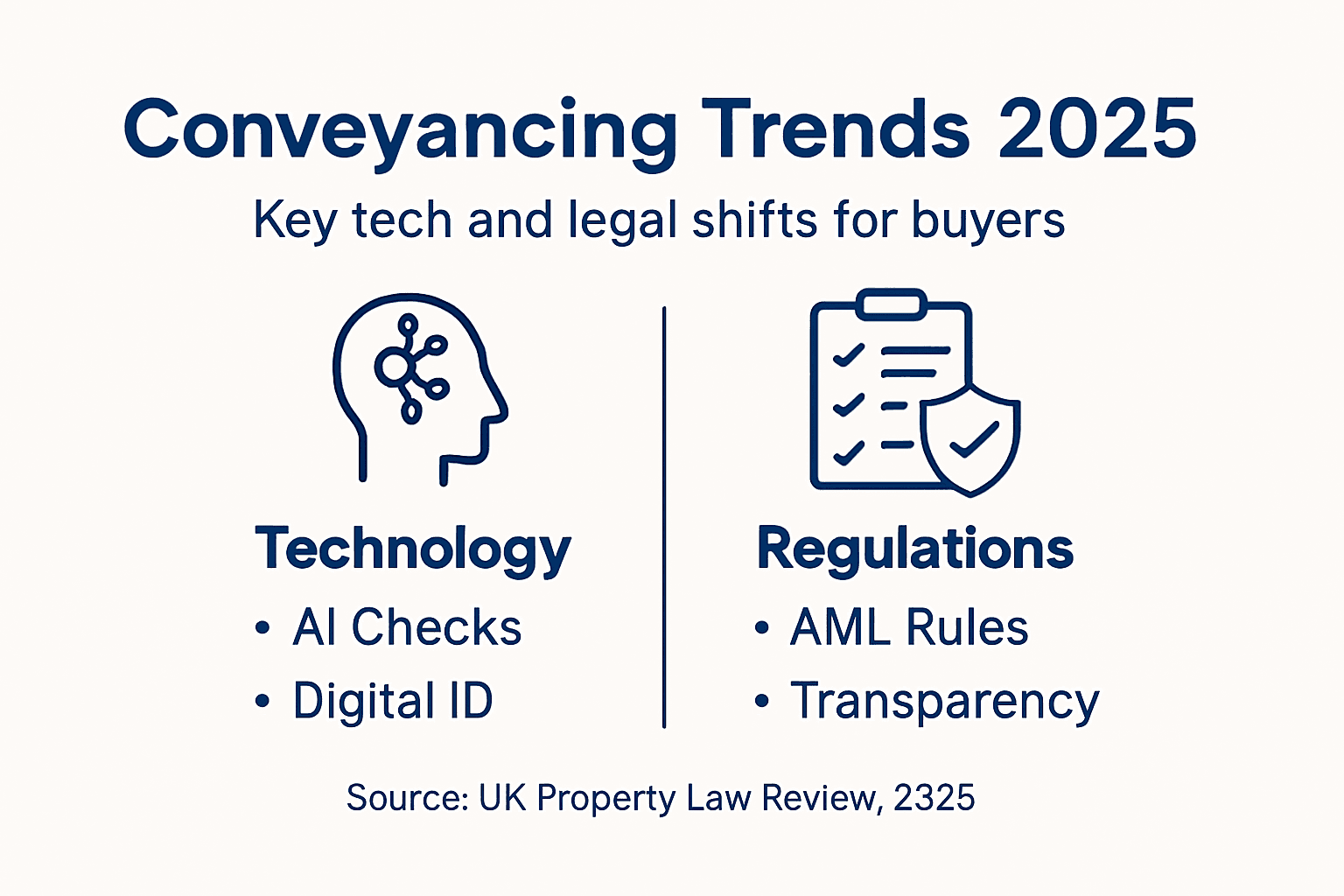
The regulatory environment is increasingly emphasising digital transformation and transparency. Conveyancing professionals must now demonstrate robust systems for protecting client information, managing digital transactions, and ensuring the integrity of property transfer processes. These changes reflect a broader move towards more accountable and technologically advanced legal services.
Pro tip: Always request a detailed compliance report from your conveyancer to understand how they meet the latest regulatory standards and protect your interests.
Shifts in Conveyancing Fees and Service Models
The conveyancing landscape in 2025 is undergoing a radical transformation, with traditional fee structures and service delivery models being reimagined to meet evolving client expectations and technological advancements. Property buyers are now experiencing a more dynamic, transparent, and technology-driven approach to legal services.
Key changes in service models include:
- Hybrid service delivery combining technology and human expertise
- Flexible pricing structures
- Scalable legal support models
- Transparent fee breakdowns
Conveyancing market consolidation is reshaping how legal services are delivered, with smaller high street firms increasingly merging or being acquired by larger, tech-enabled operators. This trend reflects a broader shift towards more efficient, cost-effective service models that can adapt quickly to changing market demands.
Technology is driving significant changes in fee structures, enabling more transparent and flexible pricing options. Fixed-fee models are becoming increasingly sophisticated, with prices tailored to the complexity of individual property transactions. Many firms now offer modular services, allowing clients to choose specific levels of support and pay accordingly.

The emergence of tech-powered hybrid teams is revolutionising conveyancing services. These teams combine in-house legal expertise with strategic outsourcing, creating more agile and responsive service models. This approach allows firms to maintain high-quality standards while reducing overhead costs, ultimately providing better value for clients.
Here’s an overview of emerging conveyancing fee models and their implications:
| Service Model | Typical Pricing Approach | Benefits for Clients |
|---|---|---|
| Fixed-Fee | Set price per transaction | Predictable costs; no surprises |
| Modular Services | Pay for selected components | Customisable; matches complexity |
| Hybrid Delivery | Combined tech and expertise | Faster service; higher accuracy |
| Scalable Support | Variable pricing by volume | Supports frequent transactions |
Pro tip: Request a detailed breakdown of fees and service models before committing to a conveyancing firm, ensuring you understand exactly what services are included.
Risks, Pitfalls, and Buyer Protection Trends
The conveyancing landscape of 2025 demands unprecedented vigilance from property buyers, with evolving risks requiring sophisticated protection strategies. Property transactions have become increasingly complex, necessitating a more proactive approach to identifying and mitigating potential challenges.
Critical risks buyers must navigate include:
- Cybersecurity vulnerabilities in digital transactions
- Identity verification challenges
- Fraudulent property transfer attempts
- Complex legal compliance requirements
Heightened regulatory scrutiny is transforming risk management in conveyancing. Professionals are now implementing more robust compliance measures, conducting comprehensive firm-wide risk assessments to protect clients from potential legal and financial complications.
Cybersecurity has emerged as a paramount concern in property transactions. Sophisticated digital platforms now employ advanced encryption and multi-factor authentication to protect sensitive client information. Machine learning algorithms continuously monitor transactions for suspicious activities, providing an additional layer of security against potential fraud.
Buyers are increasingly protected by more comprehensive legal frameworks that mandate detailed due diligence. Conveyancers must now demonstrate rigorous verification processes, including enhanced checks on property ownership, potential legal encumbrances, and the financial capacity of all parties involved in the transaction.
Pro tip: Request a comprehensive risk assessment report from your conveyancer, detailing specific protections implemented to safeguard your property transaction.
Navigate Conveyancing Trends in 2025 with Confidence and Save
The conveyancing landscape is evolving fast in 2025 with new technologies, legal reforms, and shifting fee models transforming the way property transactions happen across the United Kingdom. If you are concerned about cybersecurity risks, confusing pricing, or how AI and blockchain might impact your home purchase, you are not alone. Buyers today face challenges such as complex regulatory requirements and the need for transparent, fixed-fee services.
At Conveyancing-Solicitor.co.uk, we understand these challenges and offer tailored solutions to make your property transaction clear, fast and affordable. Our platform connects you instantly with SRA- and CLC-regulated conveyancers who combine expert legal support with modern technology to protect your interests every step of the way. By using our Instant Quote service, you can get fixed-fee quotes that could save you up to 75% on legal fees compared to traditional pricing models.
Don’t risk delays or hidden costs when buying property in 2025. Take control of your conveyancing journey by exploring how advanced digital conveyancing services can streamline the process while keeping fees transparent. Ready to ensure your property investment is protected with trusted, five-star conveyancers? Start now by requesting your free, no-obligation quote from our verified network at Conveyancing-Solicitor.co.uk.
Frequently Asked Questions
What technological changes are expected in conveyancing by 2025?
Conveyancing by 2025 is expected to see increased digital integration, enhanced artificial intelligence for search processes, and the use of blockchain technology for secure transaction records. These advancements will lead to more efficient and transparent property transactions.
How can buyers protect themselves from conveyancing risks in 2025?
Buyers can protect themselves by requesting comprehensive risk assessments from their conveyancer, including information on cybersecurity measures, identity verification processes, and due diligence checks on property ownership and encumbrances.
What should be included in a transparent fee structure for conveyancing?
A transparent fee structure for conveyancing should include a detailed breakdown of costs associated with the transaction, such as fixed fees, any variable fees based on the complexity of the case, and an outline of the services provided at each pricing level.
Why is understanding regulatory changes important for property buyers?
Understanding regulatory changes is crucial for property buyers as these reforms enhance security and compliance in property transactions. Buyers can ensure their conveyancer meets the latest standards and protects their interests throughout the process.
Recommended
- Conveyancing Process Explained: 2025 Impact on Buyers – Conveyancing Solicitor
- The Future of Conveyancing: Trends and Innovations to Watch – Conveyancing Solicitor
- Benefits of Conveyancing in 2025 for UK Buyers – Conveyancing Solicitor
- What to Expect from Conveyancing Fees in 2025: A Comprehensive Guide – Conveyancing Solicitor
