



Changing title deeds for a shared ownership property in London often brings confusion about paperwork, legal terms and surprise costs. For first-time buyers, understanding each step matters because mistakes can undo weeks of progress. This guide breaks down the process, focusing on gathering the right documents and recognising what each key party does—helping you move forward with confidence and keep your costs under control.
Table of Contents
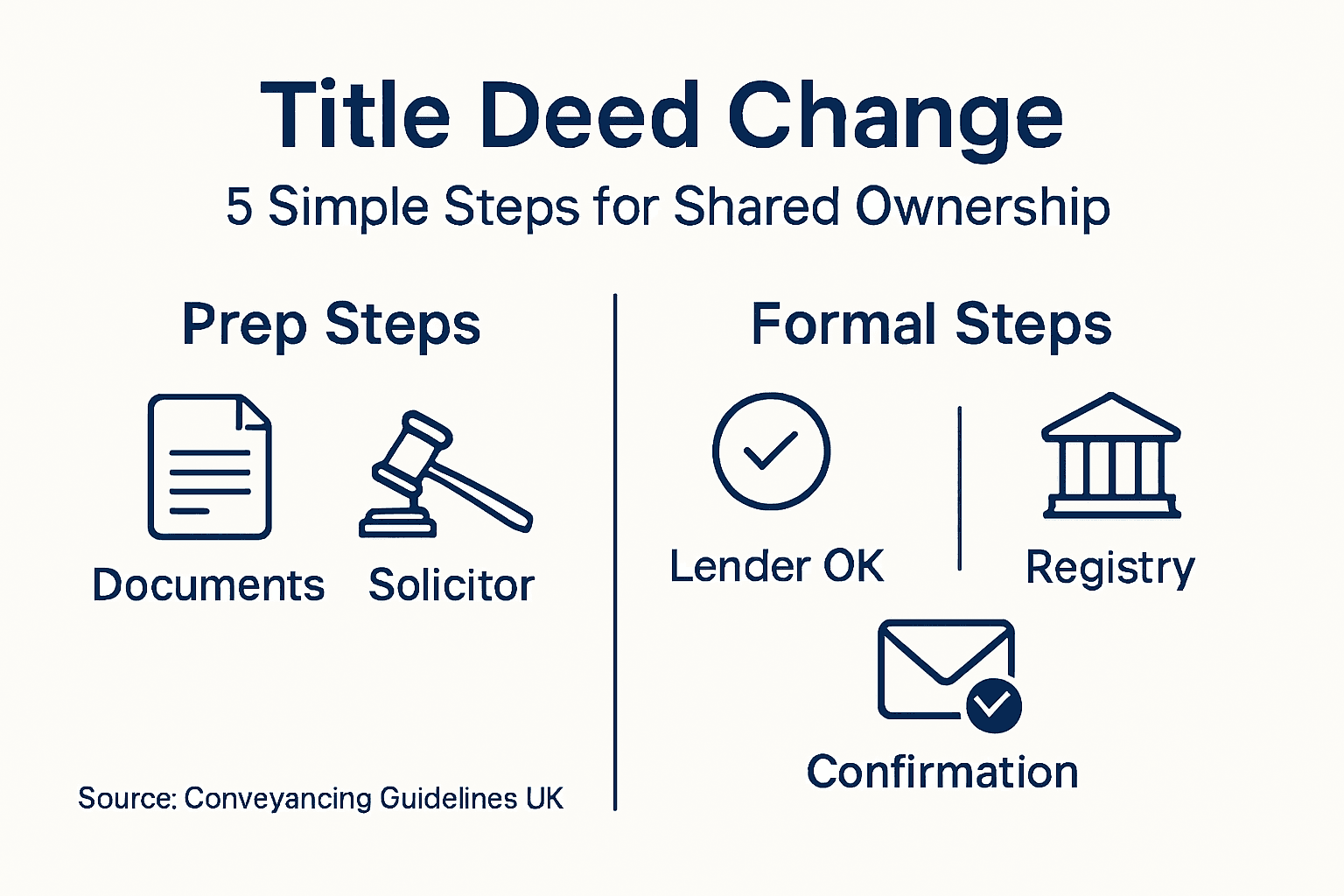
- Step 1: Gather Required Documents And Property Details
- Step 2: Instruct A Qualified Conveyancing Solicitor
- Step 3: Verify Mortgage Lender Approval And Restrictions
- Step 4: Submit Your Application To The Land Registry
- Step 5: Confirm Successful Change And Receive New Title Deeds
Quick Summary
| Key Point | Explanation |
|---|---|
| 1. Gather Essential Documents | Before changing title deeds, collect lease agreements, mortgage documents, and identity verification for a smooth process. |
| 2. Engage a Qualified Solicitor | Instruct a solicitor specialising in shared ownership to handle legalities and prevent costly mistakes during the transfer. |
| 3. Obtain Lender Approval | Contact your mortgage lender for approval and understand restrictions, as they hold legal interest until the mortgage is cleared. |
| 4. Submit Application to Land Registry | Allow your solicitor to prepare and submit the application, ensuring compliance with all requirements for timely processing. |
| 5. Confirm and Store New Title Deeds | After approval, receive and securely store updated title deeds, as they are crucial for future transactions involving the property. |
Step 1: Gather required documents and property details
Changing title deeds for your shared ownership property requires collecting specific legal paperwork and ownership information. This step forms the foundation of your transfer, so getting it right from the start saves time and prevents delays later. Spend time organising everything properly before your solicitor starts the formal process.
Start by locating your current lease agreement and any mortgage documents linked to your property. These show your existing stake in the home and outline the terms you’re operating under. You’ll need to verify your current ownership percentage and understand how much of the property you own versus rent. Next, gather evidence of your identity, such as a passport or driving licence, along with proof of your address from utility bills or bank statements dated within the last three months. The Land Registry requires this verification before processing any transfer of ownership.
If you’re purchasing additional shares through staircasing, collect details of your purchase agreement with the housing association. Your solicitor will need lease agreements and mortgage details to understand your complete financial picture and confirm what shares you’re buying. Gather documentation showing the current property valuation, the number of shares being transferred, and any insurance information held by the freeholder. Create a simple checklist as you collect each item—it’s far easier to spot what’s missing now than to chase documents later when your solicitor needs them urgently. Once you’ve assembled everything, provide copies to your conveyancing solicitor so they can review what else they might need from the housing association or other parties involved in the transfer.
Tip for you Keep photocopies of everything you submit to your solicitor and store originals in a safe place, then request them back once the transfer completes.
Here’s a helpful overview of key parties involved in the title deed change process and their responsibilities:
| Party Involved | Role in Title Deed Change | Typical Actions Undertaken |
|---|---|---|
| Property Owner | Initiates transfer, provides documents | Assembles paperwork, requests solicitor |
| Conveyancing Solicitor | Manages legal process | Reviews documents, submits forms |
| Mortgage Lender | Approves transfer, sets conditions | Confirms consent, lists restrictions |
| Housing Association | Grants share purchase/transfer consent | Supplies agreements, confirms valuation |
| Land Registry | Registers new ownership | Processes application, issues new deeds |
Step 2: Instruct a qualified conveyancing solicitor
Once you have gathered your documents, the next step is to formally engage a conveyancing solicitor to handle the legal side of changing your title deeds. This is not optional for shared ownership properties. The complexity of transferring ownership, managing leasehold arrangements, and ensuring the Land Registry processes everything correctly makes professional support essential. A qualified solicitor takes this burden off your shoulders and significantly reduces the risk of costly mistakes.

Start by researching solicitors who specialise in shared ownership conveyancing. Look for firms that are regulated by the Solicitors Regulation Authority (SRA) or Council for Licensed Conveyancers (CLC), as this guarantees they meet strict professional standards. When you contact a solicitor, explain your situation clearly. Tell them you own a shared ownership property and need to change the title deeds, whether through staircasing, gifting shares, or transferring equity. Ask for a fixed fee quote upfront so there are no surprises later. Many solicitors will ask you to provide copies of your documents at this stage, so have those ready to send over. Once you have chosen your solicitor, you will sign a letter of engagement or terms of business that sets out what they will do, their fees, and the timeline. This formally instructs them to act on your behalf. At this point, your solicitor will review your documents, request anything additional they need from the housing association or mortgage lender, and begin the process of preparing the necessary forms. The Land Registry’s legal representation guidance emphasises the importance of having professional support to manage registration applications and ensure compliance with legal frameworks.
Choose a solicitor who communicates clearly and is happy to explain what is happening at each stage. You want someone who treats your questions seriously and keeps you updated without jargon. Once instructed, your solicitor becomes your point of contact for all legal matters relating to your property transfer, leaving you free to focus on other aspects of the move.
Professional tip Request a detailed timeline from your solicitor showing when each step will happen, as this helps you plan ahead and manage expectations around when the transfer will complete.
The following table summarises common reasons for changing title deeds and their associated implications:
| Reason for Change | Typical Implications | Extra Steps Often Required |
|---|---|---|
| Staircasing Purchase | Increased ownership percentage | Updated valuation, housing consent |
| Gifting Shares | Changes in property co-ownership | Lender approval, updated identity checks |
| Transferring Equity | Redistribution of ownership stake | Affordability proof, legal agreement |
Step 3: Verify mortgage lender approval and restrictions
Before you proceed with changing your title deeds, you need to check whether your mortgage lender approves the transfer and what conditions they have placed on the property. This step is critical because your lender has a legal interest in the property until the mortgage is paid off, and they can block transfers if they believe the change poses a risk to their security. Skipping this step can cause serious delays or even halt the entire process, so tackle it early.
Contact your mortgage lender directly and explain what you are doing. Whether you are staircasing to buy more shares, gifting shares to a family member, or transferring equity to a partner, your lender needs to know. Ask them for written confirmation that they approve the transfer and request a list of any restrictions or conditions they impose. Most lenders require landlord consent before you can transfer ownership or sell, and some restrict staircasing without prior approval. Your lender may also impose conditions such as requiring you to maintain buildings insurance or ensuring the property remains your main residence. Get all of this in writing so your solicitor can review it and incorporate it into the transfer process. When mortgage lenders approve shared ownership transfers, they often need to be satisfied about the affordability of any new arrangement, so be prepared to provide evidence of your financial stability if asked.
Once you have written approval from your lender, provide copies to your solicitor immediately. They will check the restrictions against the transfer you are planning and flag any issues. In some cases, mortgage deed restrictions may affect how the transfer can proceed, so your solicitor needs to understand these fully before drafting the necessary forms. If your lender has imposed conditions that would prevent the transfer you want, your solicitor can sometimes negotiate with them to amend these terms. However, this takes time, so the sooner you raise it, the better. Your lender’s approval and written confirmation of restrictions are essential documents that your solicitor will reference throughout the conveyancing process.
Practical tip Keep all correspondence with your lender in one folder and share it with your solicitor within 48 hours of receiving it, as delays in providing this information can push back your completion date.
Step 4: Submit your application to the Land Registry
With your documents gathered, your solicitor instructed, and lender approval in place, you are ready to submit your application to change the title deeds at HM Land Registry. This is the formal step that officially registers your new ownership arrangement on the public record. Your solicitor will handle the submission on your behalf, but understanding what happens at this stage helps you follow the process and know what to expect.
Your solicitor will prepare the necessary application forms, which vary depending on your type of transfer. For a full transfer of shares, form TR1 is typically used, whilst staircasing applications use different documentation. Your solicitor will complete these forms with all the details from your documents, your lender’s approval, and the housing association’s consent. They will then compile a supporting bundle that includes your original title deeds, certified evidence of identity, proof of ownership, and any other documents the Land Registry requires. The application must include payment of the Land Registry fee, which depends on the value of the property and the nature of the transfer. Once everything is ready, your solicitor submits the complete application to HM Land Registry on your behalf. This is significantly safer than attempting it yourself, as errors in the forms or missing documents can cause rejections and lengthy delays. Land Registry applications require careful preparation to ensure all supporting documentation is correct and complete.
After submission, the Land Registry processes your application. This typically takes several weeks, though the exact timescale depends on how busy the office is and whether they need to ask questions about your application. Your solicitor will monitor progress and communicate with the Land Registry if needed. You will receive regular updates from your solicitor about where things stand. Once the Land Registry approves the application, they update the official register and issue new title documents reflecting the change of ownership. This is when the transfer is officially complete. Your solicitor will send you copies of the updated title deeds and explain any changes to your ownership details. Throughout this step, your solicitor acts as the intermediary between you and the Land Registry, handling all the technical requirements and ensuring nothing falls through the cracks.
Helpful tip Ask your solicitor for an estimated completion date once the application is submitted, as this gives you a concrete target and helps you plan any property-related arrangements with greater certainty.
Step 5: Confirm successful change and receive new title deeds
Once the Land Registry has processed and approved your application, you will receive confirmation that the change has been registered successfully. This is the moment when your new ownership arrangement becomes official and legally binding. Your solicitor will notify you as soon as confirmation arrives, and you will receive copies of the updated title deeds showing your new ownership details. Understanding what to expect during this final stage helps you know when everything is truly complete.
When the Land Registry updates the register, they issue new title deeds that reflect the change in ownership. These documents are sent to your solicitor, who will review them carefully to ensure all the details are correct. Your solicitor will check that your ownership percentage, the property address, any restrictions or charges, and the names of all registered proprietors match what was agreed. This verification step is crucial because mistakes on the title register can cause problems later if you decide to sell or remortgage. Your solicitor will send you a copy of the updated register and explain any changes to your ownership status. If you staircased, the new deeds will show your increased share percentage. If you gifted equity to a partner, the deeds will reflect both owners. New title deeds are issued once the Land Registry completes processing and updates the official register with your changes.
Store your new title deeds in a safe place, such as a safe deposit box or a secure home safe. You will need them if you ever sell the property, remortgage, or transfer ownership again. Keep copies with your other important property documents and ensure your family knows where they are kept. Your solicitor can also hold them for safekeeping if you prefer. Once you have received and reviewed your new title deeds, the process of changing your title deeds is officially complete. Congratulations. You now own your shared ownership property under the new arrangement, and everything is recorded on the official register at HM Land Registry.
Essential tip Request a certified copy of the updated register from the Land Registry through your solicitor if you need proof of ownership for any future transactions, as certified copies carry official weight with lenders and other parties.
Simplify Changing Your Shared Ownership Title Deeds with Expert Conveyancing Support
Changing your title deeds for a shared ownership property involves detailed steps such as gathering vital documents, securing mortgage lender approval, and submitting accurate applications to the Land Registry. This process can quickly become overwhelming without professional guidance. At Conveyancing-Solicitor.co.uk, we connect you with vetted, SRA- or CLC-regulated solicitors who specialise in shared ownership conveyancing, making your property transfer straightforward and stress free.
Don’t let legal complexities or delays hold you back. Benefit from instant fixed-fee quotes, expert advice, and local or nationwide conveyancing firms dedicated to your case. Whether you are staircasing, gifting shares, or transferring equity, our trusted conveyancers handle every detail with precision, keeping you informed at every stage.
Ready to take the next step? Discover how easy changing your title deeds can be by getting a free conveyancing quote today. Find your perfect legal partner and experience fast, transparent service that puts your shared ownership goals first. Explore more about shared ownership conveyancing and unlock expert support now.
Frequently Asked Questions
What documents do I need to change title deeds for my shared ownership?
To change title deeds for your shared ownership, you need your current lease agreement, mortgage documents, proof of identity, and recent proof of address. Start by gathering these documents and any evidence related to the shares you plan to purchase or transfer.
How do I find a qualified conveyancing solicitor for changing title deeds?
Begin by researching solicitors who specialise in shared ownership conveyancing. Contact them to explain your situation, ensuring they can provide a fixed fee quote for the service before formal engagement.
How long does it take to process a title deed change after submission?
Once your application is submitted to HM Land Registry, it typically takes several weeks for the processing to complete, depending on their workload. Keep in touch with your solicitor for regular updates and ask for an estimated completion date to manage your expectations.
What should I do if my mortgage lender has restrictions on my title deed transfer?
If your mortgage lender imposes restrictions, contact them for written confirmation and a list of any conditions. Provide this information to your solicitor immediately to identify any potential issues and explore ways to address the restrictions in your transfer process.
How do I confirm that the change to my title deeds has been successful?
After your application has been processed, you will receive confirmation from HM Land Registry that your change has been registered. Make sure to review the updated title deeds carefully to ensure all details are correct before storing them securely.
Recommended
- How to Handle Conveyancing for a Shared Ownership Property – Conveyancing Solicitor
- Understanding Shared Ownership Conveyancing: A Guide – Conveyancing Solicitor
- Property Title Deeds Explained: What Every UK Buyer Needs to Know – Conveyancing Solicitor
- Shared Ownership: Unlocking Affordable UK Homeownership – Conveyancing Solicitor
