



Over 90 percent of British home buyers say trust in legal professionals is vital when purchasing property. Sorting through legal jargon and fee structures can feel overwhelming, especially on your first home purchase in the United Kingdom. Understanding what SRA regulation means helps you choose a solicitor who offers not just transparency, but real consumer protection and financial peace of mind during every step of your property deal.
Table of Contents
- What Does SRA Regulated Mean?
- Types of SRA Regulated Professionals
- Key SRA Regulations and Principles
- How SRA Regulation Protects Clients
- Risks, Costs, and Alternatives to SRA Regulation
Key Takeaways
| Point | Details |
|---|---|
| SRA Regulation Ensures Standards | Solicitors must adhere to strict professional standards protecting client interests. |
| Client Protection Mechanisms | SRA provides compensation funds and professional indemnity insurance for consumer security. |
| Accountability for Legal Professionals | There are clear processes for complaints and disciplinary actions against solicitors who breach standards. |
| Investment in Quality Services | Choosing SRA-regulated solicitors may involve higher costs, but it guarantees enhanced protection and integrity in services. |
What Does SRA Regulated Mean?
When searching for a solicitor to handle your home purchase, you’ll frequently encounter the term SRA Regulated. But what exactly does this designation mean? The Solicitors Regulation Authority (SRA) serves as the independent regulatory body responsible for solicitors and law firms across England and Wales, ensuring professional standards and client protection.
Being SRA regulated means a solicitor or law firm must comply with stringent professional standards that safeguard consumer interests. These standards cover multiple critical areas, including:
- Professional conduct and ethical behaviour
- Competence and ongoing professional education
- Client protection mechanisms
- Transparent business operations
- Financial accountability
- Maintenance of professional indemnity insurance
The significance of SRA regulation extends far beyond a simple bureaucratic label. It represents a comprehensive framework designed to maintain public trust in legal services. Solicitors operating under SRA regulation must adhere to robust rules that prioritise client interests, ensuring transparency, integrity, and high-quality legal support throughout your property transaction.
For first-time homebuyers, choosing an SRA-regulated solicitor provides critical reassurance. These professionals are held to rigorous professional standards, with clear accountability mechanisms in place. If something goes wrong, the SRA offers structured complaint processes and potential compensation routes, giving you additional protection during your property purchase.
Here’s a summary of how SRA regulation impacts different aspects of legal services for homebuyers:
| Aspect of Service | Impact of SRA Regulation | Benefit to Homebuyers |
|---|---|---|
| Professional Standards | Mandatory codes and best practices | Consistent quality and ethical behaviour |
| Financial Safeguards | Strict client fund regulations | Protection from financial losses |
| Accountability Mechanisms | Complaint and disciplinary process | Clear route if problems arise |
| Consumer Protection | Compensation fund and insurance | Security against professional negligence |
Top Tip: Always verify a solicitor’s SRA registration number on the official SRA website before engaging their services, ensuring complete peace of mind during your conveyancing journey.
Types of SRA Regulated Professionals
The Solicitors Regulation Authority (SRA) oversees a diverse range of legal professionals who play critical roles in the UK legal landscape. Understanding the various types of SRA-regulated professionals helps homebuyers navigate their legal service options with confidence and clarity.
The primary categories of SRA-regulated professionals include:
- Solicitors: Traditional legal practitioners who are fully qualified and hold a practising certificate
- Registered European Lawyers (RELs): Legal professionals from European jurisdictions authorised to practice in the UK
- Registered Foreign Lawyers (RFLs): International legal professionals with specific authorisation
- Swiss Lawyers: Legal professionals from Switzerland with specific regulatory permissions
Each of these professional categories is carefully regulated to ensure they meet stringent standards of professional conduct, competence, and ethical practice. Solicitors, for instance, must complete extensive legal training, pass rigorous qualification examinations, and maintain ongoing professional development to retain their practising status.
Interestingly, SRA regulation isn’t confined to traditional law firm settings. These professionals can work across diverse environments including private law firms, in-house legal departments, freelance practices, and organisational legal teams. This flexibility allows legal professionals to serve clients in various contexts while maintaining consistent professional standards and accountability.
Pro Tip: When selecting a legal professional for your property transaction, always verify their current SRA registration status online to confirm their active regulatory standing and professional credentials.
Key SRA Regulations and Principles
The SRA’s regulatory framework is built upon a robust set of fundamental principles designed to protect clients and maintain the highest standards of legal practice. These core principles serve as the ethical backbone for all SRA-regulated professionals, ensuring integrity, transparency, and accountability in legal services.
The seven key SRA Principles encompass critical ethical standards:
- Upholding the Rule of Law: Ensuring legal processes are respected and maintained
- Acting with Integrity: Maintaining the highest standards of honest professional conduct
- Serving Client Interests: Prioritising the best interests of each client
- Maintaining Independence: Providing unbiased and objective legal advice
- Acting With Honesty: Demonstrating complete transparency in all professional interactions
- Maintaining Public Trust: Protecting the reputation of legal services
- Behaving in a Way that Supports the Administration of Justice: Contributing positively to legal processes
The SRA Standards and Regulations go beyond these principles, establishing detailed guidelines that cover every aspect of legal practice. These comprehensive regulations include specific Codes of Conduct for individual solicitors and firms, comprehensive Accounts Rules for handling client finances, and mandatory requirements for continuing professional development and competence.
For homebuyers, understanding these regulations provides crucial reassurance. They guarantee that your chosen solicitor is bound by stringent ethical standards, must act in your best interests, and is subject to robust oversight that protects your legal and financial interests throughout the conveyancing process.

Pro Tip: Request a copy of your solicitor’s professional indemnity insurance details and verify their current SRA registration to ensure complete peace of mind during your property transaction.
How SRA Regulation Protects Clients
The SRA’s regulatory framework provides comprehensive client protection through a multi-layered approach designed to safeguard legal consumers’ interests during property transactions and beyond. This protection extends far beyond simple oversight, creating a robust safety net that ensures solicitors maintain the highest standards of professional conduct.
The key client protection mechanisms include:
- Compensation Fund: Financial protection if a solicitor misappropriates client funds
- Professional Indemnity Insurance: Mandatory coverage for potential professional negligence
- Strict Financial Regulations: Comprehensive rules governing client account management
- Disciplinary Powers: Ability to investigate, fine, suspend, or disbar solicitors who breach standards
- Transparent Reporting: Public register of regulated professionals and firms
The regulatory system ensures solicitors maintain appropriate controls and systems that protect client interests throughout their legal journey. This means homebuyers can proceed with confidence, knowing multiple safeguards are in place to prevent financial misconduct, unprofessional behaviour, or potential legal complications during their property purchase.
Moreover, the SRA’s oversight goes beyond reactive protection. They proactively monitor solicitors and law firms, requiring ongoing compliance with ethical standards, continuous professional development, and transparent business practices. This approach means potential issues can be identified and addressed before they impact clients, providing an additional layer of security for vulnerable consumers engaging with legal services.
Pro Tip: Always request and review your solicitor’s SRA registration details and confirm their current professional standing before instructing them for your property transaction.
Risks, Costs, and Alternatives to SRA Regulation
The regulatory landscape for legal services involves complex considerations around protection, cost, and consumer choice. While SRA regulation provides robust safeguards, it also introduces financial and operational challenges for legal professionals and potential cost implications for clients seeking legal services.
The alternative regulatory options present a spectrum of risk and protection:
Unregulated Legal Services
- Lower initial costs
- Minimal professional oversight
- No guaranteed consumer protection
- Higher personal risk
SRA-Regulated Services
- Higher upfront costs
- Comprehensive professional standards
- Multiple consumer protection mechanisms
- Guaranteed accountability
The ongoing regulatory discussions highlight the delicate balance between maintaining professional standards and managing regulatory expenses. While unregulated services might seem financially attractive, they often lack the critical safeguards that protect consumers during complex legal transactions like property purchases.
For homebuyers, the additional cost of SRA regulation represents a crucial investment in professional integrity and personal protection. The comprehensive oversight, compensation funds, and disciplinary mechanisms provide significant peace of mind that far outweigh the marginal additional expense associated with choosing a regulated legal professional.
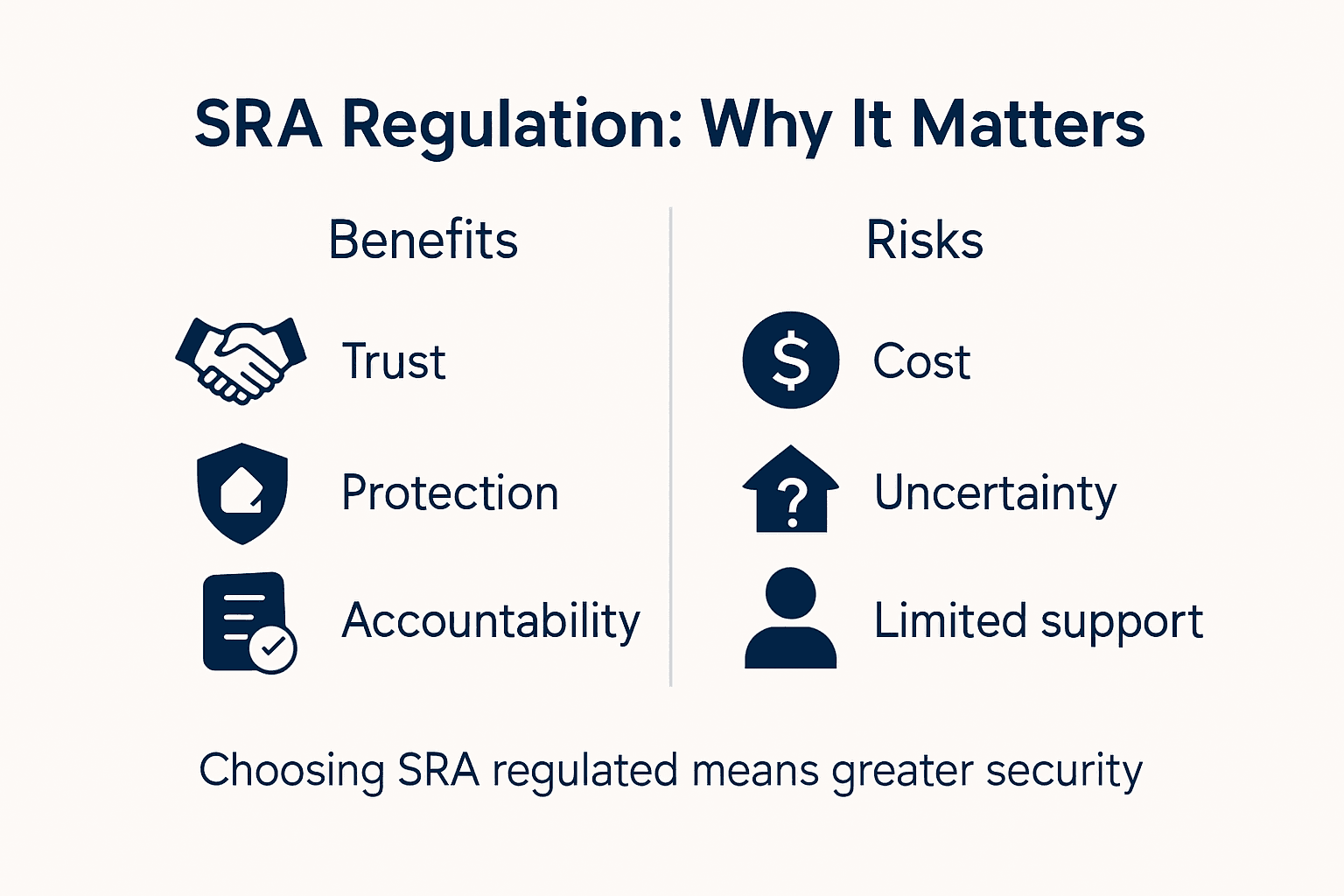
Use this table to compare the risks and benefits of SRA-regulated and unregulated legal services:
| Service Type | Protection Level | Cost Implications | Accountability Provided |
|---|---|---|---|
| SRA-Regulated | Comprehensive safeguards | Generally higher fees | Formal redress and clear complaints |
| Unregulated | Minimal safeguards | Lower upfront costs | Limited or no complaints process |
Pro Tip: Always calculate the potential long-term financial risks of using an unregulated service against the modest additional cost of working with an SRA-regulated solicitor.
Secure Your Home Purchase with Trusted SRA-Regulated Conveyancers
Choosing an SRA-regulated solicitor is one of the most important decisions you will make when buying a home. This article highlights key protections such as professional accountability, client fund safeguards and dispute resolution options that help you avoid costly risks during conveyancing. You want a conveyancer who meets these high standards and brings expert knowledge to your property transaction.
At Conveyancing-Solicitor.co.uk, our Trusted Quotes Team connects you to five-star rated solicitors and licensed conveyancers all regulated by the SRA or CLC. Our service offers transparent, fixed-fee quotes that could save you up to 75% compared to standard market fees. You benefit from local or nationwide coverage paired with fast, clear advice that takes the stress out of buying your home.
Protect yourself with a conveyancer who is fully compliant with SRA regulations. Take the next step now and compare instant fixed-price quotes from premium vetted professionals on our instant quote page. Start your secure conveyancing journey with confidence today.
Frequently Asked Questions
What does it mean for a solicitor to be SRA regulated?
SRA regulated means that a solicitor or law firm is overseen by the Solicitors Regulation Authority, ensuring they adhere to strict professional standards and ethical guidelines designed to protect clients’ interests.
Why should homebuyers choose an SRA regulated solicitor?
Choosing an SRA regulated solicitor provides homebuyers with reassurance that the solicitor adheres to high professional standards and is accountable, with mechanisms in place to protect client interests during property transactions.
What protection do SRA regulations offer to clients?
SRA regulations offer several protection mechanisms, including a compensation fund for misappropriated funds, mandatory professional indemnity insurance, and a clear complaints process for any issues that may arise.
How can I verify if my solicitor is SRA regulated?
You can verify your solicitor’s SRA registration by checking the official SRA website, where you can find their registration status and ensure they are in good standing before engaging their services.
Recommended
- Understanding the Role of a Solicitor in Selling a House – Conveyancing Solicitor
- Why You Need a Conveyancing Solicitor When Selling Your Home – Conveyancing Solicitor
- Understanding the Advantages of Using a Solicitor – Conveyancing Solicitor
- Do You Need a Solicitor to Sell a House in the UK? – Conveyancing Solicitor
