



Buying your first british home in London can feel overwhelming when you start to unravel the legal side of the process. More than 40 percent of first-time buyers admit confusion about conveyancing costs and legal paperwork. Understanding how property ownership transfers in the british system matters because small mistakes can quickly lead to lost money or stressful delays. This guide gives you clear answers on what to expect from conveyancing so you can sidestep hidden charges and make smart choices as you buy your new home.
Table of Contents
- What Conveyancing Means for Home Buyers
- The Conveyancing Journey Step by Step
- Legal Checks, Searches and Risks Explained
- Conveyancers’ Duties and Buyer Protections
- Common Mistakes and Hidden Costs to Avoid
Key Takeaways
| Point | Details |
|---|---|
| Importance of Conveyancing | Understanding the conveyancing process is crucial for home buyers to protect their investment and navigate potential financial risks. |
| Role of Conveyancers | Conveyancers are essential for overseeing legal documentation, conducting property searches, and managing financial transactions, ensuring transparency throughout the process. |
| Hidden Costs | Buyers must be aware of potential hidden costs associated with conveyancing and should request detailed, itemised fee breakdowns to avoid unexpected expenses. |
| Legal Checks | Comprehensive legal checks and searches are vital in identifying risks, such as property encumbrances and planning restrictions, safeguarding buyer interests during the transaction. |
What Conveyancing Means for Home Buyers
Conveyancing represents the comprehensive legal process of transferring property ownership from one party to another, involving intricate legal documentation and professional oversight. For home buyers, this means navigating a complex landscape of legal requirements and potential financial risks. Understanding conveyancing becomes crucial in protecting your investment and ensuring a smooth property transaction.
The primary role of conveyancing involves conducting thorough property searches, examining legal titles, managing financial transfers, and completing all necessary legal documentation. Home buyers rely on professional conveyancers to identify potential legal issues that could impact property ownership, such as boundary disputes, planning restrictions, or undisclosed property defects. This process helps mitigate risks and provides buyers with comprehensive insights into their potential property purchase.
Key aspects of conveyancing for home buyers include investigating property searches, reviewing legal documentation, coordinating with mortgage lenders, and ensuring all financial transactions comply with legal standards. Conveyancers act as intermediaries between buyers, sellers, estate agents, and mortgage providers, streamlining communication and reducing potential complications. Their expertise helps buyers understand complex legal terminology, navigate potential pitfalls, and make informed decisions about their property investment.
Pro tip: Always request a comprehensive breakdown of conveyancing fees upfront and ask about potential additional disbursements to avoid unexpected financial surprises during your property purchase.
The Conveyancing Journey Step by Step
The conveyancing journey is a structured process that transforms property ownership, requiring careful navigation through multiple legal and financial stages. The conveyancing process typically unfolds across several critical phases, each designed to protect the buyer’s interests and ensure a legally sound property transfer.
The initial stage involves instructing a professional conveyancer or solicitor who will manage the entire transaction. This professional conducts comprehensive property searches, examining local authority records, environmental data, and potential planning restrictions. These searches reveal crucial information about the property, including potential boundary issues, legal encumbrances, and any historical land use that might impact the buyer’s future ownership and property value.
Subsequent stages involve detailed legal and financial coordination, including mortgage arrangement verification, contract drafting, and formal exchange of contracts. During this phase, the conveyancer performs critical tasks such as reviewing the property’s title, checking for any legal impediments, and ensuring all financial transactions comply with current regulatory standards. This meticulous process helps mitigate risks and provides buyers with a transparent understanding of their potential property investment, typically spanning 12 to 16 weeks from initial instruction to final completion.
Pro tip: Request a comprehensive timeline and breakdown of expected conveyancing stages from your solicitor at the outset to manage your expectations and plan your property purchase effectively.
Here’s a summary of the key conveyancing stages and typical responsibilities:
| Stage of Process | Main Task | Professional Involved | Typical Timing |
|---|---|---|---|
| Initial Instruction | Appoint conveyancer or solicitor | Buyer’s solicitor | Week 1 |
| Property Searches | Conduct legal and environmental checks | Conveyancer | Weeks 2–4 |
| Mortgage & Finance | Confirm funding and review offers | Mortgage broker/solicitor | Weeks 3–6 |
| Exchange of Contracts | Finalise documentation and agreements | Both parties’ solicitors | Weeks 7–10 |
| Completion & Registration | Transfer funds and register property | Conveyancer | Weeks 11–16 |
Legal Checks, Searches and Risks Explained
Conveyancing documentation involves a comprehensive suite of legal checks designed to protect buyers from potential property risks. Conveyancing searches are critical investigations that uncover crucial information about a property’s legal status, environmental considerations, and potential limitations that could impact future ownership.

These legal checks typically encompass multiple types of searches, each serving a specific purpose in risk mitigation. Local authority searches examine planning permissions, potential infrastructure developments, and any legal restrictions affecting the property. Environmental searches investigate potential contamination, flood risks, or land stability issues that might compromise the property’s value or safety. Drainage searches reveal the property’s water and sewerage connections, highlighting potential maintenance challenges or infrastructure concerns that could affect future living conditions.
The primary objective of these comprehensive searches is to provide buyers with a transparent and detailed understanding of the property’s legal and physical characteristics. By identifying potential risks before completion, conveyancers help buyers make informed decisions, negotiate more effectively, and potentially avoid costly future complications. This meticulous approach allows buyers to understand any historical issues, planned developments, or legal encumbrances that could impact their property investment, ultimately providing peace of mind and financial protection.
Pro tip: Request a detailed breakdown of all search results from your conveyancer and carefully review each report, asking questions about any unclear or potentially concerning findings.
Compare the types of searches commonly performed in conveyancing:
| Search Type | Purpose | Example Risk Identified |
|---|---|---|
| Local Authority | Check planning and restrictions | Unauthorised development |
| Environmental | Assess contamination or flooding | Historical land pollution |
| Water & Drainage | Review sewerage connections | Inadequate waste water access |
| Chancel Repair | Uncover repair liability | Unexpected church repair costs |
Conveyancers’ Duties and Buyer Protections
Conveyancers play a pivotal role in protecting buyers throughout the property purchase journey. Detailed legal protections ensure that buyers receive comprehensive professional support, mitigating potential risks and legal complications associated with property transactions.
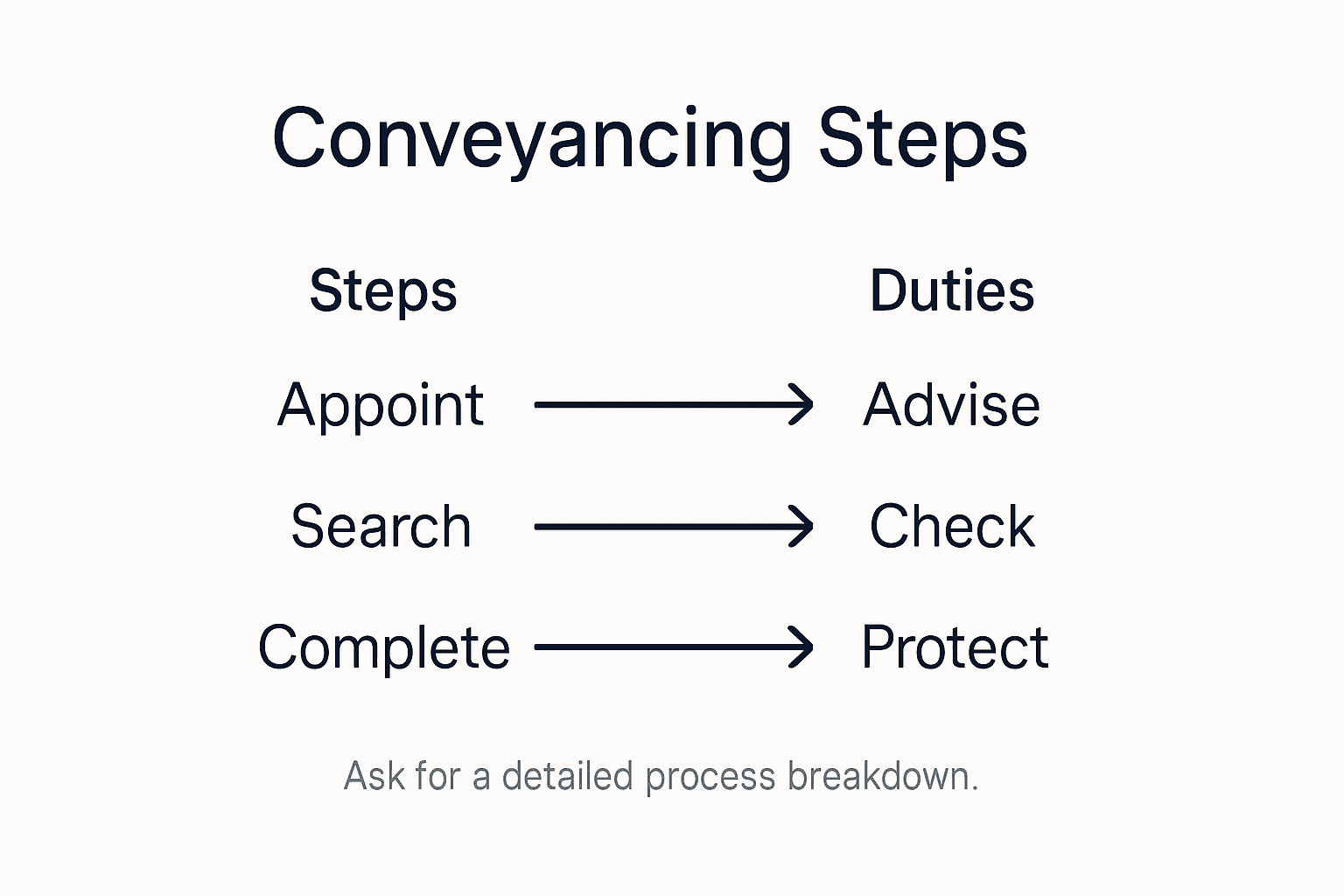
The primary duties of a conveyancer encompass multiple critical responsibilities. These include conducting thorough property searches, examining legal titles, identifying potential ownership restrictions, and verifying the property’s legal status. Conveyancers meticulously review all documentation to ensure transparency, checking for any encumbrances, planning permissions, or historical issues that might impact the buyer’s future ownership. They also manage financial transactions, providing a secure mechanism for transferring funds and protecting clients from potential fraudulent activities.
Statutory regulations mandate that conveyancers maintain rigorous professional standards, including providing clear information about fees, potential risks, and contractual obligations. This professional oversight helps buyers navigate complex legal landscapes, offering expert guidance on lease terms, property boundaries, and potential future developments. By acting as an independent intermediary, conveyancers ensure that all parties’ interests are protected, reducing the likelihood of disputes and providing buyers with confidence throughout the property purchase process.
Pro tip: Always request a detailed written breakdown of your conveyancer’s specific duties and ask about their professional indemnity insurance to understand the extent of your legal protections.
Common Mistakes and Hidden Costs to Avoid
Property buyers frequently encounter unexpected financial complications during conveyancing, making understanding hidden costs absolutely essential. These unexpected expenses can significantly impact the overall budget and potentially derail property purchase plans if not anticipated and carefully managed.
Common mistakes in the conveyancing process often stem from inadequate initial cost assessments and poor communication. Buyers might encounter unexpected disbursements such as additional search fees, legal document processing charges, and complex environmental investigation costs. Specific hidden expenses can include drainage searches, environmental risk assessments, chancel repair liability checks, and potential land registry fees that are not always transparently communicated during initial quote discussions. These unexpected costs can accumulate rapidly, potentially adding hundreds or even thousands of pounds to the overall transaction expense.
To mitigate financial risks, prospective buyers must maintain vigilant communication with their conveyancing professional and request comprehensive, itemised fee breakdowns. Critical areas requiring close scrutiny include understanding the difference between fixed and variable fees, identifying potential third-party charges, and clarifying exactly what services are included in the initial quote. Buyers should also be particularly cautious about leasehold properties, which often involve additional complex legal requirements and associated costs that can substantially increase the financial burden of property acquisition.
Pro tip: Request a detailed, written breakdown of all potential conveyancing fees and disbursements before signing any agreements, and ask your solicitor to explain each potential additional charge in clear, straightforward language.
Simplify Your Conveyancing to Save Time and Money
Navigating the complex world of conveyancing can feel overwhelming, especially when facing hidden costs, lengthy timelines, and legal jargon. This article outlined key challenges home buyers encounter, such as understanding legal searches, managing financial transactions, and avoiding unexpected fees. You want a conveyancing process that is transparent, affordable and hassle-free, so you can focus on moving into your new home with confidence.
At Conveyancing-Solicitor.co.uk, we connect you instantly with trusted, SRA- and CLC-regulated conveyancers offering fixed fees that could save you up to 75% compared to traditional legal costs. Our nationwide network of expert conveyancers ensures you get clear advice on searches, contract exchanges and completion details to avoid common pitfalls. If you are seeking to manage conveyancing fees, avoid delays and gain peace of mind, start with our free quote tool today.
Get a fast, fixed-fee quote from top-rated conveyancers who understand the full conveyancing journey. Act now to take control of your home purchase and avoid unexpected legal costs by visiting Get an Instant Conveyancing Quote. Discover how easy and affordable conveyancing can be when you choose experts who put your needs first.
Frequently Asked Questions
What is the conveyancing process when buying a house?
The conveyancing process involves several stages including appointing a conveyancer, conducting property searches, reviewing legal documents, and completing financial transactions to ensure a smooth property transfer.
How can a conveyancer help save time during the house buying process?
A conveyancer streamlines communication between all parties involved, manages all necessary documentation, and ensures compliance with legal requirements, significantly reducing delays and helping expedite the property transaction.
What are the potential risks of not using a conveyancer when buying a property?
Not using a conveyancer can expose buyers to legal pitfalls, such as undisclosed property issues, unclear title rights, and potential financial fraud, leading to costly complications and delays.
What are common hidden costs I should be aware of in the conveyancing process?
Common hidden costs can include additional search fees, drainage investigation fees, environmental assessments, and disbursements not clearly listed in the initial quote, all of which can add significant expenses to the overall purchase price.
Recommended
- Why You Need a Conveyancing Solicitor When Selling Your Home – Conveyancing Solicitor
- The Role of Conveyancers in Property Transactions – Conveyancing Solicitor
- The Step-by-Step Process of Conveyancing for First-Time Buyers – Conveyancing Solicitor
- Role of Conveyancer in Property Purchase – Why It Matters – Conveyancing Solicitor
