



Looking for your first place to call home in the UK brings plenty of excitement, but it can quickly turn stressful when you are faced with the legal side of buying property. Many first-time buyers struggle with confusing steps, unclear costs, and the worry of making expensive mistakes. This guide offers clear guidance and fixed-fee quotes that help you understand your conveyancing options, compare trusted professionals, and set your expectations for a straightforward start to your property journey.
Table of Contents
- Step 1: Clarify Your Conveyancing Needs
- Step 2: Research Approved And Regulated Solicitors
- Step 3: Compare Quotes And Service Options
- Step 4: Check Client Reviews And Track Records
- Step 5: Verify Credentials And Fee Transparency
- Step 6: Select Your Solicitor And Start The Process
Quick Summary
| Essential Insight | Detailed Explanation |
|---|---|
| 1. Define your conveyancing needs | Understanding your specific situation is crucial. Identify the transaction type, property details, and any unique circumstances before reaching out to solicitors. |
| 2. Research regulated solicitors | Ensure the solicitor is regulated by the SRA or CLC. This guarantees compliance with professional standards and offers legal protection in case of issues. |
| 3. Compare quotes comprehensively | Gather quotes from multiple solicitors and ensure you compare services included, not just pricing. This helps you understand the best value for your needs. |
| 4. Assess client reviews carefully | Read genuine client feedback to gauge service quality and communication. Focus on recent reviews for an accurate portrayal of the solicitor’s current performance. |
| 5. Verify credentials and fee transparency | Confirm the solicitor’s qualifications and ensure fee structures are clear. Written documentation should detail all costs to avoid surprises later on. |
Step 1: Clarify your conveyancing needs
Before you start ringing up solicitors or comparing quotes, take a step back and understand exactly what you need from your conveyancing process. This might sound straightforward, but many first-time buyers skip this crucial groundwork and end up confused or disappointed later. Getting clear on your specific situation now saves time, money, and stress down the line.
Start by identifying the type of transaction you are undertaking. Are you buying your first property, or is this your second or third? Are you purchasing a flat, a house, a leasehold property, or a freehold? Each of these scenarios requires slightly different expertise and approaches. A solicitor experienced in leasehold transactions, for instance, will flag issues you might not know about, such as ground rent escalation clauses or service charge disputes. Similarly, understanding the role of a conveyancer helps you recognise what specific skills matter most for your situation. Are you buying with a mortgage or paying cash? Is this a new build or an older property? These details shape what searches need conducting, what checks are required, and how much time the process typically takes.
Think about your budget constraints and timeline expectations as well. How much can you realistically spend on legal fees? Do you need the conveyancing wrapped up by a specific date, or are you flexible? Some properties require additional searches or surveys due to their location or condition, which affects both cost and speed. If you are buying a property in a flood risk area, near a railway line, or in a conservation area, expect more searches and potentially higher fees. Writing down these parameters gives you a clear picture of what “good” conveyancing looks like for your specific needs.
You should also note whether you have any unusual circumstances involved. Are you a first-time buyer receiving a gifted deposit? Are you going through a divorce where property division is involved? Are you buying with someone else and need to understand joint ownership implications? Are you assuming existing ground rent obligations on a leasehold? These situations demand solicitors with specialist knowledge, not just general experience. Once you have clarified all of this, you will know exactly what questions to ask potential solicitors and what red flags to spot.
Here is a quick comparison of conveyancing for different property types:
| Property Type | Typical Challenges | Required Specialist Checks | Common Extra Costs |
|---|---|---|---|
| Leasehold flat | Lease details, ground rent clauses | Service charge dispute review | Leasehold enquiry fees |
| Freehold house | Land boundaries | Flood or railway proximity | Additional surveys |
| New build | Developer contract complexity | Warranty document scrutiny | Extended searches |
| Older property | Potential structural issues | Historic planning permissions | Condition surveys |
Pro tip: Write a one-page summary of your property details, purchase timeline, budget ceiling, and any special circumstances, then keep it handy when speaking to solicitors. This forces you to be specific, helps you compare responses consistently, and ensures you do not accidentally omit important information.
Step 2: Research approved and regulated solicitors
Now that you know what you need, the next crucial move is finding solicitors who are properly regulated and approved to handle your transaction. Regulation is not just a bureaucratic box to tick. It is your legal protection. A regulated solicitor must follow strict professional standards, maintain insurance to cover client funds, and comply with codes of conduct that exist to protect you. If something goes wrong, you have recourse through professional oversight bodies. An unregulated or rogue operator leaves you with far fewer safeguards.
Start by checking whether a solicitor is regulated by the Solicitors Regulation Authority (SRA) or the Council for Licensed Conveyancers (CLC). These are the two main bodies responsible for overseeing conveyancing professionals in England and Wales. The SRA regulates traditional solicitors, whilst the CLC regulates specialist licensed conveyancers. Both sets of professionals can deliver excellent conveyancing work, so this is not about choosing one over the other. What matters is that whoever you hire is on one of these registers. You can verify this instantly. Use the SRA’s online register to search for solicitors by name or firm, and you will see their status, any disciplinary history, and their areas of accreditation. Similarly, the Law Society’s Find a Solicitor database provides a searchable list of SRA-regulated solicitors and allows you to check their specialisations and whether they are accredited for conveyancing. This transparency means you can verify credentials before you even pick up the phone.
When you search for a solicitor online, look beyond just the regulation tick. Check whether they hold accreditation or recognised expertise in conveyancing specifically. Some solicitors are regulated but do not specialise in property law, so they may not be the best fit for your needs. Look for reviews and complaints information. Both the SRA and CLC websites show whether solicitors have faced disciplinary action or upheld complaints. A clean record does not guarantee perfection, but it is a good sign. You should also confirm that the firm carries professional indemnity insurance, which protects you if something goes seriously wrong during the transaction. Regulated firms must carry this, so it should be freely stated on their website or during your first conversation. Once you have narrowed down to firms that are properly regulated, accredited, and have a track record you are comfortable with, you can move forward with confidence knowing you are dealing with professionals held accountable by law.
Below is a summary of what to expect from regulated versus unregulated solicitors:
| Criteria | Regulated Solicitor | Unregulated Operator |
|---|---|---|
| Professional Standards | Strict code enforced by SRA/CLC | No mandatory standards |
| Insurance Cover | Client funds protected | No automatic protection |
| Complaint Recourse | Oversight bodies investigate issues | Limited or no recourse |
| Credentials Verification | Public registers available | Difficult to verify legitimacy |
Pro tip: Before contacting any solicitor, spend ten minutes checking their SRA or CLC registration and reading any available reviews or testimonials. This five-minute filter eliminates unsuitable firms quickly and saves you time on calls with professionals who do not meet your basic criteria.
Step 3: Compare quotes and service options
Once you have identified regulated solicitors who could handle your conveyancing, the next step is to gather quotes and compare what each firm actually offers. This is where many first-time buyers make mistakes. They focus solely on price and miss critical differences in service quality, speed, or what is actually included in the fee. A cheap quote that takes three months to complete is far worse than a slightly pricier option that finishes in six weeks. Getting this comparison right ensures you pick the solicitor who genuinely offers the best value for your situation, not just the lowest number.
Request quotes from at least three solicitors. Give each one exactly the same information about your property and transaction so the quotes are genuinely comparable. Most regulated firms will provide a fixed fee quote that covers their legal work plus an estimate of disbursements, which are third party costs such as searches, Land Registry fees, and survey costs. Ask each solicitor to break down what is included in their fee and what falls under disbursements. Some firms bundle more into their legal fee whilst others charge separately for everything. You can compare quotes more effectively by understanding this breakdown. For example, one firm might charge £800 plus £350 in disbursements, whilst another charges £950 with disbursements included. The total cost is the same, but the structure matters if your budget is tight. You can also compare conveyancing quotes from multiple providers to see how different firms price similar work and what service levels they offer.

Beyond the numbers, pay attention to what each solicitor actually promises to deliver. Will they provide regular email updates, or do you have to chase them for progress? How quickly do they respond to queries, and what are their office hours? Some firms offer fixed timescales for completion, whilst others give only rough estimates. Check whether they charge extra for particular services, such as acting for a lender or dealing with lease queries. Ask directly whether their quote covers everything you identified in Step 1, or whether there are likely to be additional costs. A solicitor who charges a clear fixed fee with minimal hidden costs gives you peace of mind and makes budgeting straightforward. You should also consider practical factors such as whether they have a local office if you prefer face to face meetings, or whether they work entirely online. First-time buyers often appreciate having someone nearby they can visit if concerns arise, though many firms now operate efficiently across the country without physical branch presence. Once you have gathered quotes, organised them by total cost, and assessed the service level each firm promises, you will have a clear basis for your decision.
Pro tip: Create a simple spreadsheet with each solicitor’s name, total fee, breakdown of costs, response time commitment, and any unique service benefits they mention. This visual comparison makes it obvious which firm offers the best combination of price and service for your needs, and you can refer back to it if you need to ask follow up questions.
Step 4: Check client reviews and track records
Numbers and credentials tell part of the story, but what past clients actually say about a solicitor tells you everything you need to know about the real experience you will receive. Before you commit to anyone, invest time in reading genuine client feedback. Reviews reveal patterns in how firms treat their customers, whether they communicate well, and crucially, whether they deliver on their promises. A solicitor with impressive qualifications but a trail of unhappy clients is far riskier than a less flashy option with consistently positive feedback.
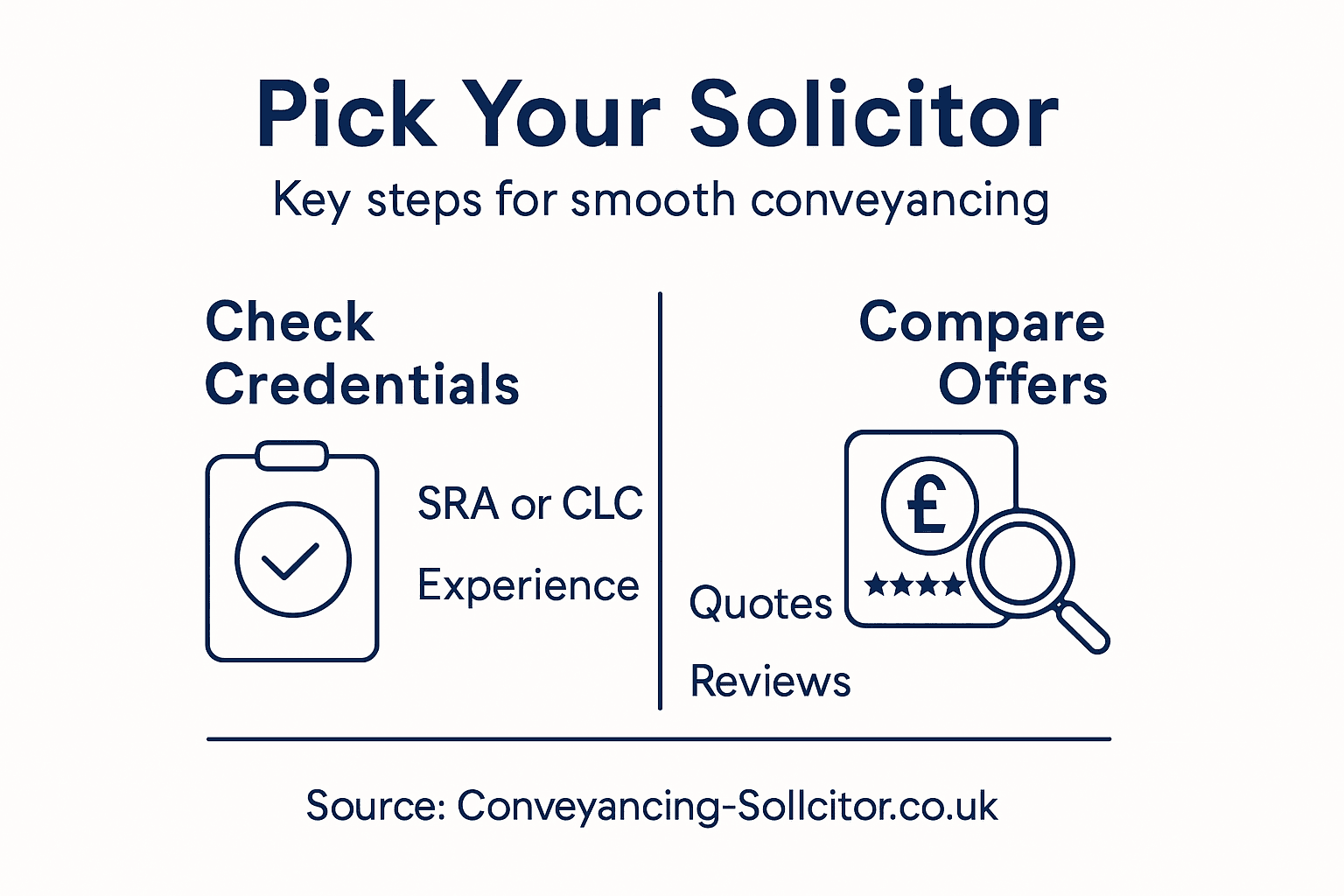
Start by searching for the firm on Trustpilot conveyancer reviews and other independent review platforms. Look at the overall rating, but then read specific reviews in detail. Pay attention to comments about communication, speed, and whether the solicitor explained costs clearly upfront. Negative reviews are valuable too. If someone complains about slow responses, that is a pattern you can expect to experience. However, one critical complaint among hundreds of positive reviews is less concerning than a consistent theme of poor service. Look at the dates of recent reviews as well. A firm that was excellent two years ago may have changed, so focus on what people are saying now. Beyond rating stars, read the actual feedback to understand whether clients felt heard, whether deadlines were met, and whether the solicitor kept them informed throughout the process. First-time buyers particularly appreciate solicitors who take time to explain what is happening at each stage, so search for comments mentioning communication or explanations.
Also check whether the firm holds professional accreditations that reflect strong track records. The Law Society’s Conveyancing Quality Scheme recognises firms meeting high standards for competence and client service, and membership demonstrates ongoing commitment to quality. Firms with CQS accreditation undergo regular compliance checks, so this badge signals that their service is actively monitored and maintained to a consistent level. You can verify CQS status on the Law Society website or ask the firm directly whether they hold it. Similarly, check the SRA or CLC register for any disciplinary history or upheld complaints against individual solicitors or the firm. This is public information and takes just a few minutes to review. Combine all of this information, and you will have a rounded picture of whether a solicitor is genuinely trustworthy. A firm with positive reviews, professional accreditation, a clean regulatory record, and transparent communication about what they offer is far more likely to deliver a smooth conveyancing experience than one where you have doubts.
Pro tip: When reading reviews, look for comments specifically mentioning your type of transaction or any similar circumstances to yours. If you are a first time buyer, search for reviews from other first time buyers describing how the solicitor handled the extra explanations and hand holding that stage often requires.
Step 5: Verify credentials and fee transparency
You are now at the stage where you need absolute clarity on two fronts: you must confirm that the solicitor you are considering is genuinely qualified and authorised to handle your conveyancing, and you must understand exactly what you will pay with no surprises lurking in the small print. These two elements work together. A qualified solicitor who is transparent about fees gives you confidence. A qualified solicitor who hides costs or is vague about what is included creates anxiety and risk. Take the time to verify both thoroughly.
Start with credentials verification. Check the regulated professions register to confirm solicitor credentials and ensure the individual or firm is authorised to provide conveyancing services. This register holds information about all SRA and CLC regulated professionals, so searching here confirms that the person you are about to hire is legitimately qualified and actively authorised. Note the date they became registered and whether there are any restrictions on what they can do. Some newly qualified solicitors, for example, may have completed fewer transactions than others. This does not necessarily mean they are worse, but it is worth knowing. Once you have confirmed their registration status, cross-check this against what their website claims. Any discrepancies are a red flag. A solicitor who claims CQS accreditation but is not listed on the Law Society website, or who claims to be SRA regulated but does not appear on the SRA register, is either mistaken or misleading. Either way, move on.
Now turn your attention to fee transparency. The SRA requires all solicitors to publish clear, transparent pricing information including total costs or ranges, what disbursements cover, billing basis, and timelines. Request a written quote from each solicitor and check that it meets these standards. A good quote tells you the fixed fee for their legal work, an estimate of disbursements, whether there are any additional charges, and what happens if the transaction takes longer or becomes more complex. If a solicitor is vague about costs, quotes a huge range with no explanation of why, or refuses to give you anything in writing, that is a warning sign. Ask whether the quote includes acting for your lender if you are buying on mortgage, or whether that incurs an extra fee. Ask whether it covers dealing with any lease-related queries if you are buying a flat. Ask what happens if the seller delays, or if you discover issues during searches. Get clarity on absolutely everything before you commit. A transparent solicitor will happily answer these questions in writing. One who becomes evasive or impatient is showing you their true colours. By the end of this step, you should have confirmed that your chosen solicitor is genuinely qualified, that their fees are clearly documented in writing, and that you understand every element of what you will pay.
Pro tip: Request written quotes from solicitors and save them in a folder with the date received. If a firm later claims you agreed to a different price, you have documented proof of what was quoted. This simple habit protects you and makes disputes impossible if communication breaks down later.
Step 6: Select your solicitor and start the process
You have done your homework. You have identified regulated solicitors, compared their quotes, read their reviews, and verified their credentials. Now comes the moment to make your decision and formally instruct your chosen solicitor to begin your conveyancing. This is an exciting milestone, but it also marks the point where you need to be absolutely clear about what you are agreeing to. Do not rush this final step. A few minutes confirming everything in writing now prevents confusion and disappointment later.
Contact your chosen solicitor and confirm that you wish to instruct them. Ask them to send you a formal engagement letter or terms of business document. This document is crucial. It should outline exactly what they will do, what fees they will charge, when they expect to complete the work, and what you need to provide them. Read it carefully. Check that it matches the quote you received and the conversation you had. If anything is unclear or different from what was discussed, query it immediately before you sign. Once you have signed the engagement letter, your solicitor will begin the process. They will typically request documents from you, such as proof of your identity, proof of your address, mortgage documents if applicable, and details of any deposit you have paid. Understanding what to expect when using a solicitor helps you know what information and documents your solicitor will need and how the process unfolds from this point forward.
Your solicitor will then begin their work. They will conduct searches on the property, review the seller’s documentation, liaise with the mortgage lender if you are borrowing, and prepare contracts. They will keep you informed as they proceed, though the frequency of updates varies by firm. Some solicitors send weekly emails, others contact you only when action is needed. If communication frequency matters to you, confirm this expectation with your solicitor now. Equally, confirm the best way to reach them if you have urgent questions. Do they prefer email, phone, or a client portal? What are their office hours and response times? Formally instructing your solicitor to start the process means ensuring you understand the terms of engagement, including what they will handle and what remains your responsibility. You should also ask whether they will contact you at each major milestone such as when searches are returned, when contracts are ready, and when completion approaches. This clarity from the outset means you will not be left wondering where your transaction stands or worrying that something has been forgotten. By the end of this step, you should have a signed engagement letter, a clear understanding of what your solicitor will do and by when, and confidence that you have chosen someone who will guide you through one of the most important financial decisions of your life.
Pro tip: Create a simple contact list with your solicitor’s name, phone number, email, and their stated response time. Share this with your mortgage lender and any other parties involved in your purchase. This ensures everyone knows who to contact with questions and when to expect replies, preventing delays caused by miscommunication.
Find the Perfect Regulated Solicitor for Your Stress-Free Conveyancing Journey
Choosing the right solicitor is key to managing the complexities of conveyancing without unexpected delays or hidden costs. This article highlights the importance of verifying credentials, understanding fee transparency, and recognising specialist knowledge for your property type and transaction. Many buyers feel overwhelmed by confusing quotes and fear poor communication or surprise fees. It is vital to connect with firms that follow strict professional standards and deliver clear, fixed-fee pricing.
At Conveyancing-Solicitor.co.uk, we simplify this search by instantly matching you with vetted, SRA- or CLC-regulated conveyancing firms that specialise in your exact needs. Save time and avoid frustration with transparent, fixed-fee quotes that can cut legal costs by up to 75 percent. Whether you are buying a leasehold flat needing ground rent checks or a freehold house with complex boundaries, our pre-screened solicitors provide expert advice to keep your transaction smooth and clear. Ready to take the stress out of conveyancing? Start by obtaining your instant fixed-fee quote today and compare trusted options with confidence.
Don’t risk delays or hidden fees. Visit How to Find a Good Conveyancing Solicitor to learn expert tips on selecting the right solicitor for your unique situation. When you are ready, use our instant quote system to connect with five-star professionals offering clear, straightforward service. Your hassle-free conveyancing process begins here.
Frequently Asked Questions
How do I clarify my conveyancing needs before picking a solicitor?
To clarify your conveyancing needs, start by identifying your property type, budget, and any specific circumstances, like being a first-time buyer. Write down these details to facilitate clear communication with potential solicitors.
What should I look for in terms of solicitor regulation?
Ensure that the solicitor you consider is regulated by either the Solicitors Regulation Authority or the Council for Licensed Conveyancers. Verifying their status protects you and guarantees they adhere to professional standards.
How do I compare quotes from different solicitors?
To compare quotes, collect fixed fee quotes from at least three solicitors and ensure you provide the same information to each. Break down what is included in the legal fees and any additional costs, which helps you gauge the true value of their services.
Why is it important to read client reviews before selecting a solicitor?
Reading client reviews is crucial as it gives insight into the solicitor’s communication style, efficiency, and overall client satisfaction. Prioritise feedback from clients with similar circumstances to yours, like first-time buyers, to ensure relevant insights.
What key questions should I ask a solicitor about their fees?
Ask about transparency in their fee structure, including what disbursements are covered and any potential additional charges. Request a written quote that clearly outlines all expected costs to avoid surprise expenses later on.
What do I need to do after selecting a solicitor for my conveyancing?
After selecting a solicitor, contact them to confirm your instruction and request a formal engagement letter outlining their services and fees. Review this document carefully to ensure it meets your expectations before signing.
Recommended
- Common Mistakes to Avoid When Choosing a Conveyancing Solicitor – Conveyancing Solicitor
- Common Mistakes to Avoid When Hiring a Conveyancing Solicitor – Conveyancing Solicitor
- How to Choose the Right Conveyancing Solicitor for Your Property Needs – Conveyancing Solicitor
- A Complete Guide to Hiring a Conveyancing Solicitor in the UK – Conveyancing Solicitor
