



Every year, more than half of British home buyers report stress over unexpected legal fees. If you are a first-time buyer in London, understanding conveyancing is crucial for protecting your investment and avoiding common financial pitfalls. This guide reveals how transparent, fixed-fee conveyancing helps you steer through complicated legal requirements, giving you clarity and control as you secure your new property.
Table of Contents
- What Is Conveyancing and Why It Matters
- Modern Types of Conveyancing Services
- Digital Transformation: Faster, Smarter Transactions
- Legal Compliance and Buyer Protection in 2025
- Transparent Pricing, Cost Savings, and Fixed Fees
Key Takeaways
| Point | Details |
|---|---|
| Importance of Conveyancing | Conveyancing is essential for securely transferring property ownership, protecting both buyers and sellers through legal compliance and thorough procedures. |
| Modern Service Models | The conveyancing sector offers a range of service models, from traditional solicitor-led processes to advanced digital platforms that enhance efficiency and client convenience. |
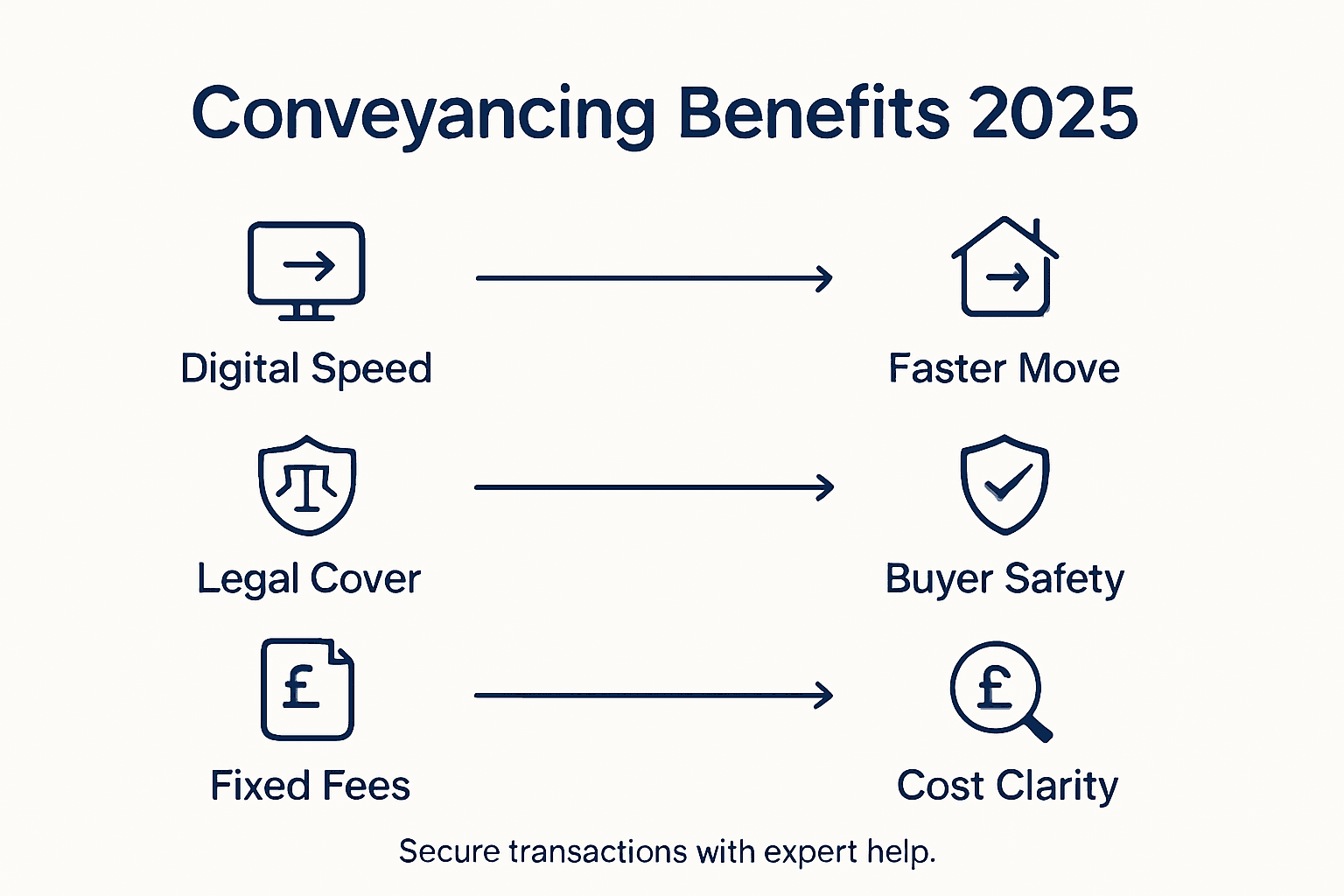
| Digital Transformation | Technology is revolutionising conveyancing, streamlining transactions with AI, electronic documentation, and real-time tracking, minimising errors and processing times. |
| Transparent Pricing | Fixed-fee structures are becoming standard, ensuring buyers understand all costs upfront, promoting trust and allowing for better financial planning during property transactions. |
What Is Conveyancing and Why It Matters
Conveyancing represents the critical legal process of transferring property ownership in the United Kingdom, involving complex administrative, financial, and legal procedures to protect both buyers and sellers. At its core, conveyancing ensures that property transactions occur smoothly, legally, and with comprehensive protection for all parties involved.
The process encompasses multiple crucial steps that licensed conveyancers manage professionally, including conducting detailed property searches, managing mortgage arrangements, preparing formal documentation, and completing official Land Registry registrations. These professionals navigate intricate legal requirements, verifying property titles, checking for potential legal restrictions, and ensuring all financial transactions comply with current UK property legislation.
Property transactions represent significant financial investments, making conveyancing an essential safeguard for buyers. A skilled conveyancer examines multiple factors such as property boundaries, potential planning restrictions, environmental considerations, and historical land use. Their comprehensive legal expertise ensures secure property transfers by identifying potential risks and resolving complex legal challenges before they become problematic.
Key aspects of conveyancing include:
- Conducting comprehensive property searches
- Reviewing and preparing legal contracts
- Managing financial transactions
- Verifying property ownership details
- Registering property transfers with official authorities
Expert Tip: Always request a fixed-fee quote from your conveyancer and confirm exactly what services are included to avoid unexpected additional costs during your property transaction.
Modern Types of Conveyancing Services
The landscape of conveyancing services has dramatically transformed in recent years, with technological advancements and changing consumer expectations driving significant innovations across the property transfer sector. Modern conveyancing now encompasses a diverse range of service models designed to provide flexibility, efficiency, and comprehensive legal protection for property buyers and sellers.
Traditional conveyancing services continue to operate alongside increasingly sophisticated digital platforms, offering comprehensive legal guidance through evolving technological frameworks. These contemporary approaches include online conveyancing platforms, hybrid legal services, and specialised digital support models that leverage advanced technology to streamline property transactions while maintaining rigorous legal standards.
The emergence of digital conveyancing services has introduced several distinct service types that cater to different client needs. These include fully digital conveyancing platforms, which offer end-to-end online property transfer processes, remote consultation services, and technology-enabled legal support. Professional legal training programmes now incorporate digital tools and virtual service delivery methods, reflecting the industry’s rapid technological transformation and the growing importance of adaptable, client-focused legal services.
Key modern conveyancing service types include:
- Traditional solicitor-led conveyancing
- Online digital conveyancing platforms
- Hybrid digital-traditional service models
- Remote consultation and document management services
- Technology-enabled legal support systems
Expert Tip: Research multiple conveyancing service providers, comparing their digital capabilities, fixed fees, and client reviews to ensure you select a modern, efficient service that meets your specific property transaction requirements.
To clarify how modern conveyancing options differ, here is a comparison of common service types:
| Service Model | Delivery Approach | Typical Advantages |
|---|---|---|
| Traditional Solicitor-led | Face-to-face, paper-based | In-depth guidance, local expertise |
| Online Digital Platform | Fully remote, web-based systems | Faster turnaround, lower paperwork |
| Hybrid Digital-Traditional | Mix of online and in-person | Flexibility, wider support options |
| Remote Consultation Service | Phone/video meetings, e-Docs | Convenience, national legal access |
Digital Transformation: Faster, Smarter Transactions
The conveyancing industry is experiencing a profound digital revolution, fundamentally reshaping how property transactions are conducted across the United Kingdom. Advanced technological solutions are dramatically reducing processing times, enhancing accuracy, and creating more transparent, efficient legal workflows that benefit both property buyers and legal professionals.

Digital transformation in conveyancing is accelerating transaction efficiency through sophisticated legal technology solutions. These innovations include advanced digital identification verification, electronic document management systems, and artificial intelligence-powered workflows that streamline complex legal processes. By integrating cutting-edge technologies, conveyancers can now process property transactions with unprecedented speed and precision, minimising human error and reducing overall transaction timelines.
The UK legal sector is implementing rigorous governance frameworks to ensure responsible technological adoption. The Ministry of Justice has developed comprehensive AI governance guidelines that guide the ethical implementation of digital tools in legal services. These frameworks ensure that technological innovations enhance service delivery while maintaining strict legal standards and protecting client interests.
Key digital transformation features in modern conveyancing include:
- Real-time digital document tracking
- AI-assisted legal document analysis
- Automated compliance and risk assessment
- Secure electronic signature platforms
- Blockchain-enabled transaction verification
Expert Tip: Request detailed information about a conveyancer’s digital capabilities and technological infrastructure before engaging their services, ensuring you select a provider with robust, secure, and efficient digital processes.
Below is a summary of how digital transformation is reshaping property transactions in the UK:
| Innovation | Impact on Conveyancing | Benefit to Clients |
|---|---|---|
| AI-powered Workflows | Speeds up contract analysis | Shorter transaction timelines |
| Blockchain Verification | Increases transaction transparency | Higher trust in process |
| Electronic Signatures | Enables faster document exchange | No need for physical appointments |
| Real-time Document Tracking | Instant progress visibility | Reduced waiting and uncertainty |
Legal Compliance and Buyer Protection in 2025
The evolving landscape of property transactions demands increasingly sophisticated legal compliance and buyer protection mechanisms to safeguard consumers’ interests. As the property market becomes more complex, regulatory frameworks have been strengthened to ensure transparency, fairness, and comprehensive protection for buyers navigating property purchases.
The Conveyancing Handbook provides crucial updates on legal compliance requirements, outlining enhanced consumer protection laws and regulatory standards mandated by the Solicitors Regulation Authority (SRA). These comprehensive guidelines establish rigorous ethical practices that compel conveyancers to maintain absolute transparency, disclose potential risks, and adhere to stringent professional standards that protect buyers throughout the property transaction process.
Professional legal conferences highlight emerging statutory developments affecting buyer protection, particularly focusing on complex areas such as community acquisition rights, insolvency considerations, and comprehensive risk management. These developments ensure that buyers receive robust legal safeguards, with regulatory frameworks designed to mitigate potential financial and legal risks associated with property transactions.
Key legal compliance and buyer protection features in 2025 include:
- Mandatory risk disclosure protocols
- Enhanced digital documentation verification
- Comprehensive professional indemnity requirements
- Strict transparency obligations
- Advanced consumer protection mechanisms
Expert Tip: Request a detailed breakdown of your conveyancer’s compliance certifications and professional regulation credentials to ensure maximum legal protection during your property transaction.
Transparent Pricing, Cost Savings, and Fixed Fees
The conveyancing industry has undergone a significant transformation in pricing models, prioritising transparency and predictability for property buyers across the United Kingdom. These evolutionary changes address long-standing consumer concerns about unexpected legal fees and complex billing structures that have historically created financial uncertainty during property transactions.
Recent conveyancing practice guidelines emphasise comprehensive cost disclosure and fixed fee structures, enabling buyers to understand exactly what they will pay before commencing their property purchase. This approach eliminates hidden charges, provides clear financial expectations, and allows buyers to budget more effectively, removing the traditional anxiety associated with unpredictable legal expenses.
Industry discussions in 2025 reinforce the trend toward transparent pricing strategies, which support competitive market dynamics and consumer protection. By mandating upfront fee structures, conveyancers are creating a more accessible, fair environment where buyers can compare services confidently and make informed decisions about their property transaction legal support.
Key advantages of transparent, fixed-fee conveyancing include:
- Predictable total transaction costs
- No unexpected supplementary charges
- Clear breakdown of legal and administrative expenses
- Simplified financial planning
- Enhanced consumer trust and satisfaction
Expert Tip: Always request a comprehensive, written fee breakdown from your conveyancer, ensuring all potential costs are explicitly detailed before signing any agreement.
Secure Your Property Future With Expert Conveyancing in 2025
Navigating conveyancing in 2025 can be complex due to evolving legal compliance, rising demand for digital solutions, and the need for transparent pricing. If you want to avoid costly delays, hidden fees, or unclear legal obligations, partnering with a highly trusted conveyancer is crucial. Conveyancing-Solicitor.co.uk connects you instantly to fully vetted, SRA- or CLC-regulated conveyancing firms offering fixed fees and clear cost breakdowns. Benefit from their expert knowledge of modern conveyancing services including online platforms, digital workflows, and up-to-date legal protections.
Get ahead in your property transaction by exploring how conveyancing AI and transparent pricing protect your investment while boosting efficiency. Whether you are a first-time buyer or remortgaging, choose a conveyancer who understands today’s market demands. Don’t let uncertainty slow your purchase. Visit Instant Fixed Fee Conveyancing Quotes for a quick comparison. Discover more about the Benefits of AI Conveyancing and learn how to Find a Conveyancer that suits your needs precisely.
Start your conveyancing journey with confidence today. Request your free, no-obligation quote now and secure expert support tailored to the latest conveyancing landscape.
Frequently Asked Questions
What is conveyancing and why is it important for buyers in 2025?
Conveyancing is the legal process of transferring property ownership. It protects buyers during significant financial transactions by ensuring that all legal requirements are met and potential risks are identified and managed.
How has technology impacted conveyancing services for buyers in 2025?
Technology has transformed conveyancing by introducing digital platforms that streamline property transactions, reduce processing times, and enhance accuracy. Features like AI-assisted workflows and secure electronic signatures make the process more efficient for buyers.
What should I look for in a modern conveyancing service?
When choosing a conveyancing service, consider their digital capabilities, fixed-fee pricing, client reviews, and the comprehensiveness of their legal guidance. A service that combines traditional and digital elements may offer the best flexibility.
How can transparent pricing benefit buyers during the conveyancing process?
Transparent pricing models eliminate unexpected costs and hidden charges, allowing buyers to have clear financial expectations. This predictability enhances trust and enables better financial planning throughout the property transaction.
Recommended
- What to Expect from Conveyancing Fees in 2025: A Comprehensive Guide – Conveyancing Solicitor
- Property Sale Legal Tips 2025: Avoiding Costly Mistakes – Conveyancing Solicitor
- Understanding Help to Buy Conveyancing for First-Time Buyers – Conveyancing Solicitor
- The Impact of Brexit on Conveyancing Solicitors and Property Transactions – Conveyancing Solicitor
