



A single missing document can delay a british property purchase by weeks, putting your dream home at risk in a fast moving London market. For first-time buyers, understanding each step of the conveyancing process is essential for smooth progress and peace of mind. This guide breaks down every stage with straightforward advice and highlights how fixed fees and transparent costs protect you from unpleasant surprises often hidden in legal jargon.
Table of Contents
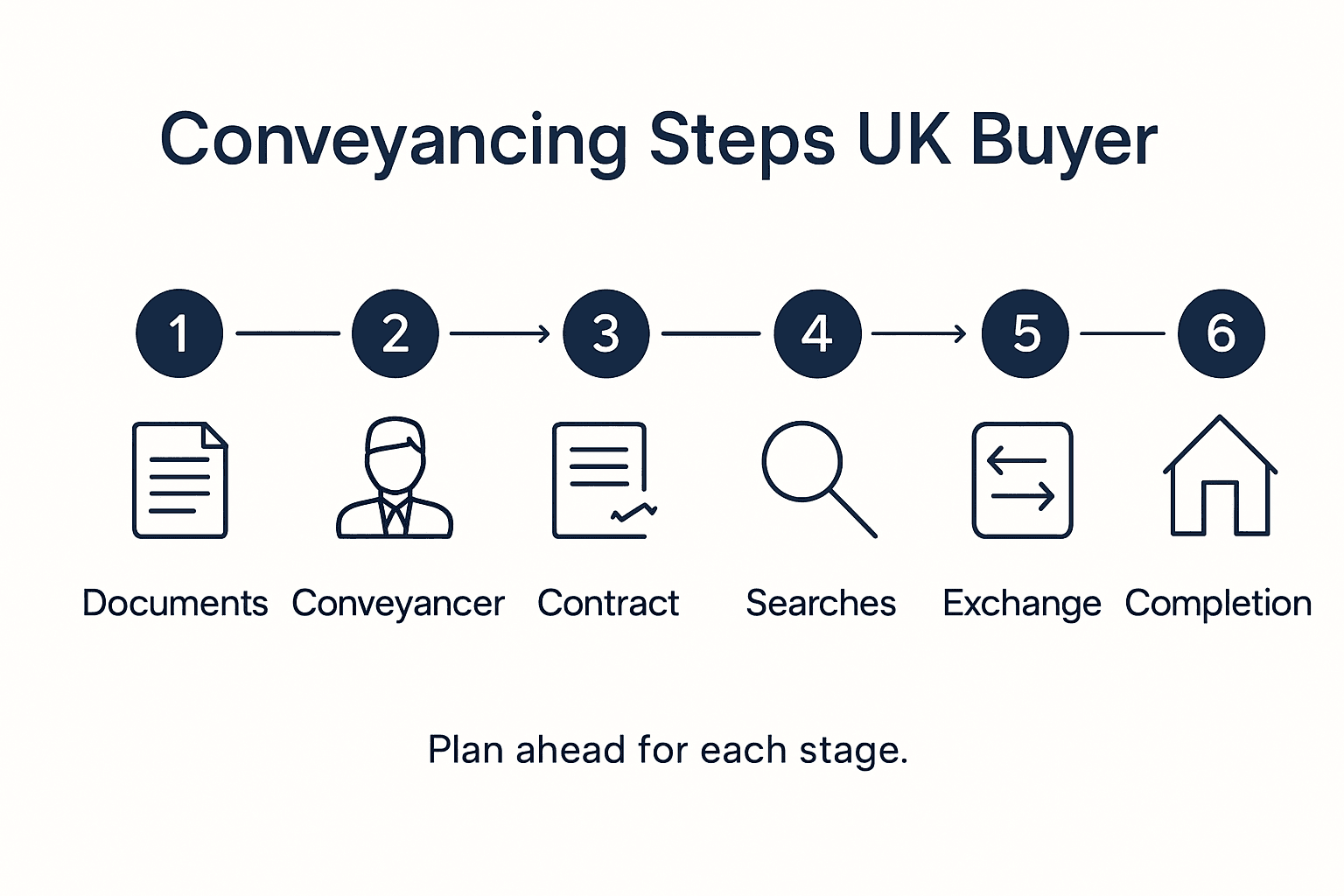
- Step 1: Gather Essential Documents And Property Details
- Step 2: Instruct A Regulated Conveyancer For Legal Support
- Step 3: Agree Terms And Verify The Draft Contract
- Step 4: Review Searches, Surveys, And Mortgage Offers
- Step 5: Exchange Contracts And Prepare For Completion
- Step 6: Complete The Transaction And Register Ownership
Quick Summary
| Key Insight | Explanation |
|---|---|
| 1. Organise essential documents | Collect personal identification, address proof, and financial statements early to facilitate a smoother home buying process. |
| 2. Select a qualified conveyancer | Choose a regulated conveyancer experienced in property transactions for legal guidance and to ensure a successful purchase. |
| 3. Review the draft contract carefully | Scrutinise the draft contract details with your conveyancer to identify potential issues and negotiate terms effectively before final agreement. |
| 4. Conduct comprehensive property searches | Ensure thorough legal and structural assessments of the property to protect your investment and verify its status before finalising the purchase. |
| 5. Prepare for completion and ownership | Plan and confirm logistics, including insurance and utilities, to ensure a smooth transition into your new home upon final contract exchange. |
Step 1: Gather essential documents and property details
Kicking off your home buying journey starts with collecting the critical documents that will smooth your path to property ownership. This stage is about getting organised and demonstrating you are a serious buyer ready to progress your purchase.
Begin by assembling your core personal documentation. You will need multiple forms of photo identification like your passport or driving licence, proof of current address such as utility bills from the past three months, and evidence of your financial standing. These documents are crucial for your solicitor and mortgage provider to verify your identity and financial capability. Check your documentation requirements carefully to avoid potential delays.
Next, request key property documents from the seller or estate agent. These should include the property’s energy performance certificate, detailed floor plans, lease information if it is a leasehold property, and information about boundaries and any planned developments nearby. Your conveyancing solicitor will conduct detailed searches, but having these documents upfront can help you understand the property more comprehensively and potentially identify any potential issues early.
Additional financial documentation will strengthen your position. Gather your mortgage agreement in principle, bank statements showing your deposit funds, and proof of income such as payslips or tax returns. These documents not only support your mortgage application but also demonstrate to sellers that you are a committed and prepared buyer.
Pro tip: Create a dedicated folder or digital file where you can systematically collect and store all these documents. Being organised from the start will save you significant stress and potential setbacks during your property purchase.
Step 2: Instruct a regulated conveyancer for legal support
Now that you have gathered your essential documents, it is time to secure professional legal support through a regulated conveyancer who will guide you through the complex property transaction process. Instructing the right legal professional is crucial to ensuring a smooth and legally sound property purchase.
When selecting your conveyancer, focus on finding a professional regulated by a recognised body such as the Law Society or Council for Licensed Conveyancers. Understanding the key factors in choosing a conveyancer will help you make an informed decision. Look for firms with specific experience in residential property transactions, transparent fee structures, and a track record of successful completions. Request detailed quotes from multiple providers, comparing not just their costs but also their service offerings, communication styles, and responsiveness.
During your initial consultation, prepare a list of specific questions about their approach, expected timelines, and potential additional costs. Ask about their experience with similar properties, their search and investigation processes, and how they will keep you informed throughout the transaction. Confirm they are fully authorised to conduct conveyancing work and request details of their professional indemnity insurance. A good conveyancer will not only handle legal paperwork but also provide strategic advice, identify potential risks, and proactively manage your property purchase.
Pro tip: Request a comprehensive breakdown of all potential fees upfront, including basic conveyancing charges, disbursements, and any additional costs for complex searches or unexpected complications. This transparency will help you budget accurately and avoid financial surprises during your property purchase.
Step 3: Agree terms and verify the draft contract
With your conveyancer instructed, you are now entering a critical phase of your property purchase where careful review and negotiation of the draft contract become paramount. This stage determines the legal framework of your property transaction and requires meticulous attention to detail.
Understanding the contract exchange process is crucial for protecting your interests. Your conveyancer will receive a draft contract from the seller’s solicitor, which includes essential details such as property boundaries, fixtures and fittings, completion date, and any specific conditions of sale. Carefully review each section, paying close attention to potentially complex elements like property boundaries, rights of way, or any restrictions that might impact your future use of the property. Do not hesitate to ask your conveyancer to clarify any technical language or terms you do not fully understand.
During this review, be prepared to negotiate and raise queries. If you discover any discrepancies or have concerns about specific contract terms, your conveyancer will communicate these to the seller’s legal representative. This might include clarifications about included fixtures, resolving boundary disputes, or discussing potential amendments to the completion timeline. Remain flexible but clear about your expectations, understanding that successful property transactions often involve compromise from both parties.
Pro tip: Create a dedicated checklist of key contract elements to discuss with your conveyancer, including precise property boundaries, included fixtures and fittings, expected completion dates, and any special conditions. This proactive approach will help ensure no critical details are overlooked during contract review.
Here is a summary of key checks at contract stage:
| Contract Element | Why It Matters | What to Confirm |
|---|---|---|
| Boundaries | Avoids future disputes | Lines match property description |
| Fixtures and Fittings | Know inclusions and exclusions | List matches agreements |
| Completion Date | Plan your move effectively | Date is clearly defined |
| Special Conditions | Prevent hidden obligations | All terms are understood |
Step 4: Review searches, surveys, and mortgage offers
At this critical stage of your property purchase, you will dive into the detailed investigation of the property’s legal and structural status. This comprehensive review involves multiple essential investigations that will help you make an informed decision and protect your investment.
Comprehensive property searches form the backbone of your due diligence process. Your conveyancer will conduct several key searches including local authority searches, environmental searches, drainage searches, and land registry checks. These investigations reveal crucial information about the property such as planning permissions, potential environmental risks, flood risks, and any legal restrictions or charges on the property. Local authority searches can uncover planned road works, proposed developments near the property, and potential compulsory purchase orders that might impact your future property enjoyment.
Simultaneously, you will need to arrange a property survey and confirm your mortgage offer. The survey will provide a detailed assessment of the property’s physical condition, highlighting any structural issues, potential repair requirements, or hidden defects. Choose a survey level appropriate to the property age and condition ranging from a basic condition report to a more comprehensive structural survey. Your mortgage lender will also conduct their own valuation to ensure the property provides sufficient security for the loan. Review the mortgage offer carefully, checking interest rates, fixed rate periods, early repayment charges, and any specific conditions attached to the financing.
Below is a comparison of main property survey types:
| Survey Type | Level of Detail | Typical Buyer Profile |
|---|---|---|
| Condition Report | Basic | Newer homes, minimal issues |
| Homebuyer Report | Moderate | Standard properties, most buyers |
| Building Survey | Comprehensive | Older or unique properties |
Pro tip: Request digital copies of all search reports and survey documents, and schedule a detailed review with your conveyancer to discuss any findings that might require further investigation or negotiation with the seller.
Step 5: Exchange contracts and prepare for completion
You have reached a momentous point in your property purchase where legal commitment becomes real. Exchanging contracts represents the formal point of no return in your property transaction, transforming your offer from an agreement into a legally binding commitment.
Understanding the legal implications of contract exchange requires careful preparation. At this stage, your solicitor will coordinate with the seller’s legal representative to swap signed contracts and confirm the agreed completion date. You will typically pay a deposit usually between 5% to 10% of the property value, which becomes non refundable if you withdraw from the purchase. This is also the moment when you must arrange buildings insurance for the property, as the legal responsibility transfers to you even before you physically move in.
Preparing for completion involves several critical administrative tasks. Confirm your mortgage funds are ready, arrange removal services, notify utility providers, and ensure all financial preparations are in place. Your solicitor will conduct final searches to check no last minute issues have emerged with the property. You will also need to sign legal transfer documents and arrange the transfer of the full property purchase price through your solicitor on the agreed completion date.
Pro tip: Create a comprehensive checklist of all tasks to complete between contract exchange and moving day, including setting up mail redirection, transferring council tax, and preparing your moving logistics to minimise potential stress during this exciting transition.
Step 6: Complete the transaction and register ownership
You have now reached the pinnacle moment of your property journey. Completion represents the final financial and legal transfer of your new home, marking the moment when you officially become a property owner.
Understanding the final registration process is crucial for securing your legal ownership. Your conveyancer will transfer the full purchase funds to the seller’s solicitor, and upon confirmation, you can collect your keys and move into your new property. Simultaneously, your solicitor will submit the necessary documents to the Land Registry to officially register you as the new legal owner. This registration process typically takes between two to six weeks and involves submitting the transfer deed, paying any applicable Stamp Duty, and updating the property’s official records with your details.
After completion, several administrative tasks require your attention. You will need to update your address with various organisations including banks, employers, and government agencies. Ensure you have copies of all important documents such as the property deed, land registry confirmation, and mortgage offer. If you have purchased a leasehold property, make sure you understand and comply with any specific lease conditions or management requirements. Your solicitor can help clarify any legal nuances related to your specific property ownership.
Pro tip: Keep all property transaction documents in a secure, easily accessible digital and physical file, and consider creating a backup with a trusted family member or solicitor to ensure you always have proof of your legal ownership.
Simplify Your Conveyancing Journey with Trusted Legal Experts
Navigating the conveyancing process can feel overwhelming with so many steps from gathering documents to completion. The complexity of contract terms, essential searches, mortgage arrangements and meeting legal deadlines often causes stress and costly delays. If you want to avoid confusion, unexpected fees and ensure expert support tailored to your home buying needs, finding a regulated conveyancer you can trust is critical.
At Conveyancing-Solicitor.co.uk, we connect you instantly with premium, SRA- or CLC-regulated conveyancing firms across the UK offering fixed-fee quotes that can save you up to 75% on legal costs. Our vetted specialists guide you clearly through key stages including reviewing contracts, conducting thorough searches, and ensuring a smooth exchange and completion. Don’t leave your biggest purchase to chance.
Ready to take the stress out of your property purchase while ensuring expert legal handling every step of the way? Get a free instant quote today and find your ideal conveyancer fast. Experience straightforward, affordable conveyancing designed to help you move confidently and securely. Start now at Instant Conveyancing Quotes and take your first step towards owning your new home with confidence.
For further insights on choosing the right conveyancer, see our comprehensive guide on How to Find a Good Conveyancing Solicitor and explore No Sale No Fee Conveyancing options to protect your interests during the property journey.
Frequently Asked Questions
What documents do I need to gather to start the conveyancing process for buying a home?
To start the conveyancing process, you need to gather personal identification, proof of address, and financial documents such as your mortgage agreement in principle. Make sure to collect utility bills, payslips, and tax returns to facilitate your application and demonstrate your financial capability.
How do I choose the right conveyancer for my property purchase?
Selecting the right conveyancer is crucial for a smooth transaction. Look for a professional regulated by a recognised body, compare quotes, and ask about their experience with residential property transactions to ensure you find one that suits your needs.
What should I expect during the contract review stage of the conveyancing process?
During the contract review stage, your conveyancer will receive a draft contract and guide you through its details, including property boundaries and completion dates. Review the contract carefully and raise any queries or concerns with your conveyancer to protect your interests.
What types of property searches should I expect my conveyancer to conduct?
Your conveyancer will typically conduct several essential property searches, including local authority searches, environmental searches, and drainage searches. These investigations reveal critical information about the property and can uncover any issues that may affect its value or your enjoyment of it.
What is involved in the exchange of contracts during the conveyancing process?
The exchange of contracts is the formal agreement between you and the seller, where you both sign the contracts and agree on a completion date. Be prepared to pay a deposit, usually between 5% to 10% of the property value, as this becomes non-refundable if you withdraw from the purchase.
How do I ensuring my legal ownership is registered after completing the property purchase?
After the completion of the purchase, your conveyancer will submit documents to the Land Registry to officially register you as the new owner of the property. Ensure you keep copies of all important documents related to the transaction, such as the property deed and registration confirmation for your records.
Recommended
- The Step-by-Step Process of Conveyancing for First-Time Buyers – Conveyancing Solicitor
- The Conveyancing Process Explained Step by Step – Conveyancing Solicitor
- The Conveyancing Process Explained for London Homebuyers – Conveyancing Solicitor
- How to Handle Conveyancing for a First-Time Buyer – Conveyancing Solicitor
