



Over 60 percent of British buyers face unexpected fees during the property conveyancing process. This common frustration makes it clear how important it is to understand each step early. When managed the right way, conveyancing can be a straightforward part of buying or selling property that saves you time, money, and stress. By learning how to assess your specific needs, compare services, and clarify costs upfront, you set yourself up for a smoother British property transaction.
Table of Contents
- Step 1: Assess Your Conveyancing Needs Early
- Step 2: Compare Multiple Regulated Conveyancers
- Step 3: Request Transparent Fixed-Fee Quotes
- Step 4: Review and Minimise Disbursement Costs
- Step 5: Monitor Progress and Clarify Fees Before Completion
Quick Summary
| Key Insight | Explanation |
|---|---|
| 1. Assess Needs Early | Identify your specific property transaction type and gather necessary documents beforehand. |
| 2. Compare Conveyancers | Check regulatory status, fees, and services offered before choosing a conveyancer. |
| 3. Request Fixed-Fee Quotes | Ensure quotes are comprehensive and include all potential fees, avoiding unexpected costs. |
| 4. Minimise Disbursement Costs | Understand each disbursement and explore options to reduce unnecessary expenses. |
| 5. Monitor Progress Regularly | Keep close communication with your conveyancer to track progress and clarify fees. |
Step 1: Assess Your Conveyancing Needs Early
Assessing your conveyancing needs early can save you considerable time and money during property transactions. Understanding conveyancing requirements is crucial since research indicates only 40% of UK adults truly comprehend the process.
Starting your preparation involves identifying the specific type of property transaction you are undertaking. Whether you are purchasing your first home, selling a property, or transferring equity, each scenario demands unique legal considerations. Compile essential documents like proof of identity, property details, mortgage agreements, and financial statements before engaging a solicitor. This proactive approach helps streamline communication and reduces potential delays in your conveyancing journey.
Your initial assessment should also include a realistic budget evaluation. Factor in not just solicitor fees but potential additional costs like search fees, land registry charges, and potential survey expenses. Request transparent quotes from multiple conveyancing professionals and compare their service offerings carefully.
Professional tip: Conduct a preliminary review of your personal circumstances and property transaction specifics before your first solicitor consultation to ensure a more efficient and targeted discussion.
Here’s a comparison of common types of property transactions and their unique legal considerations:
| Transaction Type | Key Legal Considerations | Typical Documents Needed |
|---|---|---|
| Purchase | Title investigation, mortgage checks | Proof of ID, mortgage offer, contract |
| Sale | Redemption of mortgage, title proof | Title deed, sale contract, disclosures |
| Transfer of Equity | Stamp duty, lender consent | Proof of ID, transfer deed, lender letter |
Step 2: Compare Multiple Regulated Conveyancers
Comparing multiple regulated conveyancers is a strategic approach to securing the most cost-effective and reliable legal support for your property transaction. Understanding how to compare conveyancing quotes effectively can help you make an informed decision that balances quality and affordability.
When comparing conveyancers, focus on several key criteria beyond just the initial quote. Check their regulatory status first ensuring they are registered with either the Solicitors Regulation Authority (SRA) or the Council for Licensed Conveyancers (CLC). Request detailed breakdowns of their fees including potential additional charges for searches, land registry fees, and potential disbursements. Look for transparent firms that provide comprehensive quotes without hidden costs.

Evaluate each conveyancer based on their expertise in your specific transaction type whether you are buying, selling, or transferring property. Review their online ratings, request client testimonials, and consider their average transaction completion times. A slightly higher fee might represent better service and potentially faster processing which could save you money in the long run.
Professional tip: Always request a full written quote and compare at least three different regulated conveyancers to ensure you receive competitive pricing and comprehensive service.
Step 3: Request Transparent Fixed-Fee Quotes
Navigating the conveyancing landscape requires a strategic approach to securing transparent pricing. Understanding the benefits of fixed-fee conveyancing quotes can help you protect your budget and avoid unexpected financial surprises during your property transaction.
When requesting quotes, be methodical and comprehensive. Contact multiple regulated conveyancing firms and explicitly request a complete breakdown of their fixed fees. Ensure the quote includes all potential disbursements such as local searches, land registry fees, drainage checks, and environmental searches. Ask for written confirmation that the quote represents a true fixed fee with no hidden additional charges. Pay close attention to the small print and clarify any terms that seem ambiguous or potentially variable.
Compare the quotes not just on price, but on the level of service included. Some firms might offer more comprehensive packages that could save you money in the long run. Look for quotes that provide clear timelines, detailed service descriptions, and transparent communication protocols. Consider factors like the firm’s reputation, average completion times, and client reviews alongside the financial aspects of their proposal.
Professional tip: Request quotes in writing and ask each conveyancer to confirm their quote includes all potential fees to prevent unexpected financial complications during your property transaction.
Step 4: Review and Minimise Disbursement Costs
Understanding the detailed costs involved in conveyancing is crucial to managing your overall property transaction budget. Disbursement costs can quickly escalate if you are not proactive and strategic in your approach.
To minimise disbursement expenses, start by thoroughly understanding each potential cost. Common disbursements include local authority searches, land registry fees, drainage searches, environmental checks, and bank transfer charges. Request a comprehensive breakdown from your conveyancer that details each potential fee. Compare these costs across multiple firms and ask for explanations of any charges that seem unusually high. Some searches might be negotiable or potentially unnecessary depending on your specific property type and location.
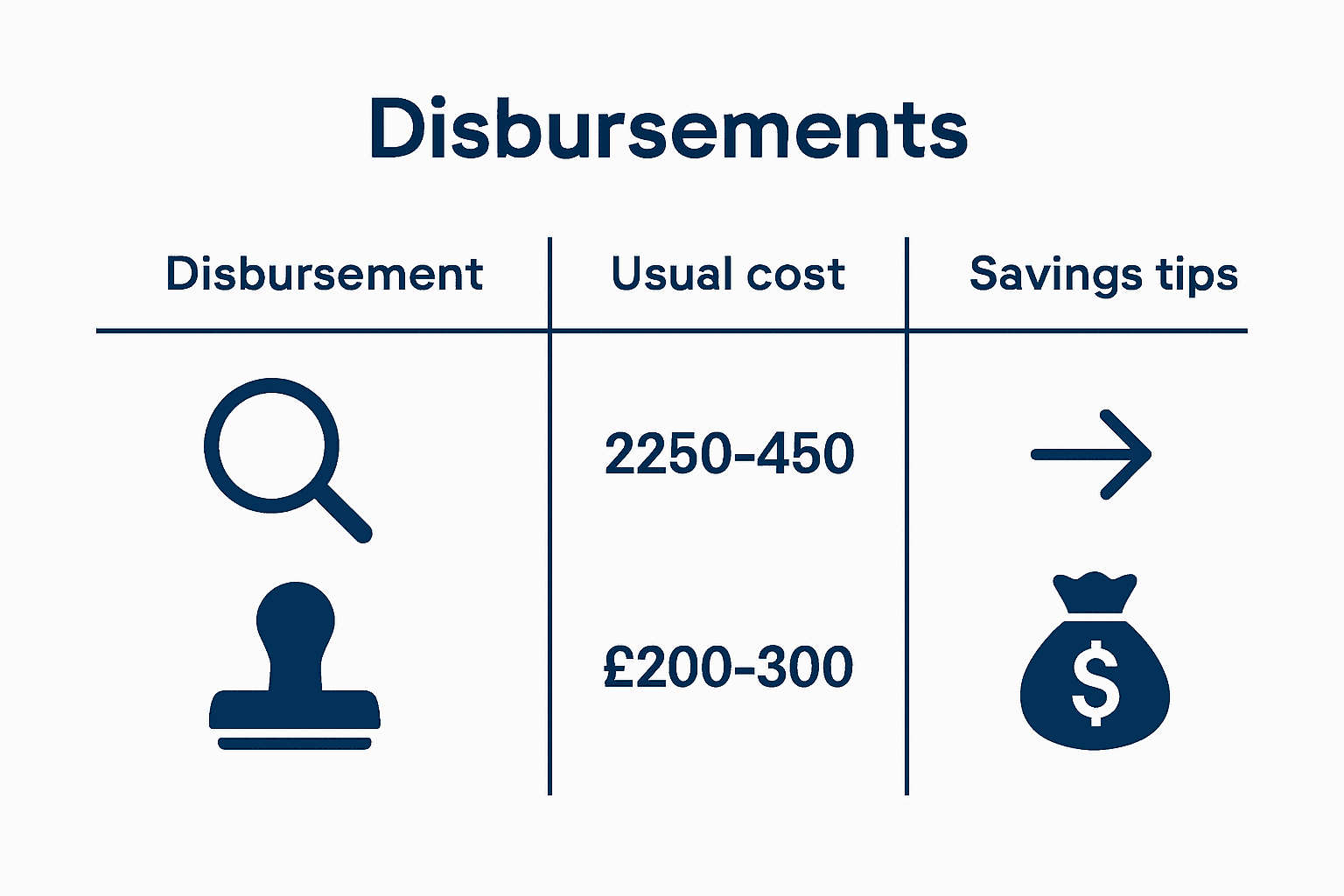
Consider alternative strategies to reduce disbursement expenses. Some conveyancers offer package deals that bundle searches at a lower rate. If you are purchasing a newer property, certain searches might be less comprehensive or critical. Additionally, some mortgage lenders have specific search requirements you can leverage to potentially reduce overall costs. Always ask your conveyancer about potential cost saving strategies and request a clear explanation of why each search is being conducted.
Professional tip: Carefully review each disbursement line item and do not hesitate to question charges that seem excessive or unnecessary to ensure you are not overpaying for standard conveyancing services.
The table below summarises major conveyancing disbursements and potential ways to minimise them:
| Disbursement Type | Typical Cost Range | Possible Cost Reduction Strategy |
|---|---|---|
| Local Authority Search | £100–£300 | Bundle searches, check necessity |
| Land Registry Fee | £20–£910 | Confirm correct property value band |
| Drainage/Environmental | £50–£150 | Use package deals, new builds may require less |
| Telegraphic Transfer Fee | £20–£45 | Request alternatives, use secure online transfer |
Step 5: Monitor Progress and Clarify Fees Before Completion
Monitoring the progress of your conveyancing transaction is essential to ensure a smooth and transparent property transfer process. Staying proactive and informed can help you avoid potential complications and unexpected financial surprises.
Establish clear communication protocols with your conveyancer from the outset. Request regular updates at least every two weeks and agree on a preferred communication method whether that is email, phone, or online portal tracking. During these check ins, specifically ask about any potential additional fees that might arise and request a detailed explanation of their origin. Pay particular attention to disbursements and supplementary charges that could impact your overall transaction budget.
Document every interaction and financial discussion with your conveyancer. Keep a comprehensive record of quotes, email correspondence, and verbal agreements. If any new fees are proposed during the transaction, request written confirmation and a thorough breakdown of the charges. Be prepared to ask direct questions about the necessity and scope of each additional cost. Your goal is to maintain financial transparency and prevent any unexpected expenses that could derail your property transaction.
Professional tip: Create a dedicated folder both digital and physical to store all conveyancing documents and correspondence to ensure you have a clear audit trail of your transaction.
Save on Conveyancing Fees with Transparent Fixed-Price Quotes Today
Navigating the complexities of conveyancing fees and hidden disbursement costs can be stressful when buying or selling property in the UK. This article highlights the challenges of unclear pricing, surprise charges, and the need to compare multiple regulated conveyancers for cost savings without compromising quality. If you want to avoid unexpected fees and secure fixed-fee quotes from trusted, SRA- or CLC-regulated firms, your best next step is to request instant, transparent quotes.
At Conveyancing-Solicitor.co.uk we connect you with premium vetted conveyancers who offer clear, fixed prices tailored to your specific transaction type. Compare multiple quotes easily and find expert legal support that meets your budget and timeline needs. Our service saves customers up to 75% on legal fees, eliminates hidden costs, and ensures faster completions with reliable communication.
Don’t let conveyancing fees catch you off guard — get your personalised fixed-fee quotes now from a panel of top-rated professionals who understand exactly how to minimise disbursements and streamline your property transaction. Take control of your conveyancing journey immediately by visiting Instant Quote and secure affordable legal support you can trust.
Frequently Asked Questions
How can I assess my conveyancing needs effectively?
Assess your conveyancing needs by identifying the type of property transaction you are undertaking, such as purchasing, selling, or transferring equity. Compile essential documents and evaluate your budget to ensure a smooth initial consultation.
What should I look for when comparing conveyancers to cut costs?
When comparing conveyancers, focus on their regulatory status, fee transparency, and expertise in your specific transaction type. Request detailed quotes that include potential additional charges to make informed decisions on cost-effective options.
How can I ensure I receive transparent fixed-fee quotes from conveyancers?
Request fixed-fee quotes directly from multiple conveyancers and ask for a complete breakdown of their fees, including all potential disbursements. Verify that the quote represents a true fixed fee, free from hidden charges, to protect your budget.
What strategies can I use to minimise disbursement costs during conveyancing?
To minimise disbursement costs, thoroughly review each potential charge and compare them across different firms. Look for bundled packages or ask your conveyancer about unnecessary searches that may reduce your overall expenses.
How often should I monitor the progress of my conveyancing transaction?
Monitor the progress of your conveyancing transaction at least every two weeks to stay informed. Establish clear communication protocols with your conveyancer and ask about any additional fees during each check-in.
What should I do if unexpected fees arise during the conveyancing process?
If unexpected fees arise, request written confirmation and a detailed breakdown of the charges from your conveyancer. Document these interactions to maintain transparency and ensure you are not overpaying for services.
Recommended
- How to Save Money on Conveyancing Fees – Conveyancing Solicitor
- How Much Does Conveyancing Cost? Breaking Down the Fees – Conveyancing Solicitor
- How to Negotiate Conveyancing Fees with Your Solicitor – Conveyancing Solicitor
- Understanding Affordable Conveyancing Tips 2025 – Conveyancing Solicitor
