



Over one million British property transactions take place each year, yet many buyers and sellers find the legal steps confusing and stressful. Understanding the intricacies of British conveyancing matters because a single overlooked detail could delay or jeopardise your move. This guide breaks down the real legal process, highlights must-know protections, and reveals how the right support can turn a complicated transaction into a smoother, more secure experience.
Table of Contents
- Conveyancing Explained: The Legal Process Defined
- Types of Conveyancers and Their Roles
- Step-by-Step Stages in Conveyancing Transactions
- Legal Responsibilities for Buyers and Sellers
- Typical Fees, Costs, and Common Pitfalls
Key Takeaways
| Point | Details |
|---|---|
| Importance of Conveyancing | Conveyancing is essential for legally transferring property ownership, ensuring all administrative and legal requirements are met. |
| Role of Conveyancers | Solicitors and licensed conveyancers have distinct roles, with solicitors handling broader legal issues and licensed conveyancers focusing on property transfers efficiently and cost-effectively. |
| Legal Responsibilities | Both buyers and sellers have significant legal responsibilities, including accurate property information disclosure and thorough document preparation to prevent transaction delays. |
| Costs and Pitfalls | Conveyancing fees can vary widely, and common pitfalls such as incomplete documentation or unresolved disputes can lead to increased costs and prolonged transactions. |
Conveyancing Explained: The Legal Process Defined
Conveyancing represents the critical legal mechanism for transferring property ownership in England, encompassing a complex series of administrative and legal steps that protect both buyers and sellers during real estate transactions. At its core, conveyancing involves professionally managing the legal transfer of property from one party to another, ensuring all financial, legal, and administrative requirements are comprehensively fulfilled.
The process typically involves multiple intricate stages, beginning with initial property searches and ending with the final transfer of ownership. Legal professionals within the conveyancing system are responsible for conducting detailed property investigations, examining title deeds, checking local authority records, and verifying potential legal restrictions or challenges that might impact the property transaction. These comprehensive checks help mitigate risks and provide transparency for both buyers and sellers during what can often be a complex property transfer.
Key components of the conveyancing process include obtaining property searches, reviewing contract details, conducting financial transfers, and completing official land registry documentation. Property searches represent a fundamental aspect of conveyancing, involving investigations into potential planning restrictions, environmental concerns, and historical land use that could affect the property’s value or future development potential. Solicitors and licensed conveyancers play a crucial role in navigating these complex legal requirements, ensuring all statutory obligations are met and potential legal complications are identified before the final property transfer.
Pro Tip – Expert Property Protection: Always request a comprehensive property search report that covers environmental, planning, and legal considerations to prevent unexpected future complications with your property purchase.
Types of Conveyancers and Their Roles
In the English property market, two primary professional types handle legal property transactions: solicitors and licensed conveyancers. These legal professionals specialise in managing the complex administrative and legal processes required to transfer property ownership effectively and legally. Licensed conveyancers represent a specialised group of professionals with specific expertise in property law and real estate transactions.
Solicitors are fully qualified legal professionals who can handle a broader range of legal matters beyond property transactions, whereas licensed conveyancers focus exclusively on property transfers. Conveyancing professionals undergo rigorous training and qualification processes that equip them with specialised knowledge of property law, land registry procedures, and legal documentation. Their core responsibilities include conducting thorough property searches, examining title deeds, preparing and reviewing contracts, managing financial transfers, and ensuring all legal requirements are met during property transactions.

Each type of conveyancer brings unique strengths to property transactions. Solicitors often provide more comprehensive legal services and can handle complex legal disputes that might arise during property transfers. Licensed conveyancers, by contrast, are typically more cost-effective and streamlined, focusing exclusively on property-related legal work. Both professionals are regulated by professional bodies – solicitors by the Solicitors Regulation Authority and licensed conveyancers by the Council for Licensed Conveyancers – ensuring high standards of professional conduct and client protection.
Here is a comparison of solicitors and licensed conveyancers to help you choose the right professional:
| Professional Type | Range of Services | Expertise Focus | Typical Advantages |
|---|---|---|---|
| Solicitor | Broad legal work | Multiple legal fields | Can resolve complex legal issues |
| Licensed Conveyancer | Property law only | Residential property transfers | Usually more cost-effective |
| Regulation | SRA (Solicitors Regulation Authority) | Council for Licensed Conveyancers | Strong regulatory oversight for both |
Pro Tip – Professional Selection: Always verify a conveyancer’s professional credentials and regulatory status before engaging their services, ensuring you work with a fully qualified and regulated legal professional specialising in property transactions.
Step-by-Step Stages in Conveyancing Transactions
The conveyancing process involves a systematic approach to legally transferring property ownership, consisting of several critical stages that protect both buyers and sellers. Licensed conveyancers follow a structured legal framework to ensure a comprehensive and legally sound property transaction. These stages are designed to mitigate risks, verify property details, and facilitate a smooth transfer of ownership.
The initial stages of conveyancing typically involve several key steps. First, the buyer instructs a conveyancer and obtains a property information pack. This is followed by comprehensive property searches, which include local authority searches, environmental searches, and water and drainage investigations. These searches reveal crucial information about the property, such as potential planning restrictions, environmental risks, and infrastructure details that might impact the property’s value or future use.
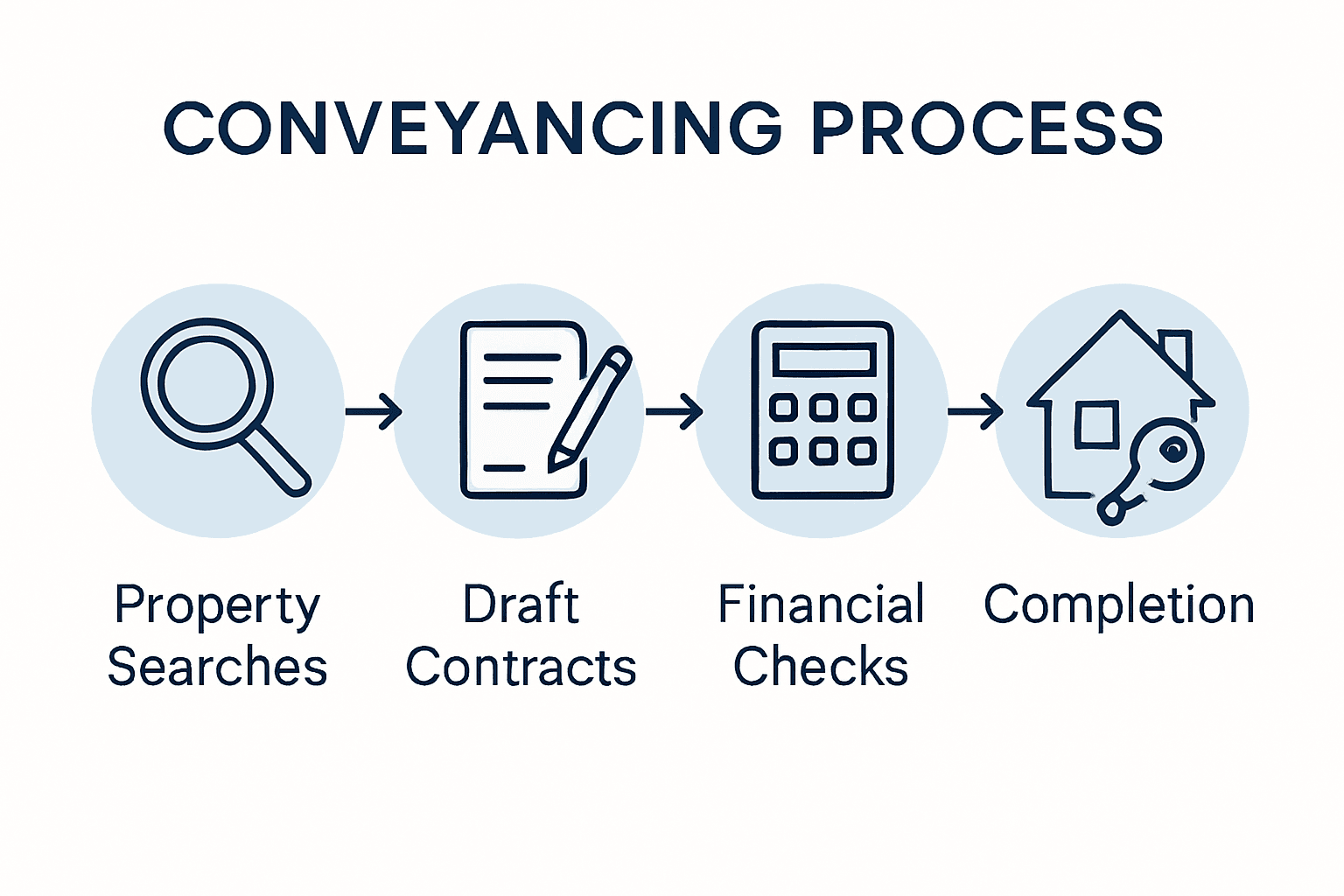
Subsequent stages involve more detailed legal and financial processes. The conveyancer will review the draft contract, negotiate terms, and conduct thorough due diligence. This includes examining title deeds, checking for any legal restrictions or encumbrances, and ensuring the property can be legally transferred. Financial aspects are also critically important, with the conveyancer managing the exchange of contracts, handling deposit transfers, and coordinating with mortgage lenders to ensure all financial requirements are met.
Pro Tip – Documentation Readiness: Prepare all necessary financial and personal documentation in advance, including proof of identity, proof of funds, and mortgage agreements, to expedite the conveyancing process and prevent potential delays.
Legal Responsibilities for Buyers and Sellers
In the complex landscape of property transactions, both buyers and sellers carry significant legal responsibilities that must be carefully navigated. Legal professionals outline specific obligations to ensure transparent and legally compliant property transfers. Each party must provide accurate information, disclose potential issues, and adhere to contractual commitments throughout the conveyancing process.
For sellers, legal disclosure represents a critical responsibility. They must provide a comprehensive property information form detailing the property’s condition, any known defects, boundary disputes, ongoing planning permissions, and potential structural issues. Sellers are legally bound to present truthful and complete information about the property, with potential legal consequences for deliberate misrepresentation or concealment of material facts. This includes declaring any alterations, building works, or modifications that might impact the property’s value or legal status.
Buyers, meanwhile, have equally important responsibilities during the conveyancing process. They must conduct thorough property searches, review all documentation meticulously, and ensure financial preparations are complete. This includes obtaining mortgage agreements, arranging property surveys, and confirming their ability to complete the financial transaction. Buyers must also demonstrate financial readiness, provide necessary identification documents, and respond promptly to requests for additional information from their conveyancer. Failure to meet these obligations can potentially delay or even jeopardise the entire property transaction.
Pro Tip – Documentation Transparency: Always maintain open communication with your conveyancer and be prepared to provide prompt, accurate documentation to prevent unnecessary delays in your property transaction.
Typical Fees, Costs, and Common Pitfalls
Conveyancing fees represent a significant financial consideration in property transactions, with costs varying depending on property complexity and transaction type. Legal professionals highlight the intricate cost structures associated with property transfers. Typically, conveyancing fees range from £850 to £1,500 for standard property transactions, with additional disbursements that can substantially increase the total expense.
The primary components of conveyancing costs include professional legal fees, property searches, and various administrative disbursements. Mandatory searches constitute a critical expense, including local authority searches, environmental searches, and water and drainage investigations. Inefficiencies in the conveyancing process can lead to unexpected additional costs, with common pitfalls including incomplete documentation, delayed responses, and complex property title investigations. Buyers should anticipate potential extra charges for specialist searches, such as flood risk assessments or mining investigations, which can add £200 to £500 to the total transaction costs.
Below is a summary of common conveyancing fees and potential pitfalls to watch for:
| Cost Item | Typical Range | Notes on Impact |
|---|---|---|
| Professional Legal Fees | £850 – £1,500 | Varies with property complexity |
| Property Searches | £200 – £500 | Includes standard investigations |
| Specialist Searches | £200 – £500 extra | Flood risk or mining, as required |
| Common Pitfall | Potential Cost | Impact on Transaction |
| Delayed Documentation | Increased fees | May prolong completion date |
| Unresolved Disputes | Additional legal costs | Can jeopardise transaction entirely |
Common pitfalls in conveyancing often stem from inadequate preparation and communication. These include failing to disclose property defects, incomplete property information forms, unexpected legal restrictions, and chain complications. Potential issues such as boundary disputes, unresolved planning permissions, and structural problems can significantly delay transactions and incur additional legal fees. Some transactions may require specialist legal investigations, potentially adding substantial time and expense to the conveyancing process.
Pro Tip – Cost Management: Request a comprehensive, fixed-fee quote from your conveyancer upfront, ensuring all potential disbursements are clearly explained to avoid unexpected financial surprises during your property transaction.
Simplify Your Conveyancing Journey with Trusted Experts
Navigating the detailed legal steps of conveyancing can feel overwhelming whether you are a buyer or a seller. From managing essential property searches and reviewing contracts to understanding legal responsibilities and anticipating costs, the process involves many critical tasks that demand precision and expertise. Delays or overlooked details can lead to unexpected fees or jeopardise your home purchase or sale. This complexity highlights the importance of choosing professionals who understand the nuances of conveyancing in England and can guide you step-by-step through the process.
At Conveyancing-Solicitor.co.uk, we connect you with fully regulated SRA and CLC conveyancers who specialise in smooth, transparent property transactions. Our service offers fixed-fee quotes that could save you up to 75% on legal fees compared to typical prices. With vetted conveyancing firms across the UK, you gain access to local and nationwide expertise tailored to your needs. Why wait for stress and uncertainty when you can begin your conveyancing with confidence and clear costs today?
Ready to take control of your property transfer with trusted conveyancers who understand your needs? Get your instant fixed-fee quote now and see how much you could save while avoiding common conveyancing pitfalls. For more guidance on how the conveyancing process works and what to expect at each stage, explore our expert resources and discover the benefits of working with regulated conveyancing professionals.
Frequently Asked Questions
What is the conveyancing process?
Conveyancing is the legal process of transferring property ownership between parties, involving various administrative and legal steps to ensure a smooth transaction.
Why is property searching important in conveyancing?
Property searches reveal critical information such as planning restrictions, environmental risks, and any legal encumbrances that may impact the property’s value or future development potential.
What are the main roles of solicitors and licensed conveyancers in conveyancing?
Solicitors manage a wider range of legal issues and can address complex disputes, while licensed conveyancers specialise exclusively in property transactions, often providing a more streamlined and cost-effective service.
What legal responsibilities do buyers and sellers have during the conveyancing process?
Sellers must provide accurate information about the property’s condition, while buyers must conduct thorough searches and ensure all financial requirements are met to facilitate a successful transaction.
Recommended
- The Legal Documents Your Conveyancing Solicitor Will Handle – Conveyancing Solicitor
- What is Conveyancing? A Comprehensive Guide to Property Transfers – Conveyancing Solicitor
- The Conveyancing Process Explained Step by Step – Conveyancing Solicitor
- What Does a Conveyancer Do? A Guide to Legal Property Transactions – Conveyancing Solicitor
