



Over 30 percent of British homebuyers encounter unexpected obstacles when purchasing a new build property. The process demands more than a standard approach because these homes often come with unique legal and financial hurdles. Understanding what truly sets new build conveyancing apart can save buyers from costly mistakes and delays while ensuring every British buyer is protected from hidden risks and surprises.
Table of Contents
- What Sets New Build Conveyancing Apart
- Essential Legal Checks For New Builds
- Key Stages In The New Build Process
- Understanding Warranties And Guarantees
- Costs, Deadlines, And Common Pitfalls
Key Takeaways
| Point | Details |
|---|---|
| New Build Complexity | New build conveyancing involves unique legal complexities including developer contracts and warranty checks, necessitating specialised solicitor expertise. |
| Essential Legal Checks | Comprehensive checks such as planning permissions and warranty documentation are critical to safeguard against potential risks and ensure compliance. |
| Proactive Engagement | Buyers must maintain active involvement throughout the purchase process, particularly during pre-completion checks and contract negotiations. |
| Financial Considerations | A clear understanding of costs and potential pitfalls is vital, including reservation fees and deadline challenges that may arise during the transaction. |
What Sets New Build Conveyancing Apart
New build conveyancing represents a unique property transaction process with distinctive complexities that differentiate it from standard residential property purchases. Unlike traditional property transactions, new build purchases involve intricate legal considerations, additional checks, and specific contractual requirements that demand specialised expertise from conveyancing professionals.
The primary distinctions of new build conveyancing emerge from several critical factors. Conveyancing solicitors specialising in new builds must navigate a complex landscape of developer contracts, warranties, and potential construction-related legal challenges. Key differences include:
- Pre-Construction Agreements: Unlike established properties, new builds require comprehensive legal review of off-plan contracts before physical construction completion
- Warranty Verification: Ensuring proper NHBC (National House Building Council) or equivalent warranties are correctly documented and transferable
- Snagging Inspections: Mandatory detailed property assessments to identify and record construction defects before final purchase completion
- Developer-Specific Conditions: Managing unique contractual terms set by property developers that can significantly differ from standard property transactions
Moreover, new build conveyancing demands more proactive legal work. Solicitors must conduct thorough searches not just on the property itself, but also on the surrounding development area, examining potential future infrastructure changes, planned community developments, and any restrictive covenants that might impact property ownership. This comprehensive approach protects buyers from unexpected complications and ensures a transparent, legally sound property acquisition process.
Essential Legal Checks For New Builds
Purchasing a new build property involves a comprehensive set of legal checks that go far beyond traditional property transactions. Comprehensive conveyancing searches are crucial to protect potential homeowners from hidden risks and ensure a transparent purchase process.
The essential legal checks for new build properties encompass multiple critical areas. Buyers must scrutinise several key documentation and regulatory aspects:
- Planning Permissions: Verifying the development has received full, valid planning consent from local authorities
- Building Regulation Compliance: Confirming the property meets current construction standards and has appropriate certification
- Warranty Documentation: Ensuring valid NHBC Buildmark or equivalent structural warranties are in place
- Land Registry Checks: Investigating the legal title and any potential restrictions on the property
- Section 106 Agreements: Understanding any community infrastructure or financial contributions attached to the development
Moreover, new build legal checks require meticulous examination of developer contracts. Solicitors must carefully review complex pre-construction agreements, examining clauses related to completion dates, potential variations in property specifications, and mechanisms for addressing potential construction defects. This thorough approach protects buyers from unexpected complications and ensures a legally sound property acquisition.
Key Stages In The New Build Process
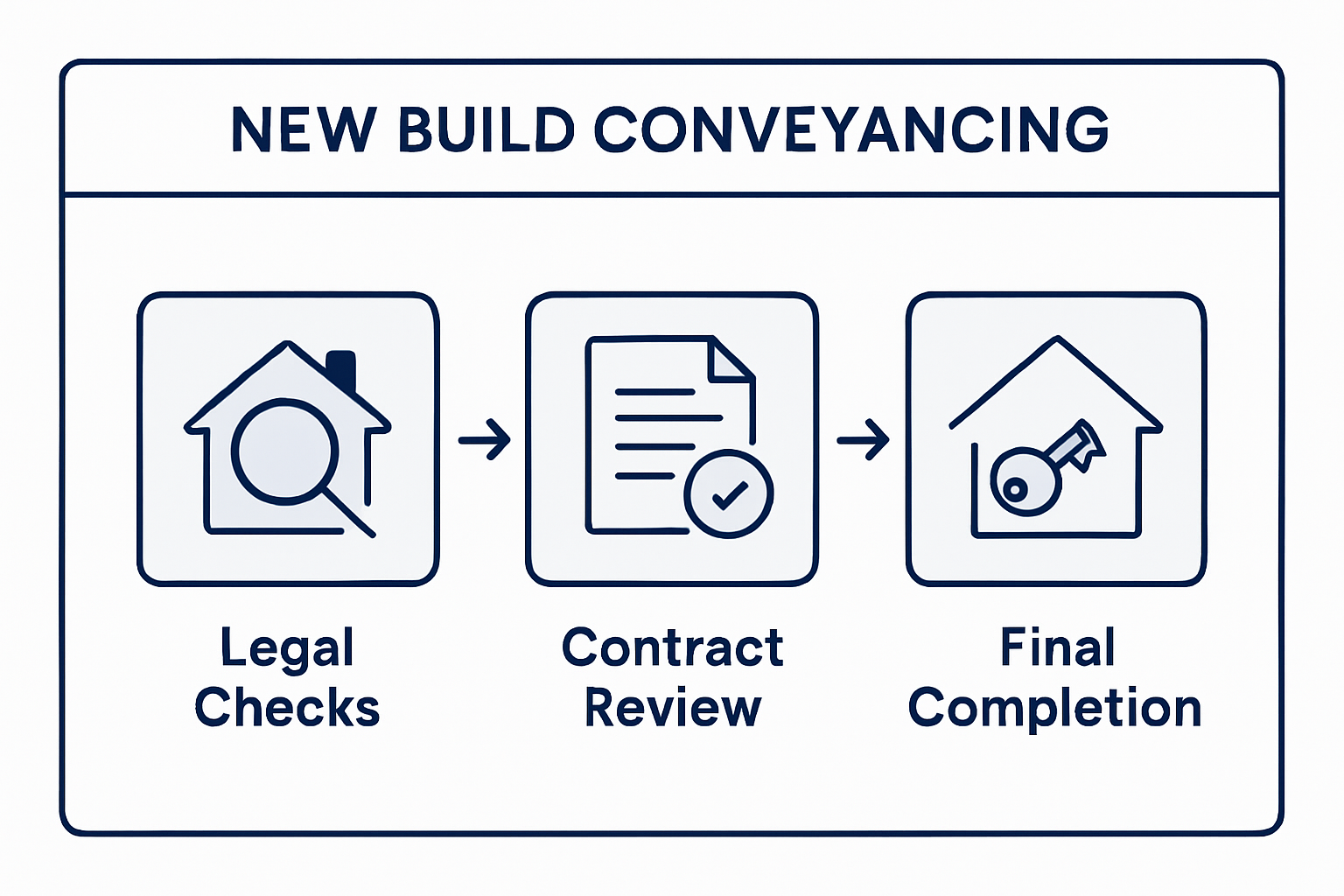
Navigating the new build property purchase requires understanding a complex, multi-stage journey that differs significantly from traditional property transactions. Buyers must carefully progress through each critical stage to ensure a smooth and legally protected purchase.
The key stages of the new build process typically unfold in a structured sequence:
Property Reservation
- Selecting and reserving the specific property
- Paying a reservation fee to secure the plot
- Initial discussions with the property developer
Legal Preparation
- Instructing a specialist conveyancing solicitor
- Reviewing developer contracts and off-plan specifications
- Conducting comprehensive property searches
Contract Exchange
- Negotiating and finalising purchase terms
- Agreeing on completion timelines
- Paying the initial deposit
Pre-Completion Checks
- Conducting detailed snagging inspections
- Verifying building regulation compliance
- Ensuring all contractual specifications are met
Unlike traditional property purchases, new build transactions require significant proactive engagement. Buyers must remain vigilant throughout the process, maintaining close communication with their solicitor and the developer. This approach helps manage potential variations in construction timelines, specifications, and ensures that the final property meets all agreed standards before the final completion and handover.
Understanding Warranties And Guarantees
Warranties and guarantees are fundamental protective mechanisms for new build property buyers, offering crucial financial and structural safeguards against potential defects. Comprehensive warranty coverage represents an essential consideration in new build property purchases, providing homeowners with significant peace of mind.
The most prevalent warranty in the UK new build market is the NHBC Buildmark, which typically offers protection across multiple stages:
- Initial Coverage: Typically provides 2-year developer warranty for construction defects
- Structural Warranty: Extends 10-year protection against major structural issues
- Defect Remediation: Mechanisms for addressing and resolving construction problems
- Independent Verification: Ensures impartial assessment of potential property issues
Buyers should understand that warranties are not blanket protections but structured agreements with specific terms and conditions. Careful examination of warranty documentation is crucial, including understanding exact coverage limits, exclusion clauses, and the precise procedures for reporting and resolving potential defects. Professional legal guidance can help buyers interpret these complex documents and ensure they fully comprehend the extent of their property’s protection, preventing potential misunderstandings or unexpected financial liabilities in future years.
Costs, Deadlines, And Common Pitfalls
New build property purchases involve a complex financial landscape with numerous potential challenges that can catch inexperienced buyers off guard. Proactive financial planning becomes crucial to navigating the intricate costs and deadlines associated with new build transactions.

The financial considerations and potential pitfalls in new build purchases include:
Cost Breakdown:
- Reservation Fee: Typically £500-£1,000 to secure the property
- Legal Fees: Specialist conveyancing costs ranging from £1,200-£2,500
- Mortgage Arrangement Fees: Can be £0-£2,000 depending on lender
- Stamp Duty: Potentially higher rates for new build properties
Common Deadline Challenges:
- Developers frequently miss initial completion dates
- Mortgage offers typically have limited validity periods
- Potential gaps between exchange and completion dates
- Risk of financial penalties for missed contractual timelines
Moreover, buyers must remain vigilant about potential hidden costs and complications. These can include unexpected utility connection charges, landscaping variations, potential snagging issues, and additional expenses related to customisation or specification upgrades. Maintaining a flexible financial buffer and conducting thorough due diligence can help mitigate these risks, ensuring a smoother property acquisition process with minimal unexpected financial stress.
Secure Your New Build Conveyancing with Expert Support Today
Navigating new build conveyancing means tackling complex contracts, stringent deadlines and ensuring your NHBC warranty is secure. This process can be overwhelming, especially when delays risk costing you time and money. If you want to avoid costly setbacks and ensure every stage from reservation to completion goes smoothly, expert legal guidance tailored to new build purchases is essential.
At Conveyancing-Solicitor.co.uk, we connect you with five-star, regulated conveyancing firms that specialise in handling new build transactions. Our vetted solicitors understand developer contracts, snagging inspections and warranty verification so you do not face unexpected pitfalls or expenses.
Ready to get a fixed-fee quote and take control of your new build conveyancing today? Start with our Instant Quote service. For more guidance on timelines and avoiding delays, see our detailed Step-by-Step Conveyancing Process and learn how our experts can help you complete on time without surprises.
Frequently Asked Questions
What is new build conveyancing?
New build conveyancing refers to the legal process involved in purchasing a newly constructed property. It includes specific checks and requirements unique to new builds, such as reviewing off-plan contracts, warranty verification, and managing construction-related legal issues.
What legal checks are required for new build properties?
Essential checks for new builds include verifying planning permissions, checking building regulation compliance, ensuring warranty documentation is in place, conducting land registry checks, and examining any Section 106 agreements related to the development.
How do warranties protect buyers of new build properties?
Warranties, such as the NHBC Buildmark, provide crucial financial and structural safeguards against defects in new build properties. They typically offer initial coverage for construction defects and an extended structural warranty that protects against major issues for up to 10 years.
What common pitfalls should buyers be aware of when purchasing a new build?
Buyers should watch for potential hidden costs, such as utility connection charges and unexpected fees for customisations. Additionally, delays in completion dates and the limited validity of mortgage offers can pose financial risks. Maintaining a flexible budget and conducting thorough due diligence can help mitigate these challenges.
Recommended
- The Role of a Conveyancing Solicitor in New Build Purchases – Conveyancing Solicitor
- Conveyancing Solicitor UK Delivers Trusted Local Specialist Conveyancing for New Builds England – Conveyancing Solicitor
- How Long Does Conveyancing Take? Find Out Here! – Conveyancing Solicitor
- The Most Common Mistakes to Avoid When Hiring a Conveyancing Solicitor – Conveyancing Solicitor
