



Nearly 90 percent of property buyers in the UK now turn to online platforms for conveyancing services, signalling a major shift in how homes change hands. Fast digital communication and clear pricing have changed expectations for anyone moving house or investing in property. Understanding the basics of online conveyancing helps you spot hidden costs, compare service options, and make the process less stressful from start to finish.
Key Takeaways
| Point | Details |
|---|---|
| Online Conveyancing Explained | It is a digital alternative to traditional property transactions, allowing for legal work to be completed remotely through internet platforms. |
| Types of Services Offered | Options range from basic packages to specialist services, designed to accommodate varying needs and transaction complexities. |
| Transparent Pricing | Most online conveyancers provide fixed, upfront quotes, helping clients better understand costs and avoid unexpected expenses. |
| Regulatory Standards | Online conveyancers are subject to the same legal requirements as traditional firms, ensuring consumer protection and professional integrity. |
Table of Contents
- What Is Online Conveyancing? Core Concepts
- Types of Online Conveyancing Services in the UK
- How the Online Conveyancing Process Works
- Legal Protections and Regulatory Standards
- Costs, Fees, and Common Misconceptions
- Choosing a Trusted Online Conveyancer
What Is Online Conveyancing? Core Concepts
Online conveyancing represents a modern approach to property transactions that transforms traditional legal processes through digital technology. Online conveyancing fundamentally means completing property transfer legal work remotely, using internet platforms and digital communication channels instead of in-person meetings at physical solicitor offices.
According to research from The Advisory, online conveyancing is legally identical to traditional high-street conveyancing in its core process. The primary distinction lies in how communications and transactions occur — entirely online or via phone, eliminating the need for physical office visits. This digital approach offers several compelling advantages:
- Increased convenience and flexibility
- Faster communication channels
- Typically more transparent pricing structures
- Ability to track progress in real-time
- Access to services from anywhere with internet connectivity
As highlighted by Inside Conveyancing, online conveyancing often provides fixed, upfront quotes. This approach enables clearer budgeting and transparency, with most firms clearly listing standard charges and disbursements at the outset. Potential home buyers and sellers can now understand their exact costs without surprise fees or complicated pricing structures, making the property transaction process more straightforward and predictable.
Types of Online Conveyancing Services in the UK
Online conveyancing services have evolved to provide multiple options for property buyers and sellers, catering to different needs and transaction complexities. These digital legal services range from basic package offerings to comprehensive support models designed to streamline property transfers.
According to the Home Owners Alliance, online conveyancers typically offer services structured around fixed-fee arrangements with potential ‘no sale, no fee’ guarantees. The primary types of online conveyancing services include:
- Basic Package: Minimal legal support covering standard property transfers
- Standard Conveyancing: Comprehensive legal work with additional search and documentation support
- Premium Service: Full-support model including extra communication channels and dedicated case management
- Specialist Conveyancing: Tailored services for complex transactions like leasehold properties, shared ownership, or new builds
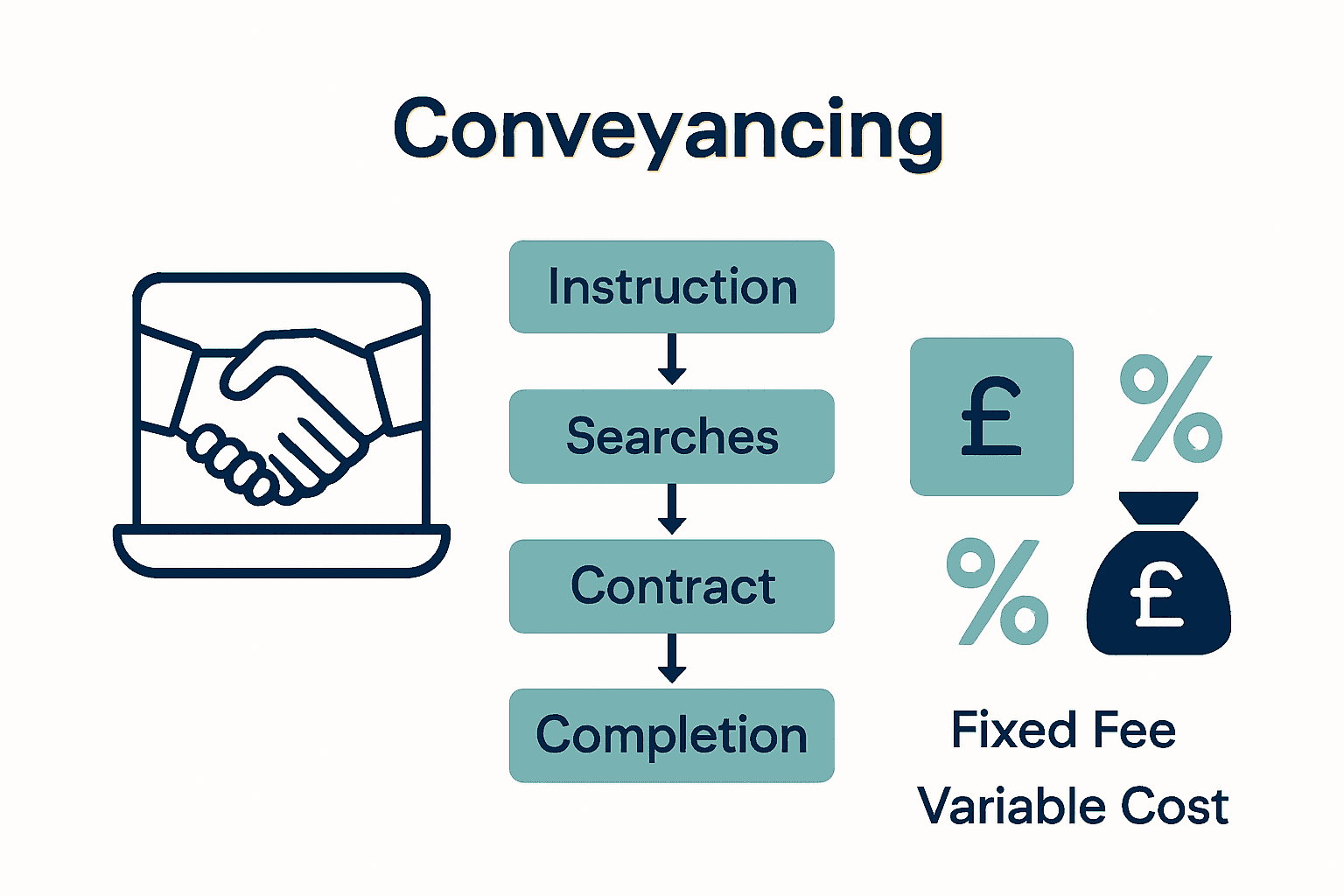
A critical aspect of these services is transparency in pricing. Conveyancing services often break down costs into two primary components: fixed legal fees and additional disbursements. Disbursements such as property searches, land registry fees, and other administrative costs are typically charged separately and should be clearly explained upfront. This approach ensures clients understand exactly what they’re paying for, eliminating unexpected financial surprises during the property transfer process.
Here’s a summary of the main types of online conveyancing services:
| Service Type | Typical Features | Suitable For |
|---|---|---|
| Basic Package | Standard legal transfer Minimal support | Straightforward sales First-time buyers |
| Standard Conveyancing | Full legal process Property searches Document support | Most typical purchases and sales |
| Premium Service | Dedicated manager Enhanced communication Priority handling | Complex cases Clients seeking extra support |
| Specialist Conveyancing | Custom advice Leasehold/shared ownership New builds | Unusual property types Challenging legal aspects |
How the Online Conveyancing Process Works
The online conveyancing process follows a structured digital approach that mirrors traditional property transfer methods while leveraging technological efficiency. Buyers and sellers can now complete complex legal transactions entirely through secure online platforms, eliminating many traditional time-consuming steps.
According to The Advisory, the typical conveyancing timeline remains consistent. Here’s a standard progression:
- Initial instruction and case opening
- Property searches and surveys ordered
- Legal document review and verification
- Exchange of contracts (typically around weeks 8-12)
- Completion and final property transfer
Research from Versus Law highlights how online conveyancing prioritises speed through digitisation. Key technological advantages include:
- Automated document generation
- Reduced manual processing
- Instant online communication channels
- Real-time document tracking
- Secure digital signature capabilities
Through our comprehensive online conveyancing guide, clients can understand how digital platforms streamline what was once a paperwork-heavy process. The online approach allows for faster progress by removing traditional delays associated with physical document postage and in-person meeting scheduling, making property transfers more efficient and transparent.

Legal Protections and Regulatory Standards
Online conveyancing in the UK operates under stringent legal frameworks designed to protect consumers and maintain professional integrity. These regulatory standards ensure that digital property transfer services meet the same rigorous requirements as traditional conveyancing practices, providing clients with comprehensive legal safeguards.
According to Wikipedia’s entry on Licensed Conveyancers, licensed conveyancers in England and Wales must be authorised by the Council for Licensed Conveyancers (CLC). This crucial regulatory body ensures practitioners:
- Complete mandatory professional training
- Hold appropriate professional licences
- Meet strict professional standards
- Maintain ongoing professional development
- Adhere to ethical conduct guidelines
The Authorised Conveyancing Practitioners Board, established under UK law, provides additional layers of professional oversight. This regulatory mechanism supports fair competition while establishing robust consumer protection measures. Notably, the board provides essential dispute resolution channels through the Conveyancing Ombudsman, giving clients a formal pathway to address potential professional misconduct or service-related issues.
Through our guide on legal protections, clients can understand that online conveyancing is not a less secure alternative, but a modernised approach to property transfers that maintains the highest professional standards. The digital transformation preserves all traditional legal protections while introducing enhanced efficiency and transparency.
Costs, Fees, and Common Misconceptions
Online conveyancing costs represent a complex landscape of legal fees, disbursements, and potential additional expenses that often surprise property buyers and sellers. Understanding the full financial picture is crucial for making informed decisions during property transactions.
According to House Legal UK, headline conveyancing costs in the UK typically range from £800 to £1,500. However, potential clients should be aware that additional disbursements can significantly impact the total expense:
- Local authority searches
- Environmental checks
- Indemnity insurance
- VAT
These supplementary costs can inflate the total expense by 20-50% if not carefully itemised in advance. Inside Conveyancing addresses a common misconception that online conveyancing lacks transparency or customer service. In reality, reputable online providers:
- Work with fixed legal fees
- Inform clients of disbursements upfront
- Deliver faster service
- Provide clear budgeting tools
- Offer comprehensive digital communication
For a deeper understanding of potential savings and service quality, our detailed conveyancing guide breaks down the financial aspects of online conveyancing. Clients can expect a transparent, efficient process that often proves more cost-effective than traditional high-street alternatives.
Choosing a Trusted Online Conveyancer
Selecting the right online conveyancer is a critical step in ensuring a smooth, transparent property transaction. The digital landscape offers numerous options, but not all providers deliver the same level of service and reliability.
According to the Home Owners Alliance, homeowners should prioritise several key criteria when choosing an online conveyancing service:
- Regulatory Status: Ensure the firm is regulated by the Council for Licensed Conveyancers
- Professional Insurance: Verify comprehensive indemnity insurance coverage
- Fee Transparency: Seek full, clear breakdowns of all charges
- Quote Comparisons: Use platforms allowing comparisons between regulated practitioners
- Communication Channels: Check for dedicated case management support
Drawing from Eden Conveyancing’s approach, an exemplary online conveyancer typically offers:
- Jargon-free, transparent fee structures
- Dedicated conveyancer assigned to your case
- Regular communication via email or online portal
- Weekly progress updates
- Clear professional standards adherence
Our comprehensive guide to spotting reliable online conveyancers provides deeper insights into making an informed choice. The key is finding a provider that balances technological efficiency with professional integrity, ensuring your property transaction is both smooth and secure.
Make Online Conveyancing Easy, Transparent, and Affordable
Understanding the online conveyancing process can be overwhelming, especially with concerns around hidden costs, unexpected delays or confusing legal jargon. If you are searching for clear fixed-fee pricing, real-time updates or guaranteed professional standards, you should not have to compromise on support or peace of mind. This article explains how the digital journey works, yet many readers are still left wondering how to find a reputable, cost-effective conveyancer who can guide them every step of the way.
Take the stress out of your property move with Conveyancing-Solicitor.co.uk. Our platform connects you only with five-star, SRA- or CLC-regulated conveyancing firms, offering transparent instant quotes and expert advice. With us, you can:
- Compare fixed-fee quotes online and save up to 75 percent on legal fees
- Choose from a network of premium, vetted conveyancers with proven records
- Enjoy clear communication and real-time case tracking for your complete peace of mind
Ready to see exactly how much you could save and get your move underway today? Visit our instant conveyancing quote page to unlock bespoke offers from trusted professionals who put your experience first. Explore why fixed-fee online conveyancing works or discover how to spot a reliable conveyancing solicitor online. Simplify your transaction and move forward with complete confidence. Book your free, instant quote now at Conveyancing-Solicitor.co.uk.
Frequently Asked Questions
What is online conveyancing?
Online conveyancing is a digital approach to property transactions that allows buyers and sellers to complete legal processes remotely using internet platforms, eliminating the need for in-person meetings. It offers convenience, faster communication, and transparency in pricing.
How does the online conveyancing process work?
The online conveyancing process involves several structured steps, including initial instruction, property searches, legal document review, and the exchange of contracts, all facilitated through secure online platforms to enhance efficiency and reduce delays.
What types of online conveyancing services are available?
Online conveyancing services vary in complexity and include basic packages, standard conveyancing, premium services, and specialist conveyancing tailored for unique property transactions like leaseholds or new builds.
How are costs structured in online conveyancing?
Costs in online conveyancing typically consist of fixed legal fees and additional disbursements for services like property searches and land registry fees. Understanding these breakdowns is essential for avoiding unexpected expenses during the transaction.
Recommended
- Your Comprehensive Guide to the Buying Home Process: From Start to Finish – Conveyancing Solicitor
- The Legal Documents Your Conveyancing Solicitor Will Handle – Conveyancing Solicitor
- Ready to Buy a Home? Here’s How to Prepare for Conveyancing Process – Conveyancing Solicitor
- What is Conveyancing? A Comprehensive Guide to Property Transfers – Conveyancing Solicitor
